
Vandaag of morgen in huis

Kwaliteit gegarandeerd

Welkomstaanbiedingen ontgrendelen: GRATIS bezorging | Tot 80% korting | Gratis 30 dagen JoyPlus-proefperiode
Download de app
Toy cars come in many forms, from simple little cars for toddlers to RC cars for children, teenagers and adult enthusiasts. That wide choice can make comparing products difficult. A model may look sturdy but still contain small parts. A toy truck may come with lots of accessories but offer little room for play. And with a radio-controlled vehicle, battery life, drive system and surface are often more important than top speed alone.
As Joybuy Product Recommendation Officer, I filter the key information according to three criteria: age suitability, verifiable product specifications and practical use.
Terms such as “off-road”, “race-ready” and “extra sturdy” are not always enough to base a purchase on. It is better to check:
With an RC car, the difference between 2WD and 4WD is noticeable. 4WD can provide more grip on uneven surfaces, while 2WD is often simpler and lighter. Also look out for contradictions in the product information. With some models, for example, the title may mention a different drive system from the description. In that case, check the current product specifications before ordering.
Many model cars, diecast cars and construction vehicles contain small parts. A metal car in a 1:64 scale is therefore not automatically suitable for a toddler. Products such as Hot Wheels cars and Siku models are generally offered for children aged 3 and over. For younger children, a larger vehicle without loose small parts is a more sensible choice.
Always check the age warning on the product page and packaging. The CE marking is relevant product information, but it does not replace supervision and does not make a small model suitable for children below the stated age.
A toy car with sound and lights may require additional batteries. With an RC car, you should also check the rechargeable battery supplied, charging time, spare batteries and charger type. A model with a rechargeable lithium battery can be practical, but keep loose batteries and charging accessories out of the reach of young children.
Metal toy cars require little maintenance, but hinges, axles and tow connections can collect dirt. A dry or slightly damp cloth is usually more suitable than immersing the toy in water.
For children aged 1 to 3, larger vehicles that are easy to operate are often more practical. According to the product information, the VTech Toet Toet Car Disney Mickey Fire Truck is intended for children aged 1 to 5. The vehicle has push buttons, sound effects and music. From the age of 3, more options become available, such as a toy truck, toy race track, construction vehicles and sets containing several cars.
For teenagers, adult car enthusiasts and collectors, scale and material become more important. A 1:36 model car takes up relatively little space and may feature details such as opening doors. However, check whether the model is intended for display, play or both.
A metal or diecast car generally feels different from a model made entirely of plastic. Do not just look at the bodywork material, but also check:
According to the product information, the Siku Tipper Truck and Trailer has a metal body, plastic wheels and a movable tipping mechanism. This makes it suitable for construction-site role play, while its dimensions of 15.2 × 3.5 × 4.7 cm also make it a compact model.
With an RC car, consider where you want to drive it. A small rally car is particularly suitable for a flat floor. An off-road buggy with larger tyres is better suited to grass or a slightly uneven surface, provided the product is designed for this purpose. Also check the turning circle and the amount of space available indoors.
For young children, vehicles with friction drive are easy to use: simply push and release. A transport truck with 12 diecast cars combines storage with a fold-out race track. This is useful when tidying away and playing need to be combined in one product.
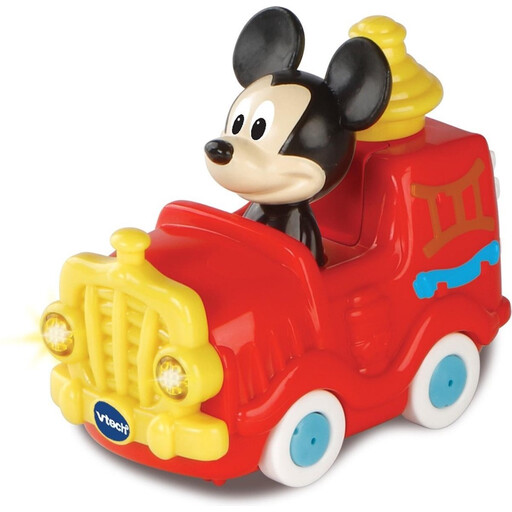
Why it suits this profile: This vehicle is aimed at young children aged 1 to 5 and uses push buttons rather than a remote control.
The age recommendation and controls are clearly described. No complicated RC set-up is required.
Suitable for ages 1–5, with 6 melodies, 3 songs and automatic shut-off.
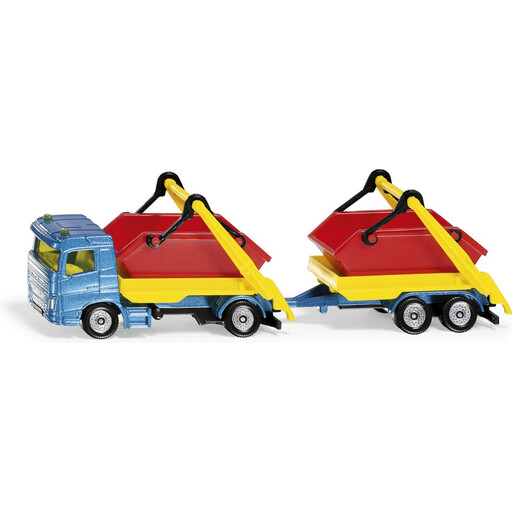
Why it suits this profile: A compact choice for fans of construction sites, transport and model cars aged 3 and over.
The product information clearly specifies the materials, dimensions and movable tipping mechanism.
Metal body, sturdy plastic wheels, no assembly required and a length of 15.2 cm.
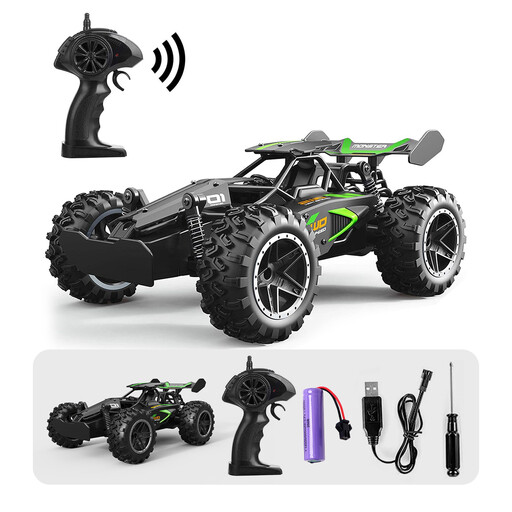
Why it suits this profile: The product page lists large tyres, suspension, a 2.4GHz remote control and a rechargeable 3.7V battery.
The power requirements are clearly specified: the battery and USB cable are included, but two AA batteries for the controller are not.
4WD according to the description, independent suspension and dimensions of 25 × 14 × 18 cm.

Why it suits this profile: According to the product information, this model is intended for ages 14 and over and combines display details with simple play features.
The scale, age recommendation and features such as opening doors are clearly stated in advance.
Metal 1:36 model, opening doors and pull-back function; suitable as a toy car gift for older enthusiasts.
We have put together a complete, up-to-date list of products that fully meet these strict selection criteria and the applicable European safety regulations.
For a child aged 1 to 3, a simple, larger vehicle with easy-to-reach buttons is often a better choice than a collection of small model cars. From the age of 3, you can choose from a toy fire engine, a transport truck, a race track or a construction vehicle set. Sets containing several cars are useful for playing together; for independent play, a friction-drive or pull-back model is easy to use.
For teenagers and adults, scale, finish and subject matter are decisive. Consider a Volkswagen T1 model, BMW M3 or another diecast car. Collectors should also check that the packaging, colour and scale match their expectations.
Choose a model with a suitable age recommendation, larger parts and simple controls. Always check the warnings. A vehicle with loose small cars or accessories is not automatically suitable for young children.
The operating time depends on how frequently it is driven, the surface, collisions, battery maintenance and the availability of spare parts. Charge the battery according to the product instructions, keep moving parts clean and do not automatically use an off-road model in water.
The price mainly depends on the material, number of vehicles, brand, scale and drive system. A single plastic car generally costs less than an RC car with a battery and remote control. A set containing 12 diecast cars or 20 Hot Wheels cars may seem inexpensive per vehicle, but always check how many parts are actually included.
