
Vandaag of morgen in huis

Kwaliteit gegarandeerd

Welkomstaanbiedingen ontgrendelen: GRATIS bezorging | Tot 80% korting | Gratis 30 dagen JoyPlus-proefperiode
Download de app
A toy car might seem like a simple present, but the difference between a hit and a miss often lies in the detail. Does the vehicle suit the child’s age? Are batteries included? Will it cope with everyday play on the floor, outside or in the sandpit? And will a child keep playing with it after the initial excitement wears off?
Use these checkpoints to compare toy cars for use, features and safety. That way you can zero in on the right RC car, building set, toy lorry or car toys for children.
Lights, music, spray effects, sounds and stunt modes stand out in product photos. For a toddler, however, a simple push-along might be a better fit than a complicated radio-controlled car. For older children, controls, speed and expandability usually matter more.
Ask yourself: does the child mostly want to roll and explore, build and make up stories, or control and race?
A toy car from age 3 may include small parts that aren’t suitable for younger children. A model that is technically rated 3+ can also be less suitable for some children due to high speed or a complex remote control.
Always check:
Age recommendations aren’t a guarantee that every child can handle the same controls. Also consider motor skills, interests and the play environment.
Batteries aren’t always included with electric vehicles. An RC car may come with a rechargeable battery pack for the car, but still require separate AA batteries for the remote control. Check the full power requirements before you buy.
Also think about maintenance. A vehicle with exposed wheels, small accessories or a delicate load bed needs more checking than a robust push-along. Use an electric model only as per the manual and avoid water unless the product information explicitly says it’s permitted.
For children aged 1 to 3, large, easy-to-grip vehicles without loose small parts are practical. The VTech Toot-Toot Drivers Car Carrier Teddy is, according to the product information, intended from 1 year and has buttons, sounds and a moving hoist. Supervision remains important for babies and toddlers.
From around age 3, simple racetracks, transporters and construction vehicles come into play. Check you have enough floor space. A large transporter with a fold-out track requires more room than a 10 cm metal model.
For children aged 6 and up, LEGO vehicles are a great option if building is part of the gift. The age limit then depends not only on the finished model, but also on the small building elements and the time needed for assembly.
For an RC car, these specifications matter:
A higher number of channels, as with an RC construction vehicle, indicates more control functions. That’s handy for a child who wants to load, lift and tip with precision, but it can be too complex for a beginner.
Note the difference between:
Check that a CE marking is visible and read the warnings. A CE marking is a conformity marking by the manufacturer; it is not a quality ranking. For products from outside the EU, it’s also useful to see whether an EU-based responsible person is listed.
Claims about materials or safety come from the product information. As per the manufacturer’s description, properties such as “non-toxic”, “water-resistant” or “drop-resistant” may apply under certain conditions. Don’t treat such statements as an unlimited guarantee and always follow the instructions for use.
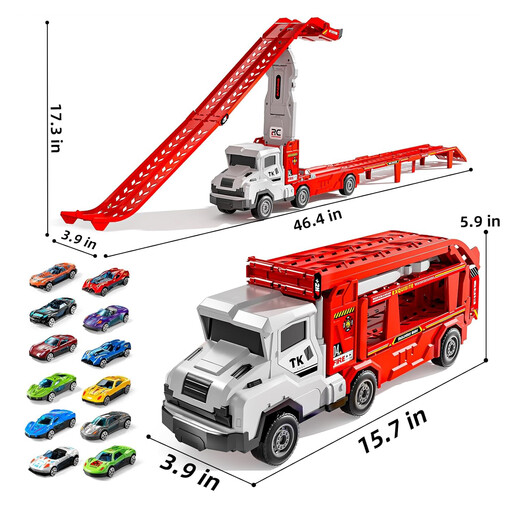
Why it suits this profile: This is a complete play set without a remote control. From around age 3, children can push the truck, store the cars and use the fold-out double track.
The play pattern is immediately clear and there’s no need to manage batteries or a remote. Do check the space you have for the track beforehand.
1 transport truck, 12 die-cast cars and a fold-out track; suitable for playing together with two or four players according to the product description.
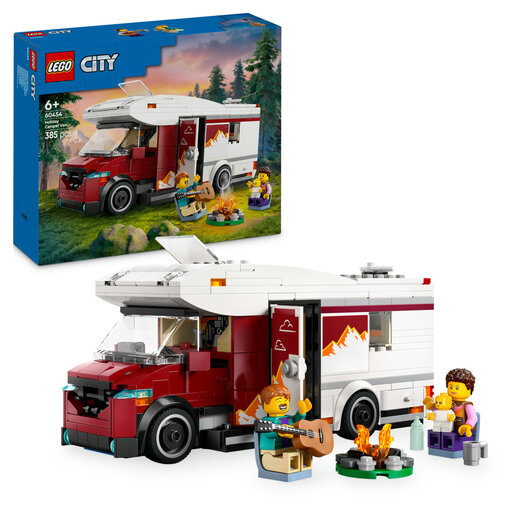
Why it suits this profile: For children aged 6+ who want to combine building with role play. The camper opens up and, according to the product details, includes a kitchen, toilet, sleeping areas and accessories.
The play value isn’t just in lights or sounds: the vehicle is a build project and then a stage for imaginative play. No batteries required.
385 pieces, 2 minifigures and a baby figure; digital building instructions via the LEGO Builder app according to the product information.
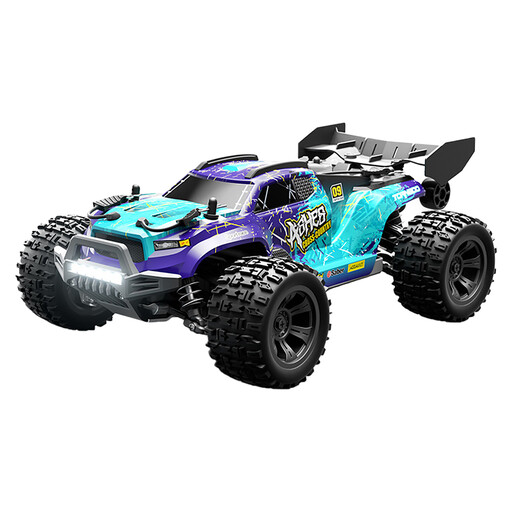
Why it suits this profile: Aimed at teens and users aged 14+ who want to drive outdoors. The product description lists 4WD, a 7,4V battery pack and a stated speed of 40+ km/u.
The age guidance makes it clear this isn’t a car toy for young children. Check the surface, speed and local play area before you order.
4WD drive, 2,4GHz transmitter, rechargeable battery pack and LED lighting according to the product details; AA batteries for the transmitter are not included.
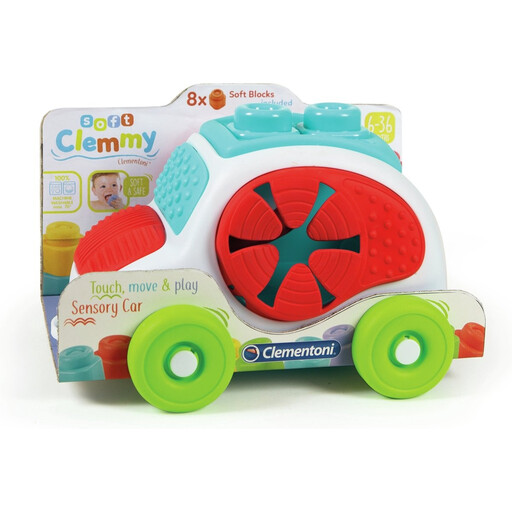
Why it suits this profile: According to the product information, this set is intended from 6 months and combines a car with 8 soft blocks. Ideal for gentle discovery and grasping under supervision.
There’s no complicated remote or battery pack required. Check parts are intact before each use and follow the stated age range.
Soft blocks, shape-sorting function and a stated age range of 6 to 36 months according to the product details.
We’ve put together a complete, up-to-date list of products that fully meet these strict selection criteria and comply with current European safety regulations.
Lifespan depends on materials, play surface and maintenance. Regularly check wheels, axles, load beds and battery compartments. Wipe vehicles with a dry or slightly damp cloth if the manual allows, and store batteries and small parts safely.
That varies by model. A simple push-along or toy lorry is often more straightforward than a fast RC car. Always look at the official minimum age, warnings and the complexity of the controls. If in doubt, adult supervision is wise.
Beyond the purchase price, charging cables, battery packs, loose batteries and spare parts can add up. Check whether the battery pack is included, which batteries the remote control uses and whether replacement parts are available. That gives you a more realistic picture of the total cost.
