
Vandaag of morgen in huis

Kwaliteit gegarandeerd

Welkomstaanbiedingen ontgrendelen: GRATIS bezorging | Tot 80% korting | Gratis 30 dagen JoyPlus-proefperiode
Download de app
A toy car for children might seem simple to choose, but the range on offer varies enormously. There are vehicles with lights and sound, race tracks, building sets, remote-controlled models and die-cast model cars. The right choice depends mainly on the child’s age, the play space available and the way they like to play.
When comparing, don’t just look at the packaging. An eye-catching design or lots of features doesn’t automatically mean the toy will be used for long. Below are the most common pitfalls, key points to check, and some suitable choices for each type of user.
Toy cars with sound and lights grab attention, but they may be less suitable if the child prefers to make up their own stories. So check whether the features are easy to operate and whether the car can still be played with without batteries.
Also pay attention to the difference between a vehicle with standalone buttons and a set that includes a proper play environment. A toy car transporter with storage space, a loading function or a race track can offer more play possibilities than a single vehicle.
A toy car for ages 3 and up may contain small parts. Think of loose accessories, mini cars, projectiles or traffic signs. Always check the warning on the product page and consider adult supervision.
For children from around 18 months, large building bricks like those in LEGO DUPLO vehicles are generally more practical than small metal cars. Die-cast models with tiny details are usually intended for teenagers and adults. The Volkswagen T1 models in this overview, for example, have a recommended age of 14 years and older.
A vehicle with sound may need batteries that aren’t included. So check:
A large garage or transporter can be appealing, but it won’t always fit in a small child’s bedroom. A roll-up race track toy might be more practical in that case.
First, choose based on the stated age. Then check whether a CE marking is shown. A CE marking is the manufacturer’s declaration that the product meets applicable EU requirements; it is not an independent quality ranking.
Also look at the warning about small parts and the recommended supervision. For toys with projectiles, a remote control or an electric drive, supervision is especially important.
For younger children, large, rounded parts and a simple design are practical. With construction vehicle toys, movable arms, loading beds and cranes can add extra play value, but check that these parts are securely attached and won’t come loose easily.
With metal models, it’s more about details, opening doors and a realistic finish. That doesn’t automatically make a model car for collectors suitable for younger children.
Ask yourself where the vehicle will be used:
Many products should be cleaned with a dry cloth. Water can damage electronics, sound and lights. Regularly check battery compartments, wheels and moving parts.
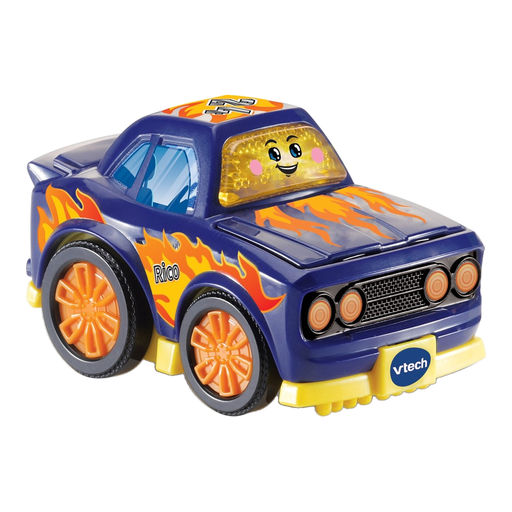
Why this fits the profile: A compact interactive car for children from 2 years old, without an elaborate track or large accessory set.
The play style is straightforward: press the light-up button and use the sensor. No loose race track parts are needed.
According to the product description, 6 melodies, 3 songs and compatibility with Toet Toet Cars are included.
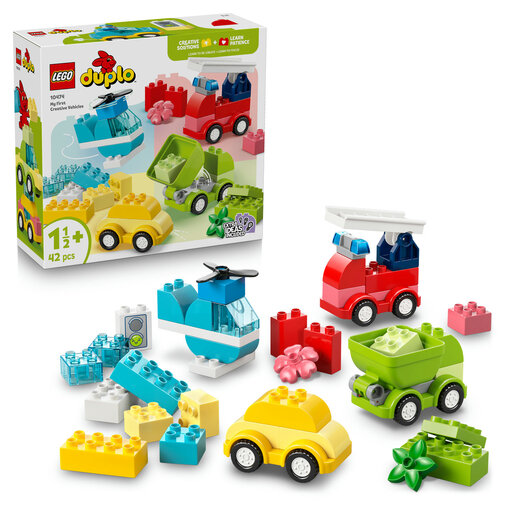
Why this fits the profile: Suitable for toddlers from 18 months who not only want to drive cars but also build their own vehicles.
The set isn’t about one fixed function. Parts can be recombined, so the play can grow with the child.
The set contains 42 pieces, 3 vehicle bases and large building bricks for little hands.
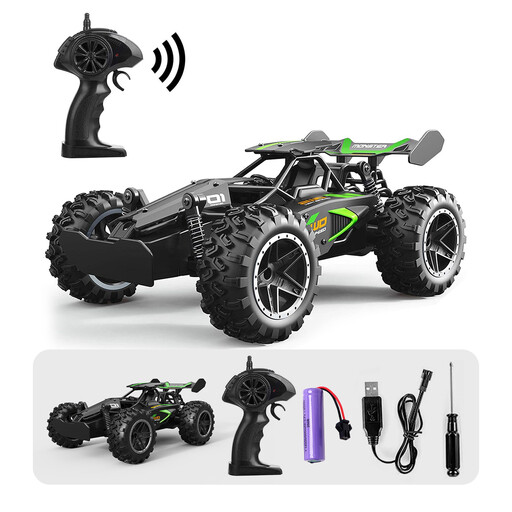
Why this fits the profile: For children from 3 years old who want to drive outdoors and enjoy steering with a remote control.
The large tyres and suspension are, according to the product description, designed for surfaces like grass, gravel and sand. Always check the local conditions of use.
Four-wheel drive, a 2.4GHz remote control and a rechargeable 3.7V battery included. The remote control uses 2 AA batteries.
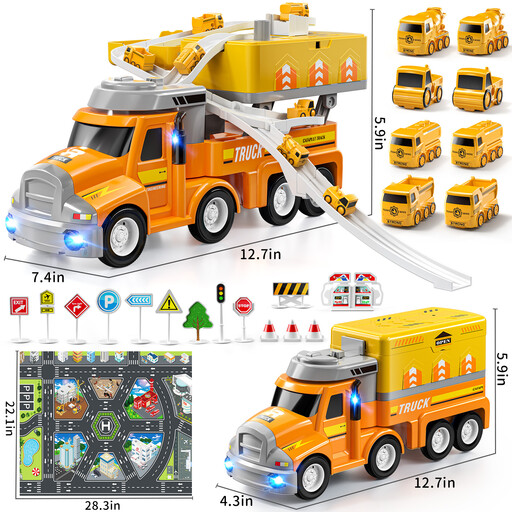
Why this fits the profile: A gift for children who enjoy multiple vehicles, a play mat and a race set-up.
The set combines a transporter, play mat and race set-up. This means fewer separate purchases are needed to create a play world.
The product description mentions 8 mini fire engines, traffic signs, a city map and light and sound effects.
We’ve put together a full, up-to-date list of products that fully meet these strict selection criteria and current European safety regulations.
That depends on the type of product. Some sets use AA batteries, while a remote-controlled car for children sometimes comes with a rechargeable battery. Check whether batteries are included and turn off lights and sound when the toy is not in use.
Usually use a dry or slightly damp cloth, depending on the product instructions. Never submerge vehicles with electronics in water. After cleaning, check that the battery compartment is completely dry.
A children’s pedal go-kart is intended for outdoor use and requires enough space, coordination and supervision. Always check the recommended age, maximum weight, braking options and the surface before making a purchase.
