
Vandaag of morgen in huis

Kwaliteit gegarandeerd

Welkomstaanbiedingen ontgrendelen: GRATIS bezorging | Tot 80% korting | Gratis 30 dagen JoyPlus-proefperiode
Download de app
A toy car may seem like a simple choice, but there’s a huge range to choose from. Some models are designed for gentle play, while others focus on speed, lights and sound effects or remote control. Choosing the wrong one could mean a car that’s too difficult to control, quickly gets left unused or isn’t suited to the space available for play.
So don’t just focus on looks. Check the age recommendation, type of drive, batteries required and dimensions. Read on to find out which common pitfalls to avoid and which specifications can make a practical difference.
An RC car with a stated top speed of over 40 km/h may sound exciting, but that doesn’t automatically make it suitable for young children. Fast models need plenty of space, good steering control and supervision. A simpler model may be more enjoyable for a child driving a remote-controlled car for the first time.
So check:
A model for children aged 14 and over calls for a different approach from a toy car for toddlers aged 3 and over.
Many vehicles include a rechargeable battery for the car, but the remote control or accessories may still need separate batteries. Check the charging time and type of connector, and whether a USB cable is included.
For example, the product descriptions for various RC models mention a rechargeable lithium battery, while separate AA or AAA batteries are needed for the controller. That’s not a problem, as long as you bear it in mind before buying.
A car with 360° rotation, sideways movement and LED wheels needs more space indoors than a simple pull-back racing car. So check that the toy is suited to the play area. A stunt car may work well on tiles, but furniture, fragile decorations and narrow hallways can make it harder to use.
For vehicles designed for outdoor use, read claims about water resistance carefully. “Waterproof” doesn’t always mean the product can be submerged. Follow the instructions and avoid water if the product information doesn’t clearly state what it can withstand.
The age recommendation is a good starting point. Products with small parts are generally unsuitable for children under 3 because of the risk of choking. Some collectables have a much higher recommended age. For example, the POP MART Wacky Mart blind box has a recommended age of 15 and over, despite the figures being small.
Also consider the difference between independent play and supervised play. It’s sensible to supervise children while they play with construction vehicle toys that include loose accessories, small building blocks or detachable parts, and while they tidy them away.
A simple toy car often works with a button, pull-back mechanism or friction motor. An RC car is operated using a remote control. More advanced models may also be able to move sideways, drift or keep going after flipping over.
Practical differences:
Check whether the vehicle is made from plastic, metal or a combination of both. A die-cast model with a metal body is more suited to collecting and gentle play. An ABS plastic RC car is usually lighter and better suited to active play.
The dimensions also affect how easy the toy is to store. A large construction vehicle or a transport lorry with cars can offer plenty of ways to play, but takes up more room after use than a small toy racing car. A foldable design or a vehicle with storage space can be a practical choice.
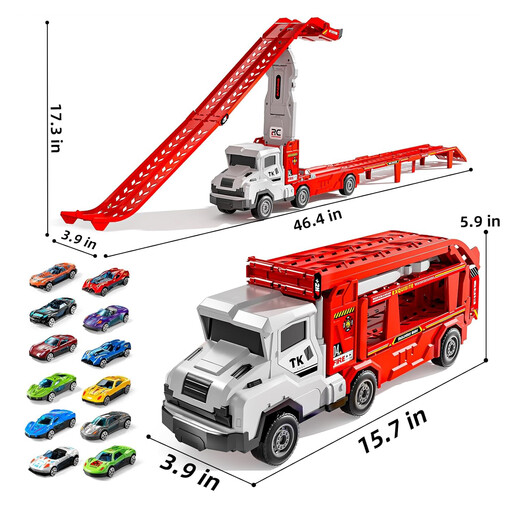
Why it suits this profile: This push-and-play vehicle combines a transport lorry, storage space and a foldable double race track. No remote control is needed, making it easy for young children to get started.
The product description explains that the lorry also provides storage space, helping to keep loose cars together after playtime.
12 die-cast cars, two race tracks and a foldable design, according to the product information.
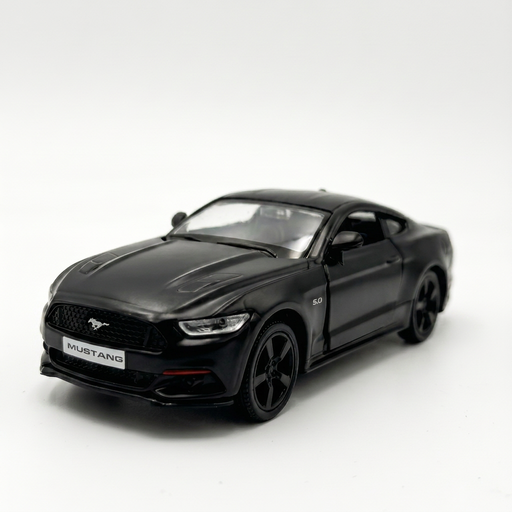
Why it suits this profile: For teenagers and collectors who value detail more than remote control, this metal scale model is a great choice for gentle play or display.
The recommended age of 14 and over helps prevent this detailed model from being bought as a toy for toddlers.
Metal construction, 1:36 scale, pull-back function and opening doors, according to the product description.
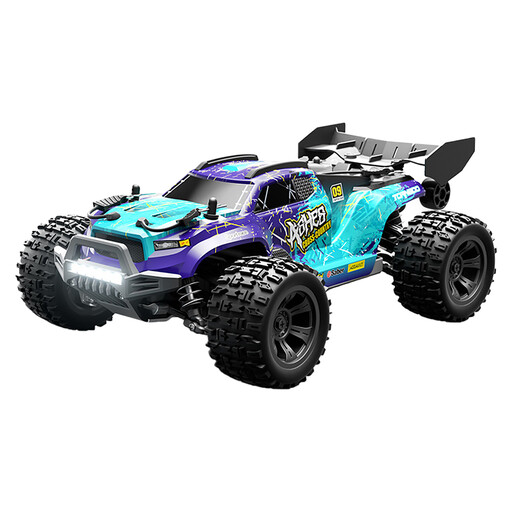
Why it suits this profile: According to the product page, this model is designed for teenagers aged 14 and over and for users who want to drive outdoors on grass, sand or other terrain.
The age recommendation and all-terrain design make it clear that this isn’t a simple beginner’s car for small indoor spaces.
4WD, a 7,4V battery, 2.4GHz controller and 1:18 scale, according to the product specifications.
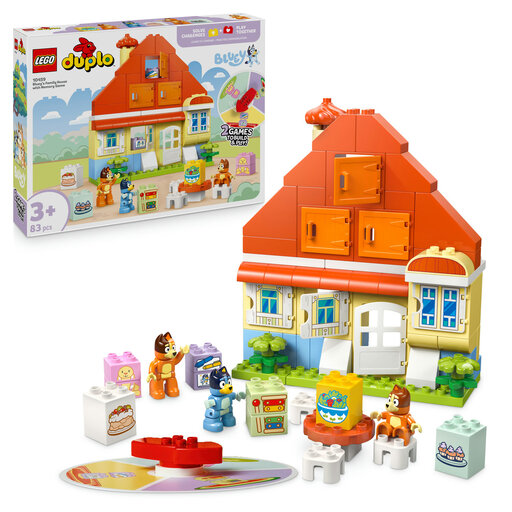
Why it suits this profile: This construction toy combines building, role play and a memory game. It’s suited to children aged 3 and over who enjoy playing with stories and characters as well as vehicles.
The set has a clear age recommendation, 83 pieces and several ways to play, rather than just light effects.
83 pieces, three figures and a memory activity, according to the product information.
We’ve put together a complete, up-to-date list of products that meet these strict selection criteria and the applicable European safety regulations.
Before buying, check whether the product page names a manufacturer, importer or responsible party in the European Union. Also look for warnings, age recommendations and battery information. A CE mark may be included in the product information, but check that the other safety information is clearly available too.
A few practical rules are important when using an RC car:
Choose a model with a clear age recommendation of 3 and over, simple controls and few loose small parts. A push-and-play transport lorry or a sturdy vehicle without a complex remote control is often easier to manage than a fast RC car.
Play time depends on battery capacity, driving style, the surface and whether you use light and sound effects. Check the stated battery voltage and capacity, but bear in mind that actual play time may vary. A replaceable battery can be useful if the car is used regularly.
That depends on its size, speed and turning circle. A compact toy car with limited speed can work well on a hard floor. A 4WD off-road model or a stunt car with large wheels will generally need more open space. Measure the play area beforehand and move any fragile objects out of the way.
