
Vandaag of morgen in huis

Kwaliteit gegarandeerd

Welkomstaanbiedingen ontgrendelen: GRATIS bezorging | Tot 80% korting | Gratis 30 dagen JoyPlus-proefperiode
Download de app
Toy cars come in many forms: from a simple toy car for young children to an RC stunt car, a remote-control drift car or a detailed die-cast model car for collectors. The difference isn’t just about looks. Material, age recommendation, drive system and maintenance all determine whether a purchase suits the user.
If you only look at an eye-catching body or lots of light effects, you might run into limitations later. Below are the key points to consider, along with some popular choices for different user profiles.
Terms like “off-road”, “stunt” and “high-speed” don’t mean much without extra information. So check whether the product details mention wheel drive, tyres, surface type, steering and dimensions. For example, an RC car with smooth tyres might be suitable for tiles or a wooden floor, but less practical on grass or sand.
A model car with small parts, metal components or a complex remote control isn’t automatically suitable for a young child. Some die-cast models in the range have a recommended age of 14 and above. A construction vehicle set might be offered from age 3, but even then, supervision is wise if small accessories are included.
An RC car can become less appealing if batteries run out quickly or charging is fiddly. Pay attention to the battery type, the included cable and the playtime if stated. For die-cast models, maintenance is especially important: dust, moisture and rough storage can affect the paintwork, wheels and hinged parts.
For outdoor use, an off-road RC car with four- or six-wheel drive can offer more possibilities than a small model with two driven wheels. Also check the tyre tread. Rubber anti-slip tyres with a deeper tread are mentioned in the product description of the 6WD stunt car for surfaces like grass, sand and concrete. That’s a product specification, not a guarantee that the car performs the same on every surface.
For drifting, smooth or low-friction tyres are relevant. A remote-control drift car is usually more suited to flat floors, tiles or an indoor track than to wet grass.
A 2.4G remote control is practical when several children want to drive at the same time. According to the product information for various RC models, multiple cars with this system can be used simultaneously. Also look at the available features: basic steering, speed settings, wrist control or automatic stunt mode.
For beginners, a slow driving programme is useful. For older children and hobbyists, 360° rotations, sideways driving and drifting might be the very reason to choose a more advanced model.
A metal model car feels different from a lightweight ABS toy model. Die-cast models are often intended for display, collecting or gentle play. The scale gives an indication of size: a 1:36 model is larger than a 1:64 model. Always check whether doors open, whether there’s a pull-back function, and whether a display stand or protective cover is included.
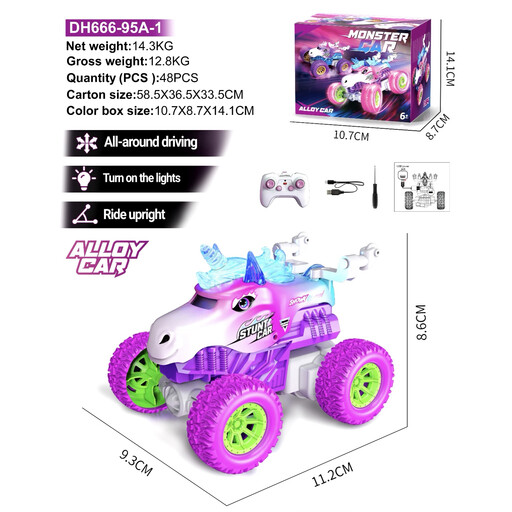
Why this fits the profile: This compact RC model offers basic steering, two speed settings and a 2.4G remote control. That makes it accessible for someone buying their first RC car.
The product information lists concrete features instead of just a speed claim: forward, reverse, left, right and a slow mode.
LED lighting, 360° spinning stunts, alloy/ABS body and a choice between two speeds.
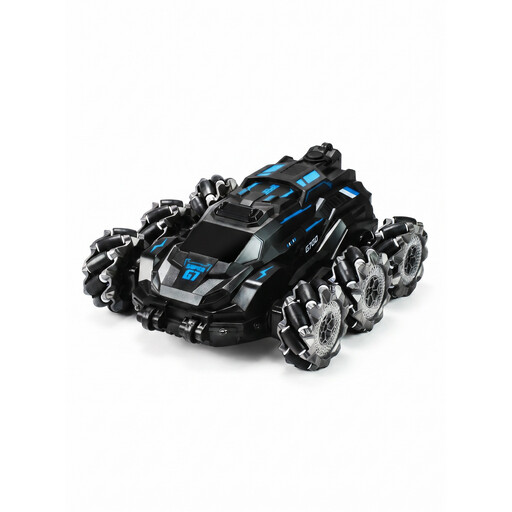
Why this fits the profile: The six-wheel drive, movable swing arms, LED lighting and various driving functions are designed for users who want more than just forward and reverse.
The product description mentions drive, tyres, water tank, remote control and a rechargeable 7.4V battery. So the key usage conditions are clear upfront.
6WD, swing arms, 2.4G control, automatic demonstration mode and a water spray effect as per the product listing.
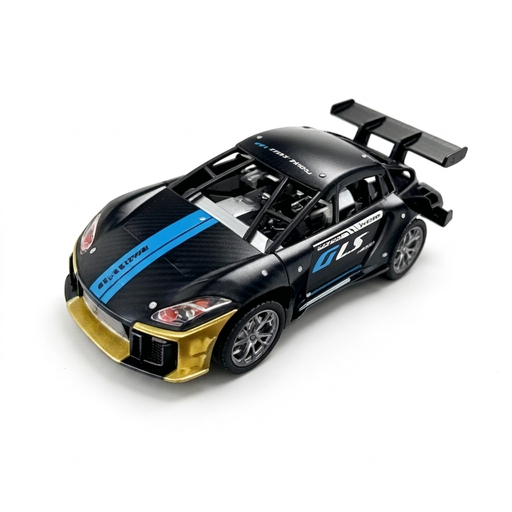
Why this fits the profile: This model is designed for controlled drifting on smooth surfaces, such as wooden floors, tiles and an indoor track.
The product description mentions the suitable smooth surfaces and the included rechargeable battery. This prevents wrong expectations about use on rough outdoor surfaces.
4WD, alloy body, low-friction tyres, lighting and battery included according to the product information.
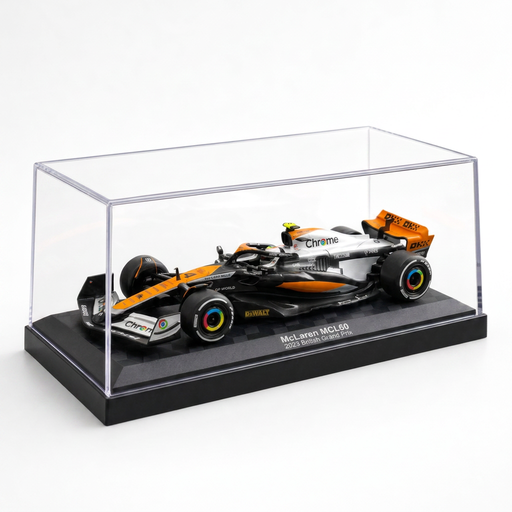
Why this fits the profile: The 1:43 scale, display stand and transparent acrylic cover make this model suitable for a desk, display cabinet or diorama.
The product information specifies scale, material, display stand and protective cover. So it’s clear that this is primarily a collector’s item and not an RC toy car.
Die-cast alloy body, race specification, display base and acrylic dust cover; the listing recommends use from age 14.
We’ve put together a full, up-to-date list of products that fully meet these strict selection criteria and comply with current European safety regulations.
First, check the age recommendation on the product page and see whether small parts are present. A simple toy car or a construction vehicle toy set with rounded edges could be suitable, provided it’s used according to the instructions. RC models with small parts require extra supervision.
The lifespan depends on use, surface, collisions, battery care and storage. Don’t leave a battery completely flat for a long time, keep moving parts free of dirt, and use an RC car on the surface it’s designed for. Also check whether spare parts or a replacement battery are available.
Besides the purchase price, costs can arise for electricity, batteries or an extra battery. A model with a USB rechargeable battery doesn’t need disposable batteries for each play session. Do check the charging time, the stated run time and whether the correct charging cable is included.
