
Vandaag of morgen in huis

Kwaliteit gegarandeerd

Welkomstaanbiedingen ontgrendelen: GRATIS bezorging | Tot 80% korting | Gratis 30 dagen JoyPlus-proefperiode
Download de app
A toy car may seem simple to choose, but the range varies considerably. Are you looking for a toy car for a toddler, an RC car for outdoor use or a LEGO car for an adult fan? Then age, play style and maintenance are more important than eye-catching packaging or a long list of features.
Three common pitfalls come up time and again:
Below, we explain what to look out for and which types of toy car suit different user profiles.
When choosing a toy car for children, the age stated on the product page and packaging is an important starting point. A toy car for children aged 3 and over may contain small parts, loose accessories or components that can come away during energetic play. For children under 3, you should therefore avoid models carrying a choking hazard warning.
Pay attention to these points:
For example, the Dinosaur Pull-Back Car states a recommended age of 2 years and over, but also warns that the product is not suitable for children under 36 months because of small parts. In practice, the strictest warning takes precedence.
The right toy car depends on what the user wants to do with it.
A pull-back car moves forwards automatically after being pulled backwards. This type does not need batteries and is simple to use. It is well suited to short play sessions and imaginative play. A toy car for children does not always need lights, sound or a remote control.
A buildable model car is mainly suitable for children from the stated age onwards and for adult enthusiasts. Consider the number of parts, the estimated building time and the space the model will take up after assembly. For example, the LEGO Technic Nissan Skyline GT-R contains 1,410 parts and measures approximately 41 cm long, 18 cm wide and 12 cm high according to the product information. This makes it more of a building project and display model than a car for free play with young children.
With a remote-controlled car, the drive system, scale, surface and battery information are important. A 4WD model can offer more grip on grass or uneven ground, while a compact drift car may be better suited to smooth floors and controlled turns.
Always check:
Claims about speed, water resistance or driving performance come from the product description. Treat these as stated product specifications and check the manual for the precise conditions of use.
A metal die-cast model car may be suitable as a display model or for careful play, but metal parts do not automatically make a model suitable for young children. Also look at protruding parts, doors, trailers and small accessories.
For everyday use, these are practical points to check:
A toy lorry with several construction vehicles offers plenty of ways to play, but it also requires more storage space. For a small flat, a compact set of pull-back cars may be more practical than a large transport truck.
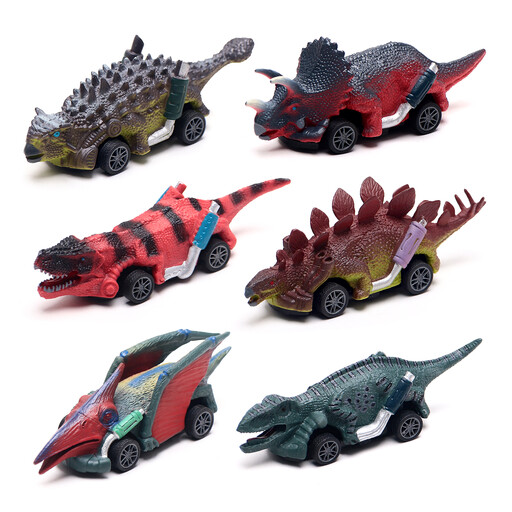
Why it suits this profile: This simple model works without batteries and is suitable for short play sessions on a flat surface. However, check the age warning before buying.
No charger or separate remote control required. The small-parts warning remains important for children under 36 months.
13 cm long; no batteries required; pull-back function.
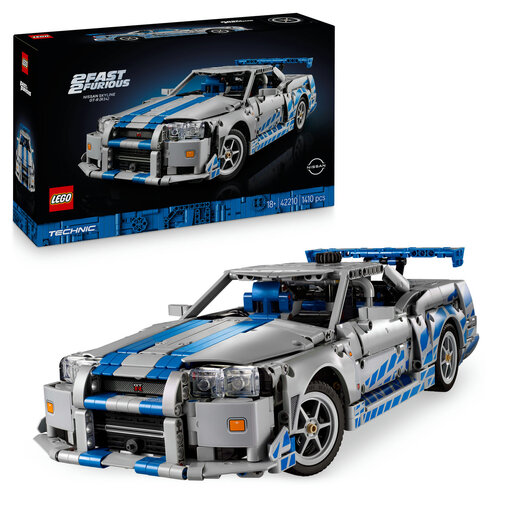
Why it suits this profile: A building set for adults who value mechanical details, a recognisable design and a model that can be displayed once built.
The product information states an age of 18+ and warns about small parts. This makes it clear that this is not a toy car for young children.
1,410 parts; working steering and suspension; adjustable spoiler and drift function according to the product description.
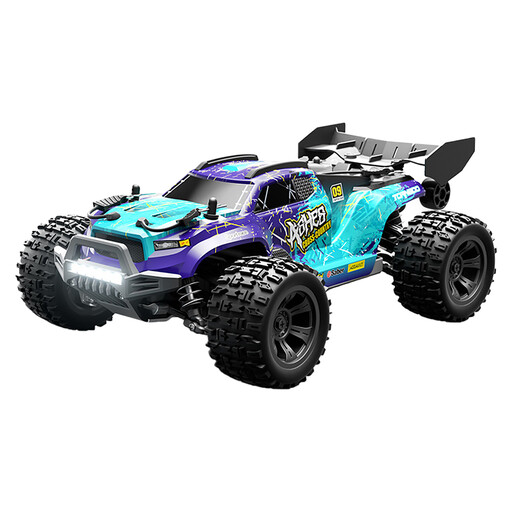
Why it suits this profile: Designed for teenagers and adults who want to drive outdoors on grass, sand or rougher terrain and are prepared to take care of battery maintenance.
The product information lists 4WD, a 7.4V battery and a 2.4GHz transmitter. Before use, check the manual for any terrain and water restrictions.
1:18 scale; 4WD; 7.4V 1500mAh lithium battery included according to the product information.
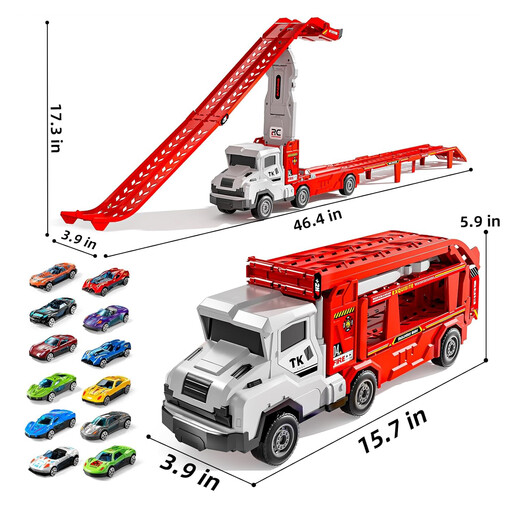
Why it suits this profile: Ideal for children who want to play together with several cars and a race track, without having to buy a separate track.
The transport truck also provides storage space. This keeps the 12 small cars together, although supervision is still required because of the loose parts.
12 die-cast cars; two fold-out race tracks; suitable for children aged 3 and over according to the product description.
We have put together a complete, up-to-date list of products that fully meet these strict selection criteria and the applicable European safety regulations.
Choose a model with a clear age indication of 3 and over, sturdy parts and few loose accessories. A Siku model, simple pull-back car or larger toy lorry may be suitable, provided the warnings on the packaging allow it. Supervise young children and check the toy regularly for damage.
In addition to the purchase price, you may incur costs for batteries, a charging cable, spare parts and possibly an extra battery. An RC car with a battery included reduces the initial cost, but check the charging time and battery type. With intensive use, tyres, axles or bodywork components may wear out more quickly.
Its lifespan depends on the material, how intensively it is played with and the surface used. With careful use, a die-cast model car for collectors will remain primarily a display object. An RC car is subjected to greater strain through collisions and driving on rough surfaces. Store every model in a dry place, remove the batteries if it will not be used for an extended period and follow the manufacturer’s maintenance instructions.
