
Vandaag of morgen in huis

Kwaliteit gegarandeerd

Welkomstaanbiedingen ontgrendelen: GRATIS bezorging | Tot 80% korting | Gratis 30 dagen JoyPlus-proefperiode
Download de app
Buying a new piece of toy can seem straightforward, until you discover that it is not suitable for the child’s age, contains too many small parts or ends up forgotten in a cupboard after a few play sessions. When shopping online in particular, photos and marketing copy do not always provide enough information to make the right choice.
So keep an eye out for three common pitfalls:
Always start with the recommended minimum age. Also check whether the toy contains small parts, magnets, batteries or loose accessories. With baby toys and toddler toys, it is important that parts cannot come loose easily.
A CE mark indicates that the manufacturer declares the product complies with relevant European requirements. Also check the warnings on the product page and packaging. Extra care is needed with toys containing magnets: swallowed magnets can be dangerous. For example, the XINQIYUAN building set states that loose magnets should be checked immediately and recommends adult supervision.
Do not just look at the material; consider how the toy is intended to be used as well. Cardboard puzzles are lightweight and easy to store, but they need to be kept dry. Plastic construction sets are generally easy to wipe clean. With figures and collectibles, it is worth checking whether the product is intended for play or mainly for display.
According to the product information, the baby activity cube is made from ABS plastic with rounded edges. The manufacturer also states that it uses BPA-free material and complies with CE and EN71 standards. These claims come from the manufacturer’s product information, so always check the latest safety details before buying.
A 1,000-piece puzzle requires a different table and more planning than a children’s game with 16 shapes. So check:
This can help prevent disappointment when buying a gift for a child. A large building set may look appealing, but it will not always fit in a small bedroom. A compact set with a storage box is much more practical for travelling or visiting family.

Why it suits this profile: This compact set is designed for children aged 2 to 5 and uses shapes, colours and cards. That makes it an easy-to-follow introduction to educational toys.
The number of parts and the way to play are clearly defined: 16 shapes, four coloured cards and a playing time of around 15 minutes.
Dutch-language game, 16 cardboard shapes, compact size and no batteries required.
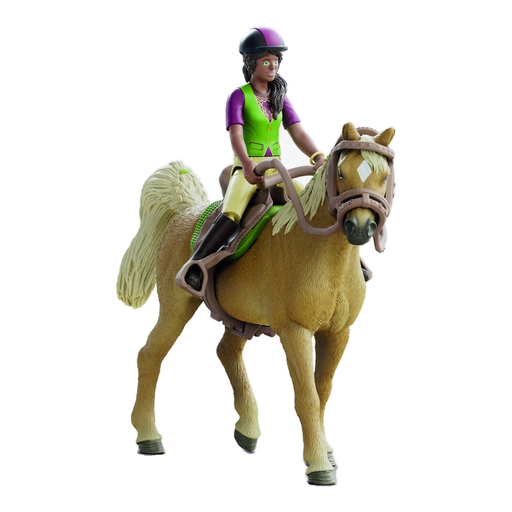
Why it suits this profile: Horse lovers aged 5 and over get a Sarah figure, an Arabian mare, saddle and bridle for imaginative play or display.
This is not an indistinct mix: the set contains four named parts and requires no assembly.
Moveable Sarah figure, removable saddle and bridle, PVC material and an equestrian theme.
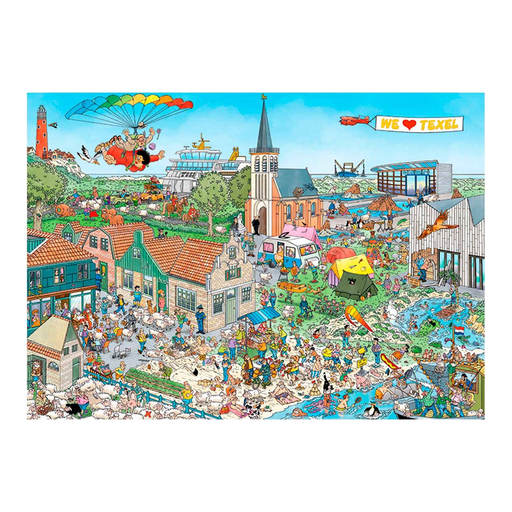
Why it suits this profile: For puzzle lovers aged 12 and over who want a large, detailed jigsaw puzzle for solo or family use.
The product clearly states that it contains 1,000 pieces, is made from cardboard and is recommended for ages 12 and over. This lets you assess the difficulty in advance.
1,000 pieces, approximately 68 by 49 cm and a colourful Texel theme packed with detail.
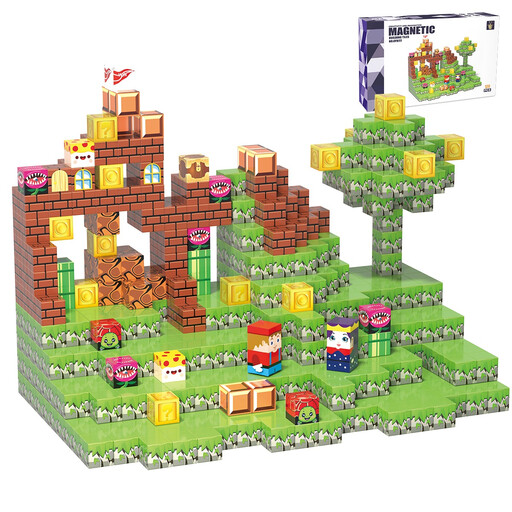
Why it suits this profile: This set is suitable for children aged 3 and over who enjoy building with magnetic blocks and want to create imaginative structures while travelling.
The set states the size of 2.5 cm, 120 pieces, a storage box and a warning about small magnets.
120 mini tiles, nature theme, storage container and an ideas booklet included.
For babies aged 6 to 18 months, simple activities involving sounds, lights or shapes are often more practical than toys with lots of loose parts. According to the product information, the Baby Musical Drum Toy is designed for ages 6 to 36 months, runs on batteries and combines drumming, shape sorting and animal sounds. However, check whether batteries are included; they are not supplied with this product.
For toddlers aged 3 and over, a LEGO DUPLO Bluey 10459 could be an interesting choice if you want to combine building play with imaginative play and a memory game. The set contains 83 pieces and three figures. For older children, a 3D puzzle, model-building set or dinosaur building kit may be more suitable. Pay attention to the minimum age and whether batteries or small accessories are included.
Collectors may want to consider figures and collectibles or a blind box. With a blind box, the contents are selected at random. According to the product information, the POP MART The Monsters Wacky Mart series contains one random figure from a collection of 12 designs. A specific figure therefore cannot be guaranteed. The product also states a recommended age of 15 and over and contains small parts. This makes it more suitable as a collectible than as a toddler toy.
We have put together a complete, up-to-date list of products that fully meet these strict selection criteria and the applicable European safety regulations.
Choose toys without small loose parts, made from sturdy materials and with rounded edges. An activity cube or simple baby toy may be suitable, provided the age recommendation and safety warnings match the child’s development. Supervise children when using toys with batteries, sounds or moving parts.
Lifespan depends on the material, use and storage. Plastic construction sets can be wiped clean easily, while cardboard puzzles need to be stored somewhere dry. Check regularly for cracks, loose parts and damaged magnets. Stop using a toy if a part comes loose or becomes sharp.
Not necessarily. First consider how the toy is played with and whether the level is appropriate. A shape game with 16 pieces may suit a young child, while a 1,000-piece puzzle is more suitable for children aged 12 and over or adults. Above all, choose something that matches the child’s age, interests and available space for play.
