What should you look for when choosing?
First decide whether you want to isolate a detail or capture the whole square. Then compare the relevant end of the zoom range, and consider how comfortable the camera is to carry and the lighting conditions.
| What to consider |
What should you check? |
Who is this important for? |
| Framing distant details |
Compare the optical telephoto focal length in 35mm-equivalent mm; treat digital zoom separately. |
If you want to isolate a detail on a façade across the square from a single spot, the optical telephoto range is the first thing to check. Around 36% of consumers make distant details their top priority. |
| Capturing the whole square |
Compare the lens’s widest setting in 35mm-equivalent mm and assess the composition from where you’ll be standing. |
If you can’t move any further back, you’ll want to know whether the buildings and open space of the square will fit in the frame together. Around 29% of consumers prioritise capturing the whole square. |
| Taking photos in low light |
Compare the sensor size and aperture at the zoom setting you want to use. |
If you regularly take photos in the shade or as daylight fades, the sensor and aperture are important factors to consider alongside the zoom range. Around 21% of consumers prioritise low-light performance. |
| Carrying and handling |
Check the weight and what’s included; also look at the viewfinder, screen and whether you’ll need to change lenses. |
If you’ll be carrying the camera for a long time while visiting the square, its weight and how easy it is to frame a shot will also affect your choice. Around 14% of consumers prioritise ease of carrying. |
Cameras on Joybuy
This selection of products on Joybuy includes pocket cameras, a camera with interchangeable lenses and cameras with zoom for a range of framing needs. For distant subjects, check which type of zoom and range of focal lengths will suit the composition you’re looking for.
 No image available
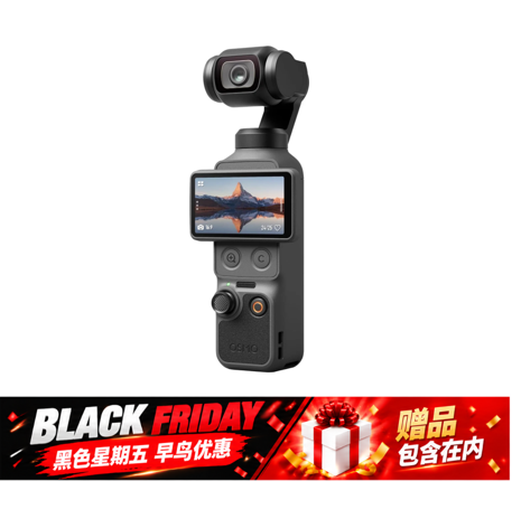
DJI Osmo Pocket 4 Standard Combo
The title mentions 2× lossless zoom; check whether this feature suits the framing you want from the square.
The title lists a 1″ CMOS sensor, 4K/240fps, 3-axis stabilisation and a rotating screen.
Joybuy
 No image available
Komery W6 12× Optical Zoom 4K Digital Camera
The listed 12× optical zoom may be useful for distant subjects; check which range in 35mm-equivalent mm will suit your framing needs.
The product title lists 4K and Wi-Fi.
Joybuy
 No image available
Songdian Digital Camera 8× Optical Zoom, 5K, 64MP, White
The title lists 8× optical zoom; check the corresponding focal length range before deciding whether it’s right for capturing a detail on the other side of the square.
The title also lists 5K, 64MP and a white finish.
Joybuy
 No image available
Sony ZV-E10 + 16–50 mm Zoom, Black
This kit includes a 16–50 mm zoom lens for framing your shot from a single spot; check whether the range suits your preferred composition.
The description lists an APS-C sensor and Sony E mount. You’ll need a compatible Sony E lens for other focal lengths.
Joybuy
 No image available
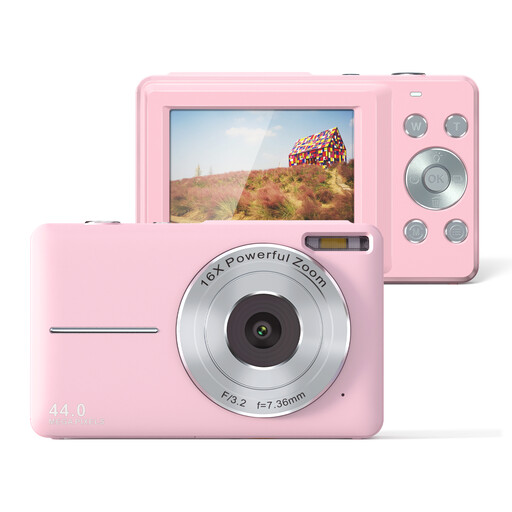
Songdian Pocket Camera 4K, 44MP, 16× Zoom, Pink
The listed 16× zoom is digital, not optical. Bear this in mind if you want to frame a distant detail in the square.
The title lists 4K, 44MP and a pink finish.
Joybuy
Frequently asked questions
Do I need more zoom to photograph the whole square?
No. If you need to fit the whole square in the frame from the same spot, look for a wider angle of view, which means a shorter focal length at the wide end in 35mm-equivalent mm. The Consumers’ Association explains that a shorter focal length gives you a wider angle of view; the optical telephoto end is what matters for a single distant detail.
Can I fit any telephoto lens to a mirrorless camera later?
No. Before buying, check the lens mount and compatibility with the exact camera body. Lenses don’t automatically fit every camera.
How can I minimise dust when changing lenses on location?
Switch off the camera and, if possible, change the lens somewhere with little dust. The Consumers’ Association advises keeping the camera body and lens open for as little time as possible.
What can I do if my camera is faulty, and do I have a cooling-off period when buying online?
If a product is faulty, the Dutch government says the seller must provide a solution; the Netherlands has no set statutory warranty period. For many eligible distance purchases, you have 14 days to change your mind. For a specific purchase, check who the seller is and which terms and conditions apply.
Can I photograph identifiable visitors to the square and publish the photo?
This depends, among other things, on who is taking the photos and what happens to them. According to the Dutch Data Protection Authority, the GDPR exemption for personal or household use applies when images remain private or are shared only with a very limited group. The exemption doesn’t apply to wider publication; organisations that photograph and publish identifiable people need a lawful basis under the GDPR.


