
For sofa-sitters who want to feel the breeze
You mainly want the airflow to reach your seat from the chosen position. The Consumentenbond describes assessing airflow at different distances and speeds.


When comparing tower fans for a large living room, focus on the airflow at the distance you sit from the fan and where the air is directed. A tower fan has a slim design, but according to the Consumentenbond, its height and angle cannot be adjusted. Choose a pedestal fan if you need to change the height or direction. A fan circulates air to help you feel cooler, but it does not replace air conditioning or ventilation that brings in fresh air from outside, as Milieu Centraal explains.
You mainly want the airflow to reach your seat from the chosen position. The Consumentenbond describes assessing airflow at different distances and speeds.
You want to spread the airflow across the sofa without having the breeze constantly aimed at one person. So, look at the oscillation and the angle at which the fan is positioned.
You use the fan while chatting or watching television and want to balance the airflow you need against the noise at your chosen setting.
A good fit when: you have little floor space beside the sofa and the fixed airflow height suits where you sit.
Bear in mind: according to the Consumentenbond, you cannot adjust a tower fan's height or angle.
A good fit when: you want to position the airflow higher, lower or in a different direction.
Bear in mind: according to the Consumentenbond's buying advice, a pedestal fan takes up more space than a tower fan.
Don't just look at the size of your living room. Assess the airflow where you sit and at a setting you find comfortable.
| What to consider | What should you check? | Who is this important for? |
|---|---|---|
| Airflow reaching the sofa | Compare the airflow at different distances and settings. Check that the fixed airflow height and direction suit where you sit. | If I mainly want the airflow to reach one seat, I check that the breeze gets there rather than relying solely on a claim about the whole room. Around 36% of consumers put reach to the sofa first. |
| Noise at a usable setting | Assess the noise and airflow together at the same setting and from the same seating distance. | If I use the fan while chatting or watching television, I want a useful breeze without distracting noise. Around 29% of consumers prioritise quiet operation at a usable setting. |
| Spreading the airflow and finding a spot for the fan | Check whether the oscillation reaches the seats you have in mind and whether the base can stand securely without blocking a walkway. | If several of us sit on the sofa, I want to spread the breeze without blocking the way through. Around 21% of consumers put shared airflow and a suitable position for the fan first. |
| Controls and running time | Check whether the exact model has a remote control or timer. Compare the stated power with the setting you use and the number of hours it runs. | If I want to operate the fan from the sofa or leave it running for a long time, I consider the controls and energy use during operation. Around 14% of consumers prioritise these points. |
How the airflow feels depends in part on the distance, the setting you choose and the fan's position. The Consumentenbond describes assessing airflow at different distances.
Compare or assess the model at the distance you plan to sit and at a setting where the noise is acceptable to you.
According to the Consumentenbond, you cannot adjust a tower fan's height or angle. This means its fixed direction may not suit every layout.
Measure the space available and check where the airflow comes out. If you need to adjust the height or direction, consider a pedestal fan.
The examples below refer to specific models and versions. They are not a verdict on an entire brand or a statement about availability.
The Philips 5000 Series CX5535/11 is a tower fan with a remote control and timer.
The VE-5905 is a tower fan with a rotary dial and three settings.
The Elevate Smart and Elevate Lite show the different versions available in one tower fan range.
The AM07 is a tower fan for which Dyson specifies a remote control and maximum airflow.
This Joybuy selection features pedestal fans as an alternative to a tower fan if you want to be able to adjust the height or direction of the airflow. Before buying, check the product information and applicable CE marking requirements. The product names below don't establish whether a model meets all applicable requirements.
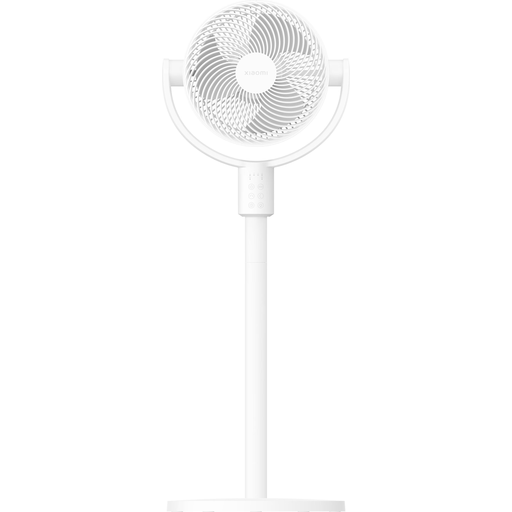 No image available
An alternative if you're looking for a freestanding model and want to be able to adjust the height or direction of the airflow; it isn't a tower fan.
The product name lists app control, 100 speeds, 3D automatic oscillation, two modes and adjustable height.
The stated airflow and distance figures don't, on their own, determine how the breeze will feel where you sit.
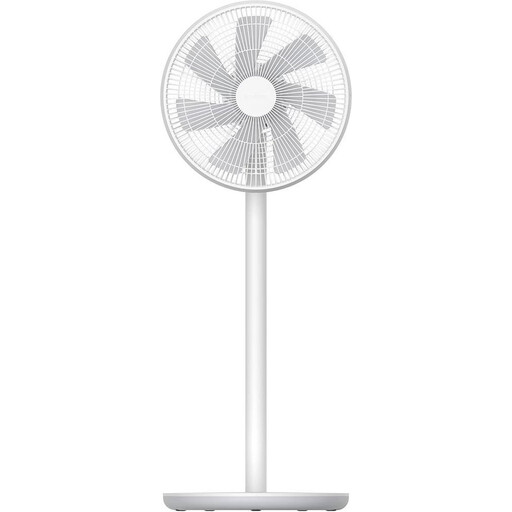 No image available
A suitable alternative if you're looking for a freestanding model with adjustable speeds; bear in mind that it isn't a tower fan.
The product name lists app control, a DC inverter motor and 100 adjustable speeds.
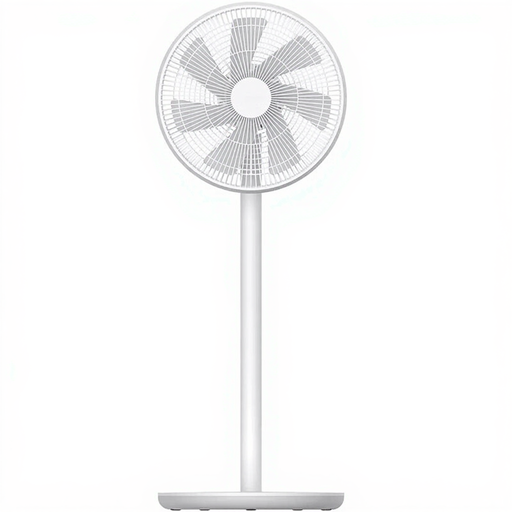 No image available
A freestanding alternative if adjustable height and remote operation are important to you; this model isn't a tower fan.
The product name lists app control, seven blades, 90° oscillation and adjustable height. It also states an airflow range of 12 m; this doesn't determine what you'll feel on the sofa.
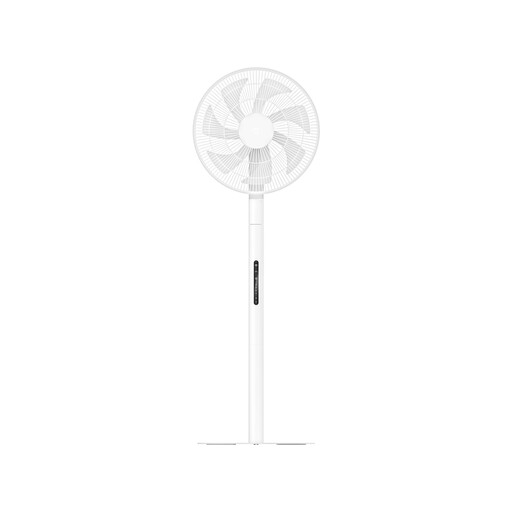 No image available
A suitable freestanding alternative if you want app or remote control; it isn't a tower fan.
The product name lists app, remote and touch controls, a DC inverter motor and Type-C charging support. The stated airflow range of 14 m doesn't prove how the air will feel where you sit.
No. A fan circulates air to help you feel cooler. According to Milieu Centraal, an air conditioner makes your home cooler but uses much more energy. Shading can help keep the heat out.
No. Milieu Centraal describes ventilation as bringing in fresh air and removing stale air. A fan that circulates air around the room doesn't do this by itself.
Place the fan securely, away from walkways, and check where the airflow reaches the sofa. Follow the manual for your chosen model when cleaning it or replacing any parts; a general cleaning method won't necessarily suit every fan.
Electrical equipment covered by the applicable Dutch rules must carry CE marking. For the Low Voltage Directive, the NVWA specifies a nominal AC voltage of 50–1000 V. CE marking doesn't tell you whether the noise or airflow will be comfortable by your sofa.
No, two years isn't automatically the cut-off. ACM ConsuWijzer explains that the legal guarantee applies for as long as the product can be expected to last under normal use. What is appropriate when something goes wrong depends on the circumstances.