
Portion-conscious snackers
You want to keep eating tortilla chips, but know how much energy your portion provides. Check the portion weight and the energy per 100 g; these aren’t the same as the weight of the whole bag.


Start with the portion: the three fully checked plain varieties available in the Netherlands contain 470–481 kcal per 100 g, so they do not meet the conditions for a ‘low calorie’ claim. Switching brands doesn’t automatically make a product low in calories, so weigh your portion and also consider salt, fibre, allergens and any dips as part of your overall diet.
You want to keep eating tortilla chips, but know how much energy your portion provides. Check the portion weight and the energy per 100 g; these aren’t the same as the weight of the whole bag.
You want to know whether switching brands or products really makes a difference. Compare the same quantities and check salt, fibre and any allergens that matter to you as well as energy.
You eat chips with others or with a dip and want to take the whole snacking occasion into account. You can divide a larger pack into portions; vegetables can also be a separate part of your snack.
First weigh out a portion, then compare the energy per 100 g, and finally consider which other label details matter to you.
| What to consider | What to look for | Who is this important for? |
|---|---|---|
| Amount eaten | Weigh your portion and work out its energy using kcal per 100 g × portion weight ÷ 100. | If I want to eat chips without treating the whole bag as one portion, I want to be able to weigh out an amount beforehand. Around 34% of consumers put portion control first when choosing a product. |
| Energy per 100 g | Compare the nutritional information for the exact variety on the same basis; portions of different sizes aren’t directly comparable. | When I’m choosing a brand or variety, I want to know how much energy the same quantity provides. Around 33% of consumers give energy per 100 g the highest priority. |
| Label details | Check fibre and salt per 100 g, and check the ingredients and allergens on the exact pack. | If salt, fibre or a personal dietary requirement influences my choice, I want to be able to compare the label for the specific variety. Around 20% of consumers prioritise these label details. |
| Dividing up the pack | Check the pack weight and storage advice; if it suits the way you use the product, divide a larger pack into portions yourself. | When I’m sharing chips or buying them for several snacking occasions, I want to be able to divide up and store the pack. Around 13% of consumers consider pack size the most important factor in this situation. |
For solid foods, the European Commission sets a maximum of 40 kcal (170 kJ) per 100 g as a condition for using the claim ‘low calorie’. The three fully checked plain varieties contain 470–481 kcal per 100 g. A small portion can provide less energy because you’re eating fewer grams, but it doesn’t make the chips themselves low in calories.
A 25 g portion and a 30 g portion are different amounts. A lower figure may therefore be due to the portion size, not a different recipe.
First compare the nutritional information per 100 g, then work out what your own portion provides.
Counting only the chips won’t give you the full picture of your snack if you’re having them with a dip or toppings.
Calculate the chips and additions separately using their own nutritional information. You could also consider vegetable sticks as a separate part of your snack; the Netherlands Nutrition Centre gives snack vegetables, optionally served with a vegetable dip, as an example of a between-meal snack.
A dip adds a separate component to your snack. Count its quantity and nutritional value separately.
‘Plain’ or ‘blue corn’ doesn’t in itself tell you anything about the energy per 100 g. A small pack doesn’t prove that a product has a low energy content either.
Check the nutritional information for the exact variety. Only use the claim ‘low calorie’ if the relevant conditions are met.
The label information and product details below apply to the varieties named and don’t reflect the brand’s entire range.
Plain tortilla chips, including the 185 g variety that was checked.
Plain corn chips in a 200 g bag; the label gives a portion size of 25 g.
Plain tortilla chips in a 300 g pack, with ten stated portions of 30 g.
The Snack Day range includes sea salt tortilla chips.
SUN SNACKS Blue Corn Tortilla Chips is a separate corn variety.
Mission Foods Europe describes a product range of round and triangular tortilla chips in different pack sizes.
These products are tortilla chips and nacho chips in a range of flavours and pack sizes, from 44 g to 475 g. Check the nutritional information per 100 g on the exact pack; a smaller bag isn’t automatically lower in calories.
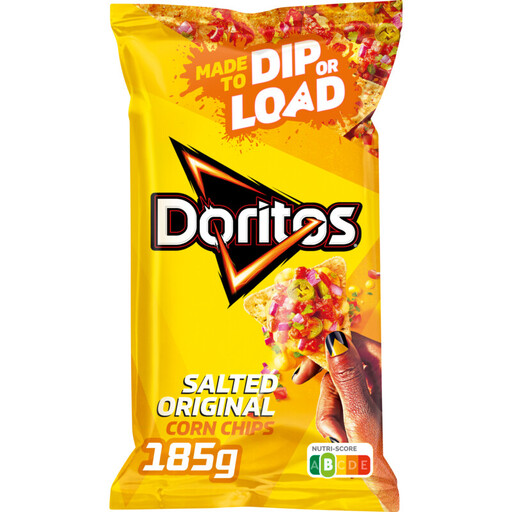 No image available
The 185 g pack gives you an amount to divide up yourself; for comparison, check the energy per 100 g and weigh your portion.
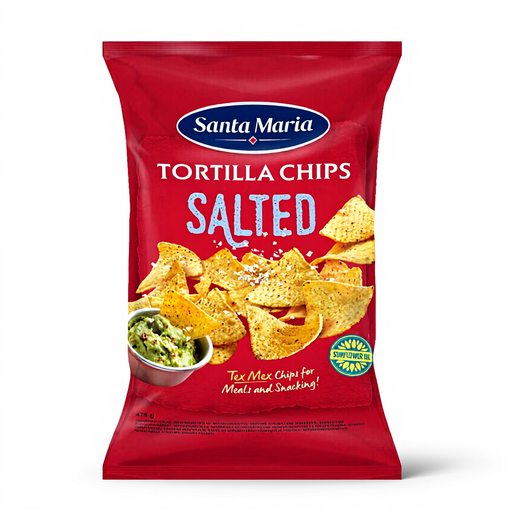 No image available
The 475 g pack lets you decide how to divide up the contents; check the nutritional information per 100 g for this variety and weigh your portion.
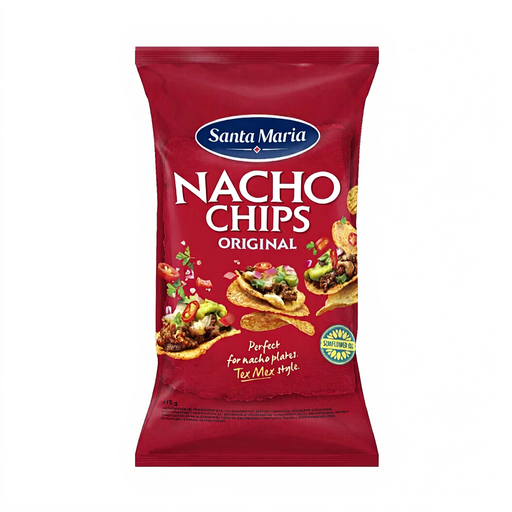 No image available
The 475 g bag is a pack size, not a recommended portion; compare the nutritional information per 100 g on the label and weigh out how much you want to eat.
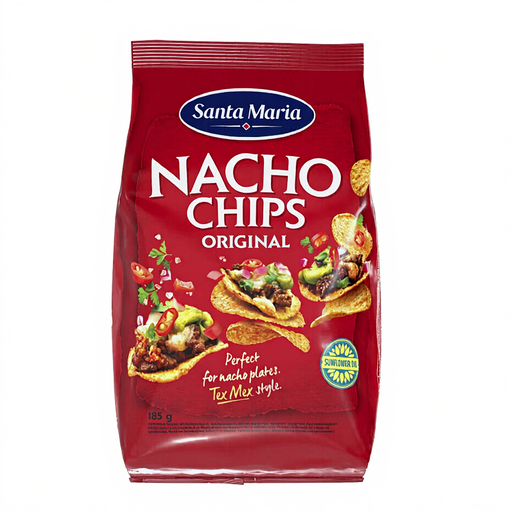 No image available
The 185 g pack can be divided into portions; to compare calories, check the nutritional information per 100 g for this exact variety.
 No image available
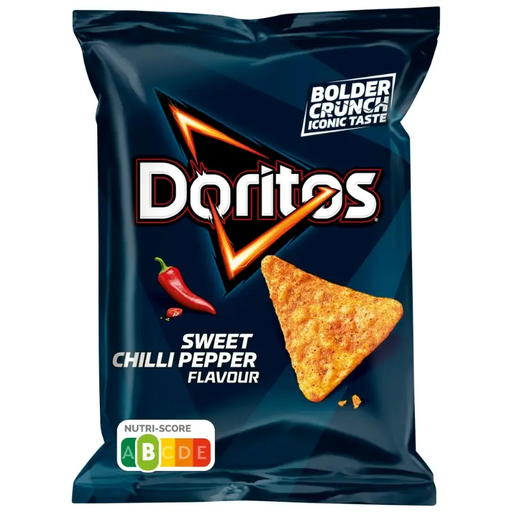
The 44 g pack shows the quantity in the bag; check the energy per 100 g and decide how much you want to eat.
For solid foods, the European Commission sets a maximum of 40 kcal (170 kJ) per 100 g for the ‘low calorie’ claim. EUR-Lex lists Regulation (EC) No 1924/2006 as being in force, with a consolidated version dated 13 December 2014. The three checked plain varieties, at 470–481 kcal per 100 g, don’t meet this condition.
No. A portion is an amount, not a property of the recipe. First compare per 100 g, then work out your own portion: at 470 kcal per 100 g, 25 g provides 117.5 kcal and 30 g provides 141 kcal.
The energy content must be at least 30% lower, and the feature responsible for the reduction must be stated. Eating a smaller portion or comparing two unrelated labels doesn’t in itself show that a product meets the conditions for this claim.
Compare the energy per 100 g for the exact varieties, then work out the figures for the same portion size. Also check salt, fibre and any relevant allergens; a difference in one item on the label doesn’t prove a slimming effect.
No, check the exact pack. The label for the AH plain variety that was checked states that it is gluten-free, while the label for the Doritos variety that was checked states that it may contain wheat (gluten).