
Mindful snackers in student accommodation
When doing your first food shop, you mainly want to keep an eye on the fat content. Compare the nutritional information per 100 g, then decide how much you want to eat at a time.


If you want less fat in the crisps themselves, compare the nutritional information and any claim on the packaging of the exact variety. The plain varieties from Albert Heijn, Doritos and Jumbo examined here list 20 to 22.2 g of fat per 100 g. That is above the 3 g per 100 g limit for a ‘low fat’ claim, as set out by the European Commission. A smaller portion doesn’t change the composition per 100 g, but it does change how much you eat.
When doing your first food shop, you mainly want to keep an eye on the fat content. Compare the nutritional information per 100 g, then decide how much you want to eat at a time.
Choose a pack size that suits how much you expect to use. A larger pack won’t necessarily suit every food cupboard or snack occasion.
You’re buying crisps to share with housemates or serve with a dip. Check the flavour, quantity and allergen information for the exact variety.
When doing your first food shop for student accommodation, the fat content, portion planning, suitable pack size and sharing snacks can all influence your choice.
| What to consider | What to look for | Who this is for |
|---|---|---|
| Less fat in the crisps | Compare fat per 100 g and check that any nutrition claim applies to the same pack. | If your main aim is to limit the fat in the crisps, look at the composition per 100 g, not just the portion size. Around 36% of consumers prioritise reducing fat. |
| Planning your portion | Check the stated portion size and number of portions; compare products using the same quantity. | If you’re snacking on your own, you’ll want to measure out a portion rather than treating the whole bag as one snack. Around 28% of consumers put portion planning first. |
| Choosing the right pack size | Match the net quantity to how much you plan to use and the space you have to store the pack. | When stocking up for the first time, you’ll want to choose a quantity that suits how much you expect to use. Around 18% of consumers prioritise having the right amount in stock. |
| Sharing and dipping | Check the flavour, quantity and allergen information for the exact variety. | If you’re sharing crisps with housemates or serving them with a dip, you’ll want a variety that suits how everyone plans to enjoy them. Around 18% of consumers prioritise sharing snacks. |
The Albert Heijn plain crisps examined here list 20 g of fat per 100 g for the regular variety and 22 g for the organic variety. Both are above the 3 g per 100 g limit for a ‘low fat’ claim, according to the European Commission.
Check the nutrition claim and nutritional information on the exact pack; don’t rely on words such as ‘plain’ or ‘organic’.
Albert Heijn lists a portion size of 25 g, while Jumbo lists 30 g. A smaller portion may contain less fat than a larger one, even though the fat content per 100 g of the crisps stays the same.
Compare the composition per 100 g, then use the portion size separately to decide how much you want to eat.
Voedingscentrum warns that crisps labelled ‘light’ can still be high in calories despite containing less fat. A lower fat content alone doesn’t tell you how much energy a product contains.
Check the energy value on the pack too, and assess it for the exact variety.
The 185 g Dutch Naturel variety is a specific mainstream option for dipping and comparing nutritional values.
The product pages show a 200 g regular plain variety and a 150 g organic plain variety.
The product page describes a 300 g plain pack containing ten 30 g portions.
Lidl Netherlands has product pages for Snack Day tortilla chips, including sea salt and sweet chilli varieties.
The ALDI Netherlands range overview lists SUN SNACKS tortilla chips in a 300 g pack.
Mission Foods Europe describes a European product range of round and triangular tortilla chips for uses including dips and nachos.
This selection includes plain and flavoured varieties for snacking, dipping and sharing; it doesn’t include a confirmed low-fat option. The stated values of 20 to 22 g of fat per 100 g are above the 3 g per 100 g limit for the EU ‘low fat’ claim, as set out by the European Commission.
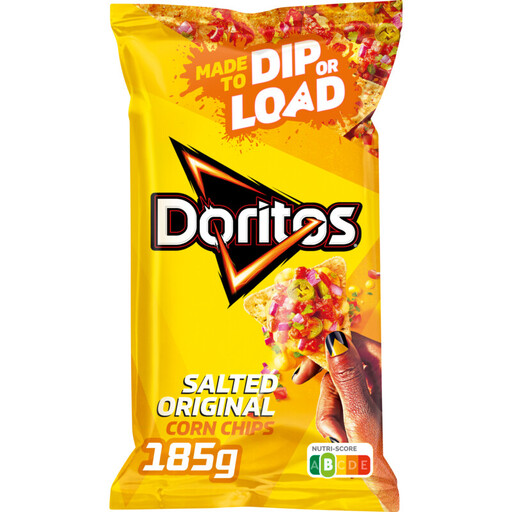 Image unavailable
The product description recommends these plain crisps for enjoying with dips.
Joybuy product information lists 20 g of fat per 100 g.
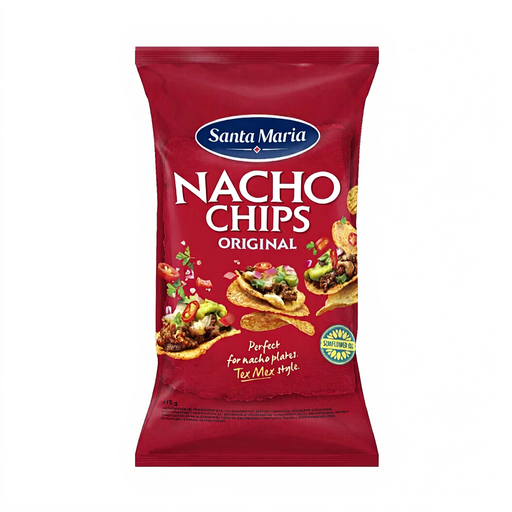 Image unavailable
The product information suggests serving these with dips and salsa, and lists twelve portions, making them a good choice for sharing.
Joybuy product information lists 20 g of fat per 100 g.
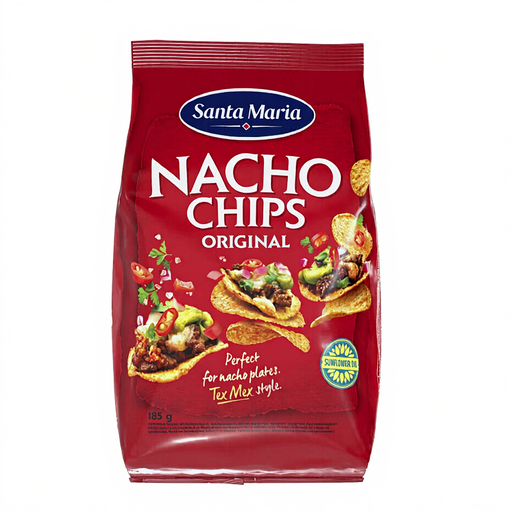 Image unavailable
The product information suggests serving these with dips or salsa, or using them to make oven-baked nachos.
Joybuy product information lists 20 g of fat per 100 g.
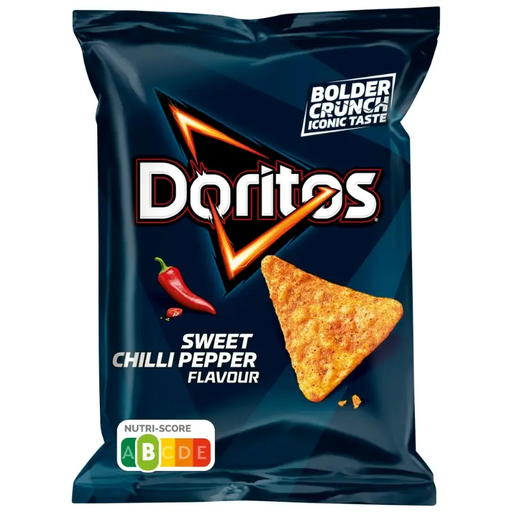 Image unavailable
The 44 g pack is a smaller bag for a snack on the go.
Joybuy product information lists 22 g of fat per 100 g.
No, they don’t mean the same thing. Voedingscentrum explains that crisps labelled ‘light’ contain at least 30% less fat than a comparable product. For a ‘low fat’ claim on solid foods, the European Commission sets a maximum of 3 g of fat per 100 g. The regular plain varieties from Albert Heijn, Doritos and Jumbo examined here are above that limit.
Only if the portions are the same size. Albert Heijn lists a 25 g portion for its plain crisps, while Jumbo lists 30 g. Compare the composition per 100 g, then look separately at what the values mean for the portion you plan to eat.
No. According to PepsiCo Product Checker NL, Doritos Naturel 185 g may contain soya and wheat/gluten; Albert Heijn’s product information says its regular plain variety may contain soya. If you have an allergy, always check the ingredients and warnings on the exact pack. The Netherlands Food and Consumer Product Safety Authority explains that allergens must be clearly listed.
Follow the instructions on the packaging for the variety you’ve chosen. Albert Heijn recommends closing the bag securely after use; Jumbo says to store it in a cool, dry place. Don’t assume a general storage period based only on the product category.
General EU labelling rules include information such as ingredients, allergens, net quantity, best-before date and nutritional values. Special storage or usage instructions must be provided when applicable, according to Your Europe and the European Union.