
Anyone comparing calories and portion sizes
You want to serve tortilla chips with lunch without guessing the amount. The Netherlands Nutrition Centre recommends comparing similar products per 100 g; then decide how much to put in a bowl or lunchbox.


When comparing tortilla chips for a school holiday lunch, start by checking the calories per 100 g, then decide how many grams you want to serve. A lower figure per 100 g doesn’t necessarily mean fewer calories per serving if you have a larger portion. For a child’s lunch, serve chips as a measured extra rather than making them the main part of the meal; the Netherlands Nutrition Centre recommends using foods from the Wheel of Five as the basis for lunch. Also check the rest of the nutritional information, ingredients and allergens before choosing.
You want to serve tortilla chips with lunch without guessing the amount. The Netherlands Nutrition Centre recommends comparing similar products per 100 g; then decide how much to put in a bowl or lunchbox.
You’re looking for something crunchy to add to a school holiday lunch, but don’t want chips to replace the meal. For a child’s lunch, the Netherlands Nutrition Centre recommends using foods from the Wheel of Five as the basis.
You want to know whether a particular flavour and any dip are suitable for you. Check both packs separately; according to the Netherlands Food and Consumer Product Safety Authority, allergen information for pre-packed foods must be shown on the label.
First decide what role the chips will play in the lunch. Then compare similar chips per 100 g and only after that choose how much to serve.
| What to consider | What to check when buying | Who it matters to |
|---|---|---|
| Calories and portion size | Compare the calories per 100 g of similar chips. Then decide how many grams you want to serve. | I want to be able to serve chips without losing track of the amount; the figure per manufacturer’s serving doesn’t tell me enough. For around 45% of consumers, planning calories and portion sizes comes first. |
| Role in the lunch | Choose the other parts of the lunch first, then decide whether chips would work as a measured extra. The Netherlands Nutrition Centre recommends using foods from the Wheel of Five as the basis for a child’s lunch. | When I’m putting together a child’s lunch, I don’t want a bowl of chips to replace the meal. Maintaining that balance is the main concern for around 36% of consumers. |
| Nutritional information and ingredients | As well as calories, check sugars, saturated fat and salt per 100 g. Check the ingredients and allergens in the chips and dip separately. | If I’m choosing a different flavour or dip, I want to know what’s in it before serving, especially if an allergen is involved. Ingredients and allergens are the top priority for around 19% of consumers. |
A flavour name doesn’t tell you the nutritional value. Jumbo lists its Tortilla Naturel 170 g at 481 kcal per 100 g; even with plain chips, the amount you eat matters.
Compare the energy per 100 g on the pack, then decide on your own portion size.
The figure per 100 g makes products easier to compare, but it doesn’t tell you how many calories are in your bowl. Serving sizes on packs can also vary.
Measure out your chosen amount before serving and use the weight of that portion to work out the figures for yourself.
Energy content on its own doesn’t tell you about the rest of the nutritional information. The Netherlands Nutrition Centre also recommends checking sugars, fats and salt when reading labels.
Compare these values within the same type of product and consider which differences matter for your choice.
A dip and a different variety of chips each have their own ingredients. If you have an allergy, checking one pack previously doesn’t mean you can skip checking another product.
Before serving, read the latest allergen information on each pack separately.
A brand name doesn’t tell you which variety has fewer calories. Always compare the exact flavour and pack.
A brand with a range of flavours and pack sizes, as shown by Jumbo.
A supermarket own brand to compare with other tortilla chips in Albert Heijn’s range.
A supermarket own brand with a plain variety whose nutritional information is available.
Lidl lists a Snack Day variety of tortilla chips in Cool Cream flavour.
ALDI lists SUN SNACKS tortilla chips in plain, cheese and sweet chilli flavours.
An international tortilla chip brand; Mission Foods lists products including Rounds and Strips.
These Santa Maria packs are options if you want to serve tortilla chips as a measured extra with lunch. The difference in pack weight doesn’t determine how much you serve each time; choose that amount yourself and check the latest nutritional information on the pack.
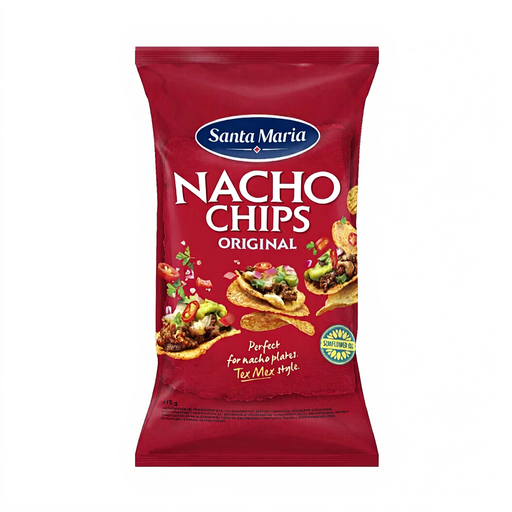 No image available
A pack to serve from when you want to offer chips as a measured extra. It contains 475 g; check the nutritional information and allergens for this variety before choosing your portion.
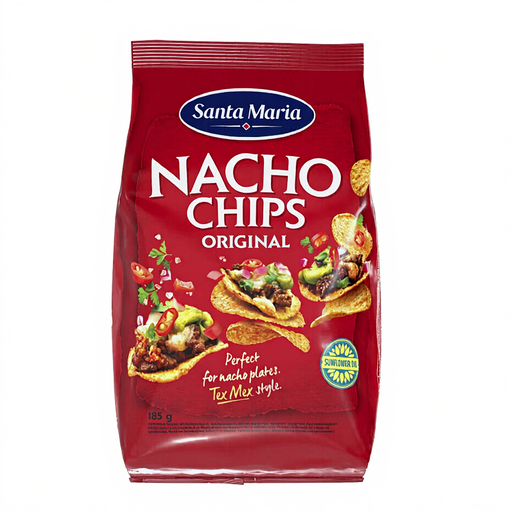 No image available
A different pack size if you want to serve chips as an extra with lunch. It contains 185 g; decide on your portion separately, and check the latest nutritional information and allergen details.
Don’t use tortilla chips as a replacement for the main part of a child’s lunch. The Netherlands Nutrition Centre recommends using foods from the Wheel of Five as the basis; if you add chips, decide on the portion in advance and compare the nutritional information for the variety you’ve chosen.
First compare the calories per 100 g for the same type of product, then decide how many grams of each you want to serve. The Netherlands Nutrition Centre uses the figure per 100 g as a basis for comparison; different serving sizes suggested by manufacturers can give a misleading impression.
Yes. If these values are relevant to your choice, also check sugars, fats, saturated fat and salt per 100 g. As the Netherlands Nutrition Centre points out when comparing labels, one figure doesn’t tell you everything about a product’s nutritional information.
Read the current label on the chips and on each dip separately, even if you’re switching to a different flavour. According to the Netherlands Food and Consumer Product Safety Authority, allergen information for pre-packed foods must be shown on the label.