
Less fat per snack
You want to assess the fat based on how much you actually eat, without mistaking a small portion for a low-fat product. For solid foods, the European Commission sets the maximum for a ‘low fat’ claim at 3 g of fat per 100 g.


First check the ingredients you need to avoid, then assess the fat per 100 g and per weighed portion: a gluten-free or lactose-free label does not make tortilla chips low in fat. Albert Heijn states that AH Tortilla chips naturel is gluten-free and lactose-free, but also contains 20 g of fat per 100 g and may contain soya. So it is only a suitable choice if its ingredients meet your needs.
You want to assess the fat based on how much you actually eat, without mistaking a small portion for a low-fat product. For solid foods, the European Commission sets the maximum for a ‘low fat’ claim at 3 g of fat per 100 g.
You’re looking for a clear statement about the substance you want to avoid, while also checking the fat content. A gluten-free or lactose-free label on its own doesn’t tell you how much fat the chips contain. Albert Heijn states that AH Tortilla chips naturel has both of these attributes.
Check the ingredients and warnings for the specific allergen you need to avoid. ‘Natural’ or another free-from label is no general guarantee that a product is allergen-free; for example, Albert Heijn also states that its natural tortilla chips may contain soya.
First compare the exclusion information that matters to you, then check the nutritional values per 100 g and per equivalent portion. According to the European Commission, solid foods can only be described as ‘low fat’ if they contain no more than 3 g of fat per 100 g. The natural varieties listed by Albert Heijn and Doritos each contain 20 g per 100 g, while Jumbo lists 22.2 g.
| Factor to consider | What should you check? | Who is this important for? |
|---|---|---|
| Fat per snack | First compare the total fat per 100 g, then weigh a portion in grams. A smaller portion doesn’t change the nutritional values per 100 g. | If your main aim is to eat less fat per snack, compare products on the same basis first, then weigh your portion. Around 36% of consumers say limiting fat is their top priority. |
| Avoiding gluten | Check the gluten-free label and the information for the exact variety. Albert Heijn labels AH Tortilla chips naturel as gluten-free; the Association of European Coeliac Societies explains that the limit is a maximum of 20 ppm. | If avoiding gluten is your main priority, first check the label for the variety you’ve chosen, then check its fat content. Around 27% of consumers say avoiding gluten is their top priority. |
| Avoiding another allergen | Read the ingredients and warnings for the allergen you need to avoid. For example, a lactose-free label doesn’t automatically answer whether a product is suitable for someone with a milk allergy. | If you need to avoid soya, milk or another specific allergen, assess the warnings separately from the fat content. Around 27% of consumers say avoiding another specific allergen is their top priority. |
| Packaging and storage | Check how many portions are in the pack and whether the quantity suits your snacking occasions. Jumbo lists ten 30 g portions in a 300 g pack; Voedingscentrum advises storing opened crisps in an airtight container and gives 2–5 days as general storage advice. | If you have small portions, choosing a pack that suits the number of times you’ll eat it can make storage easier. Around 10% of consumers say convenient packaging and storage are their top priority. |
An exclusion label and the amount of fat are two different things. For solid foods, the European Commission sets the maximum for a ‘low fat’ claim at 3 g of fat per 100 g.
Read the exclusion information and the nutrition table separately. Then consider how many grams you actually want to eat.
PepsiCo states that Doritos Naturel Tortilla Nacho Chips 185 g may contain soya and wheat. The flavour name therefore doesn’t confirm what ingredients are used or whether allergens may be present.
Check the current packaging and warnings for the exact flavour and variety you’re buying.
A lower value per portion may simply be because the stated portion is smaller. Jumbo lists nutritional values for its natural tortilla chips both per 100 g and per 30 g portion.
Compare the values per 100 g first, then work out the figures using the same portion size in grams.
A larger pack may need to be stored for longer if you eat small portions. Voedingscentrum advises storing opened crisps in an airtight container and gives 2–5 days as general storage advice for opened crisps.
Choose a bag size that suits the number of times you’ll eat it, and follow the storage instructions on the packaging too.
If you don’t finish the contents in time, some may go to waste. Choosing a pack size that suits how you’ll use it can help avoid this practical drawback.
The natural variety, AH Tortilla chips naturel 200 g, provides specific information so you can assess its exclusion label and nutritional values separately.
Jumbo’s natural tortilla chips have stated nutritional values per 100 g and per portion, making it easier to compare them based on your chosen portion size.
Based on the available product information, the Dutch natural variety can be assessed for its nutritional values and warnings.
Lidl Netherlands lists the Snack Day Tortillachips zeezout product range.
Mission Foods Europe describes tortilla chips in round and triangular shapes, including salted and seasoned varieties.
This selection includes natural or salted tortilla chips and nacho chips for snacking, dips or salsa. Check the fat content and warnings about ingredients or allergens on each pack.
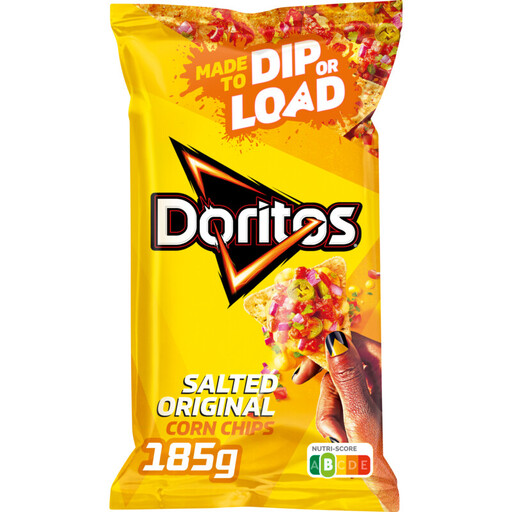 No image available
The product information describes maize chips for dips and nachos; check the ingredients if you need to avoid anything specific.
The product information lists 20 g of fat per 100 g. This is above the European Commission’s maximum of 3 g per 100 g for a ‘low fat’ claim.
May contain cereals containing gluten, soya and wheat.
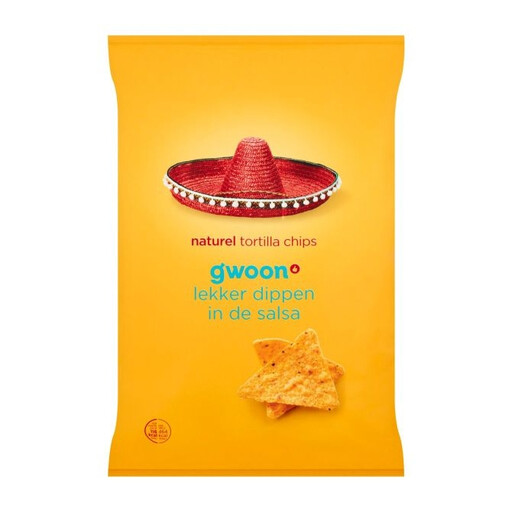 No image available
The product information describes natural maize chips for snacking or serving with a dip; check the warnings if you need to avoid a specific ingredient.
The product information lists 22 g of fat per 100 g. This is above the European Commission’s maximum of 3 g per 100 g for a ‘low fat’ claim.
May contain gluten, soya or milk.
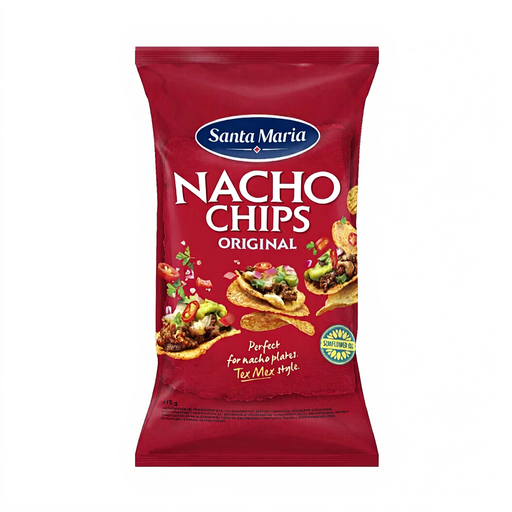 No image available
The product information describes salted maize chips for dips and salsa; check the listed ingredients if you need to avoid anything specific.
The product information lists 20 g of fat per 100 g. This is above the European Commission’s maximum of 3 g per 100 g for a ‘low fat’ claim.
Contains soya.
No. For solid foods, the European Commission sets the maximum for a ‘low fat’ claim at 3 g of fat per 100 g. A smaller portion reduces the amount of fat you eat, but doesn’t change the product’s composition per 100 g.
Yes. According to the NVWA, a product containing a cereal with gluten can be labelled ‘gluten-free’ if it complies with Regulation (EU) 828/2014; the cereal must still be named. So check gluten-free labelling separately from any wheat allergy information. For the gluten-free standard, the Association of European Coeliac Societies explains that the maximum is 20 ppm.
No. The warning indicates a possible risk, not that the bag definitely contains wheat. Since 1 January 2026, Dutch rules for warnings based on cross-contamination risks have applied, according to the NVWA. If wheat matters to you, take the warning into account when making your choice.
Store crisps in a cool, dry, dark place in an airtight container, and follow the product packaging too. For opened crisps, Voedingscentrum gives 2–5 days in a kitchen cupboard as general advice.
Keep crisps that meet your gluten-free needs away from crumbs containing gluten and other products. The Dutch Coeliac Society explains that gluten can get into food that was originally gluten-free through crumbs.