
Label checkers
You want to compare the fat content in the same amount of chips and check what any ‘light’ claim refers to. The Voedingscentrum advises checking whether a ‘light’ claim refers to energy, fat or sugar.


If you want to serve tortilla chips with less fat at a garden party, compare the fat per 100 g on the label and decide how many chips to serve each guest. A small bag doesn’t change the recipe; if you see a ‘light’ claim, check whether it refers to fat, energy or sugar, and look at the calories separately.
You want to compare the fat content in the same amount of chips and check what any ‘light’ claim refers to. The Voedingscentrum advises checking whether a ‘light’ claim refers to energy, fat or sugar.
You want to serve familiar tortilla chips but decide how much each guest gets, using weighed-out bowls or individual portions. A smaller portion doesn’t make the chips themselves lower in fat.
You’re catering for different dietary requirements and want to check the allergen information on the pack you’ve chosen. If you’re serving perishable dips, you’ll also need to check their storage instructions.
First compare the nutritional content per 100 g, then decide how many grams you want to serve. This helps you distinguish between a different recipe and a smaller portion.
| What to consider | What to look for when buying | Who is this most important for? |
|---|---|---|
| Fat content of the chips | Compare the grams of fat per 100 g for the exact variety and check what any ‘light’ claim refers to. | If you want less fat in the same amount, compare the labels per 100 g. Around 36% of consumers prioritise this fat comparison. |
| Amount per guest | Weigh the portion and use the nutritional values per portion for the exact product. | If your main aim is to decide how many chips go in each bowl, portion size is key. Around 29% of consumers prioritise portion control. |
| Flavour and serving | Check the flavour variety and whether the product description mentions serving with dips or using for nachos. | If you’re mainly looking for chips to share with dips, consider the flavour and how they’re served. Around 21% of consumers prioritise flavour and sharing. |
| Dietary requirements and storage | Read the allergen information on the pack and follow the storage instructions for the chips and dips separately. | If guests’ dietary requirements or safe serving are your main concerns, check the labels and storage advice. Around 14% of consumers prioritise these considerations. |
A ‘light’ claim may refer to energy, fat or sugar. The name alone doesn’t tell you which nutritional value has been reduced.
Check what the claim refers to on the pack and compare the fat and energy content for the same amount.
A small pack can help you divide out portions, but it doesn’t change the fat content per 100 g. Sligro lists 29 g of fat per 100 g for Doritos Bits honey barbecue; the multipack contains 30 g bags.
Check the label for the exact variety to see whether it contains less fat, and use the portion weight to work out how much you’re serving.
Dry chips and highly perishable dips don’t necessarily need to be stored in the same way. Jumbo advises keeping its plain chips in a cool, dry place; the Voedingscentrum advises not leaving highly perishable food out of the fridge for more than two hours.
Check the dip’s instructions separately, serve smaller amounts and put the rest back in the fridge promptly.
Plain tortilla chips and Bits honey barbecue are different product options, not evidence of a lower-fat alternative.
AH Plain Tortilla Chips are a supermarket own-brand option to compare with other plain tortilla chips by checking the label.
Jumbo Plain Tortilla Chips come in a 300 g own-brand pack.
Lidl Netherlands lists Tortilla Chips Sweet Paprika as a seasoned option.
ALDI lists SUN SNACKS Tortilla Chips in a 300 g pack.
Mission Foods Europe describes tortilla chips in round and triangular shapes, with a range of flavours and pack sizes.
These are regular tortilla chips and nacho crisps for portioning or serving with dips; they are not confirmed lower-fat varieties.
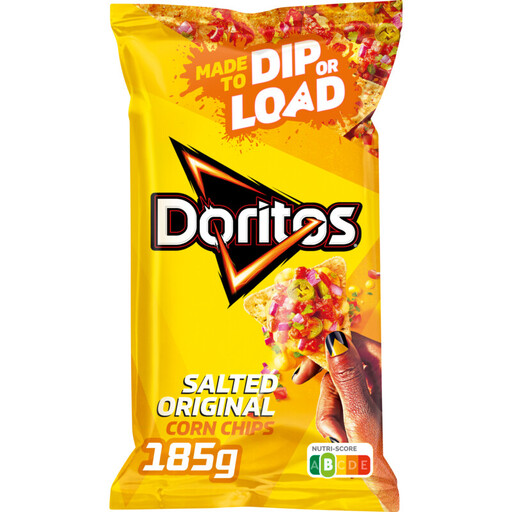 No image available
According to the product description, these plain tortilla chips are designed for dips and nachos, so you can weigh out portions for a garden party.
The product information lists 20 g of fat per 100 g. This is above the Voedingscentrum’s threshold of no more than 3 g per 100 g for a low-fat food.
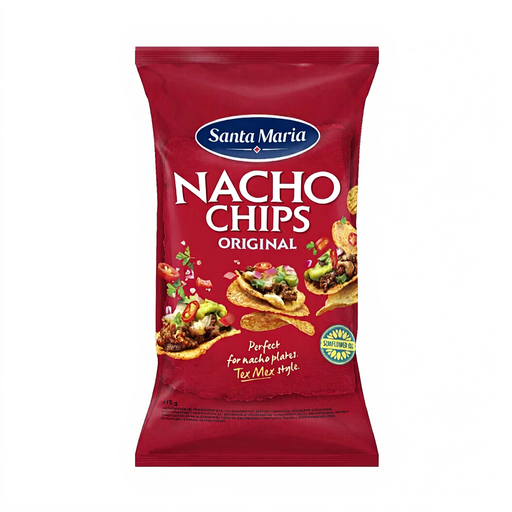 No image available
The larger bag can be divided into weighed portions for guests or served in a sharing bowl.
The product information lists 20 g of fat per 100 g. This is above the Voedingscentrum’s threshold of no more than 3 g per 100 g for a low-fat food.
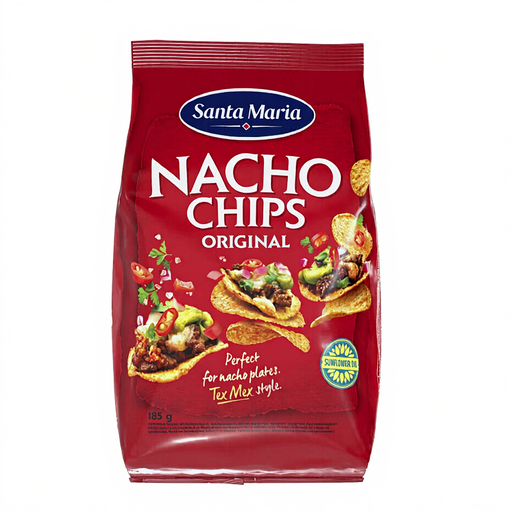 No image available
This pack is an option if you want to share nacho crisps with dips and decide how much to serve.
The product information lists 20 g of fat per 100 g. This is above the Voedingscentrum’s threshold of no more than 3 g per 100 g for a low-fat food.
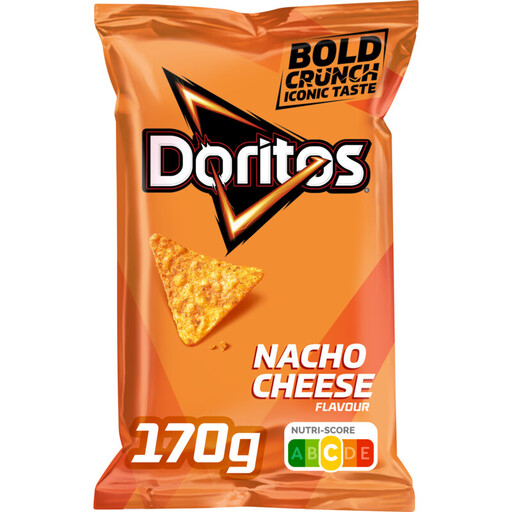 No image available
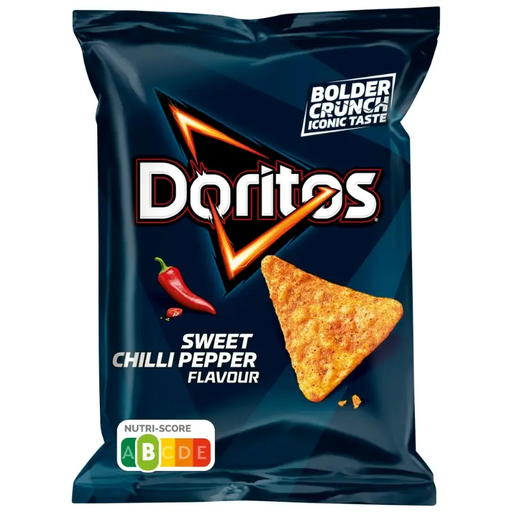
The product description suggests serving them with dips and gives 5–6 portions of around 30 g per pack.
The product information lists 22 g of fat per 100 g. This is above the Voedingscentrum’s threshold of no more than 3 g per 100 g for a low-fat food.
 No image available
The 44 g pack can be offered to each guest individually if you want to portion everything in advance.
The product information lists 22 g of fat per 100 g. This is above the Voedingscentrum’s threshold of no more than 3 g per 100 g for a low-fat food.
Multiply the fat content per 100 g on the pack by the weight of your portion, then divide by 100. Use the nutritional values for the exact variety; the Voedingscentrum’s general value for plain tortilla chips isn’t specific to any brand.
Follow the instructions for each product separately: Jumbo advises storing its plain chips in a cool, dry place. According to the Voedingscentrum, don’t leave highly perishable food out of the fridge for more than two hours, and put dips back in the fridge as directed by their storage instructions.
No. The product information for Doritos Bits honey barbecue says the chips may contain soya and wheat, despite being labelled vegan. If you’re serving someone with an allergy, check the information on the pack you’re serving.
No. A claim on an imported pack doesn’t prove what a claim for the Dutch market refers to. Check which nutritional value is being compared on the exact pack and what it’s being compared with; don’t judge the fat or energy content by the name alone.
The Voedingscentrum defines a low-fat solid food as containing no more than 3 g of fat per 100 g. Compare this threshold with the nutritional value for the exact variety; the general guidance isn’t an assessment of a specific pack.