
Label checkers
You’re looking for tortilla chips with less fat and want to understand the difference between ‘low fat’, ‘light’ and a relative reduction.


If you want to snack on less fat this Father’s Day, start by comparing the fat content per 100 g, then decide how much to serve. A lower fat content is not the same as ‘low fat’ and does not automatically mean proportionally fewer calories; the Netherlands Nutrition Centre points out that you can also compare the energy values on the label. Weighing out a portion limits how many regular crisps you eat, but does not change their nutritional make-up: Albert Heijn lists 20 g of fat per 100 g for both the AH and Doritos Original varieties reviewed.
You’re looking for tortilla chips with less fat and want to understand the difference between ‘low fat’, ‘light’ and a relative reduction.
You want to serve regular tortilla chips, but would rather decide on the amount beforehand than eat straight from a large bag.
You’re choosing snacks for several guests and want to check the information for the exact variety if anyone has dietary restrictions or food allergies.
For a Father’s Day get-together where lighter snacking is a consideration, it helps to look at the product’s nutritional make-up, portion size, flavour and suitability for your guests separately.
| What to consider | What should you check? | Who is this important to? |
|---|---|---|
| Less fat in the product | Compare the fat content per 100 g and read the exact claim and how it compares with similar products. | I want the crisps themselves to contain less fat, so I compare the nutritional values; around 34% of consumers give the product’s nutritional make-up top priority. |
| Amount served | Weigh your portion and use the same quantity when comparing products. | If I’m serving regular crisps, I want to decide on the amount beforehand rather than let the bag size dictate it; around 33% of consumers put portion control first. |
| Flavour and how you’ll serve them | Choose the flavour you want, then check the nutritional values separately. | I’m looking for crisps to go with the dip or toppings on the table; around 20% of consumers give flavour and how the product will be used top priority. |
| Dietary suitability | Read the ingredients list and allergen information for the exact variety. | If a guest has a specific dietary restriction, I want to check the product information for the variety I’ve chosen; around 13% of consumers put suitability for guests first. |
A relative reduction compared with a similar product can still mean the crisps contain more fat than the threshold for a ‘low fat’ claim.
The European Commission sets a maximum of 3 g of fat per 100 g for a ‘low fat’ claim on solid foods. Also compare the nutrition table and the products used as the basis for a relative claim.
Nutritional values per serving are not directly comparable when the stated serving sizes differ. For example, AH uses 25 g as a serving, while Doritos Original uses 30 g.
Compare the values per 100 g first, then convert them to the same quantity.
A flavour or ingredient description does not, by itself, tell you how much fat the product contains.
Check the nutrition table and, if the product claims to contain less fat, how it compares with similar products.
A launch described for the United States does not prove that the same variety is available in the Netherlands or has the same nutritional information.
Check the Dutch product variety and the information on its packaging before comparing it for your purchase.
Doritos positions its Original variety as a tortilla crisp for dips and loaded nachos.
AH Tortilla Chips Original is an own-brand variety with listed nutritional values and a stated serving size.
Jumbo describes its Original Tortilla Chips as salted corn crisps for dipping.
Lidl lists Snack Day Nacho Cheese Tortilla Chips as a product variety.
Mission’s European range page lists a crisps range, including Mission Chips Russia.
These are regular tortilla chips to weigh out or serve with dips. The listed values of 20 or 22 g of fat per 100 g are above the maximum of 3 g per 100 g that the European Commission sets for a ‘low fat’ claim.
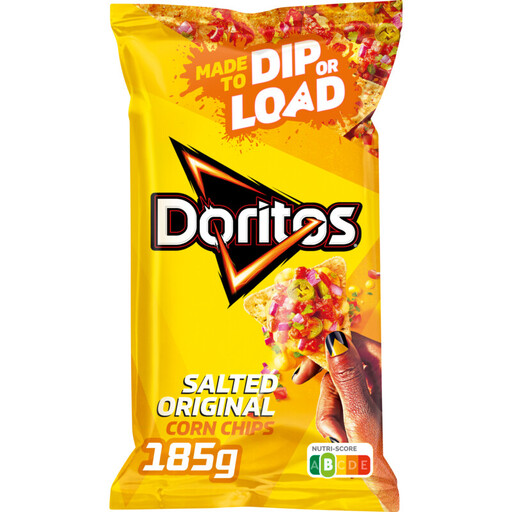 Image unavailable
Joybuy suggests serving them with dips or as loaded nachos; you can divide the contents of the bag into portions in advance.
Joybuy lists 20 g of fat per 100 g. That is above the threshold for a ‘low fat’ claim set by the European Commission.
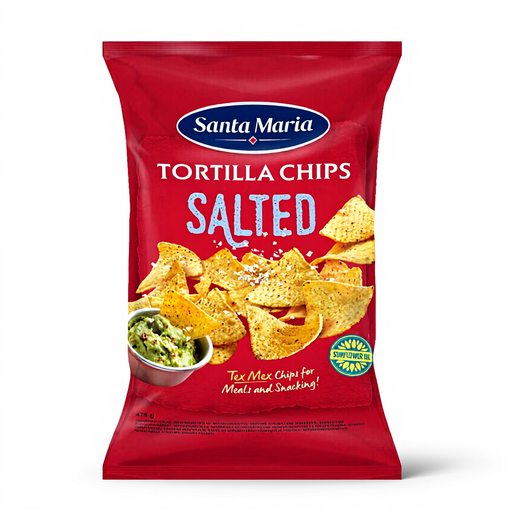 Image unavailable
The product information suggests serving them with dips and salsas; weighing them helps if you want to decide on the portion in advance.
Joybuy lists 20 g of fat per 100 g, above the threshold for a ‘low fat’ claim set by the European Commission.
Image unavailable
Joybuy suggests serving them with dips, salsas and Tex-Mex meals; you can weigh out the contents of the bag before serving.
Joybuy lists 20 g of fat per 100 g. That is above the threshold for a ‘low fat’ claim set by the European Commission.
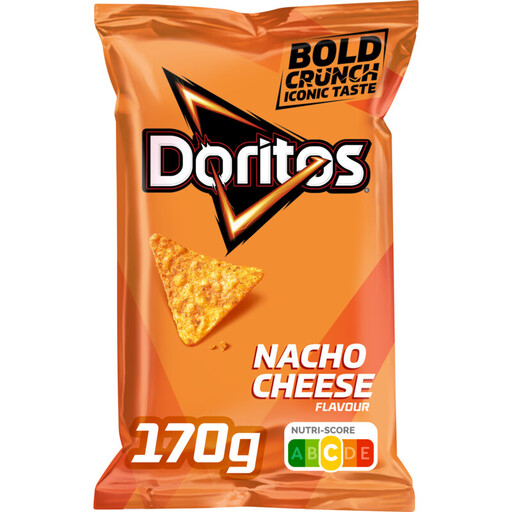 Image unavailable
The product information suggests serving them with dips and sharing them at get-togethers; divide the contents in advance if you want to control portions.
Joybuy lists 22 g of fat per 100 g, above the threshold for a ‘low fat’ claim set by the European Commission.
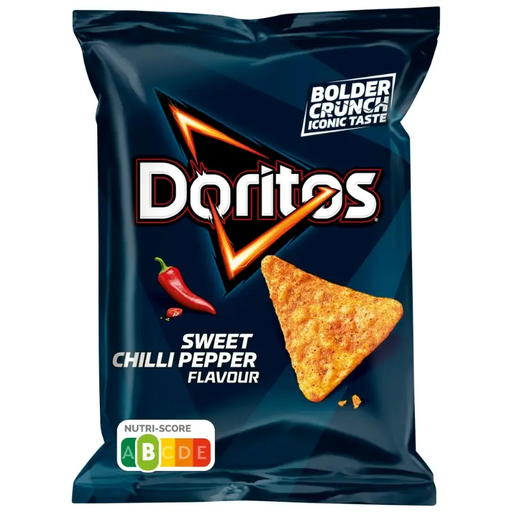 Image unavailable
The product information describes these as a snack for when you’re out and about; the 44 g bag shows the amount in each pack.
Joybuy lists 22 g of fat per 100 g, above the threshold for a ‘low fat’ claim set by the European Commission.
For solid foods, the European Commission sets a maximum of 3 g of fat per 100 g for a ‘low fat’ claim. This is an absolute threshold, which is different from a relative reduction compared with a similar product.
No. A lower fat content does not automatically mean a proportional reduction in calories. The Netherlands Nutrition Centre points out that light crisps may contain relatively more carbohydrates and protein, so compare the energy values on the label too. General examples about potato crisps are not measurements of all tortilla chips.
No. Check the ingredients and allergen information for the exact variety. The Doritos Original variety reviewed states that it may contain soya and wheat containing gluten; the name ‘Original’ does not guarantee that it is suitable.
Decide how much you want to serve beforehand and weigh it out. To calculate the amount using a nutritional value per 100 g, multiply that value by the number of grams in your portion and divide by 100. A serving size on a label is not personalised dietary advice.
Follow the instructions on the packaging. The Doritos Original variety reviewed says to store in a cool, dry place; Albert Heijn recommends sealing the AH pack carefully after use.