
Reduced fat is your main priority
You want a demonstrable reduction in fat and don’t want to confuse this with a plain or organic product characteristic. Voedingscentrum distinguishes between the absolute claim ‘low fat’ and a reduced content.


If you want a demonstrable reduction in fat, choose a tortilla chip only when its reduced-fat content is substantiated against comparable products; a lower fat figure on its own doesn’t prove this. Dutch guidance from Voedingscentrum and the Nederlands Bakkerij Centrum describes a reduced content as a reduction of at least 30% compared with comparable products. If your main aim is to snack less, compare the energy per 100 g too and choose your portion mindfully; check the flavour, salt and allergens separately.
You want a demonstrable reduction in fat and don’t want to confuse this with a plain or organic product characteristic. Voedingscentrum distinguishes between the absolute claim ‘low fat’ and a reduced content.
You want to enjoy tortilla chips now and then and keep an eye on how much you serve yourself. Compare energy as well as fat, and use the figures for the exact variant.
You’re looking for chips that go with your planned flavours and dips, and you take allergens into account if someone eating with you has an allergy or sensitivity.
First decide whether you’re looking for a product with a demonstrably reduced fat content or mainly want to limit your portion. Then check the other nutritional values and information relevant to anyone sharing your snack.
| What to consider | What to look for | Who is this most important for? |
|---|---|---|
| Demonstrable fat reduction | Check the claim, the comparable reference product and the fat per 100 g. ‘Low fat’ is a different claim: for solid foods, it means no more than 3 g of fat per 100 g, according to Voedingscentrum and the European Commission. | I want reduced fat to be the deciding factor in my choice, rather than just an impression created by the packaging. Around 33% of consumers prioritise a demonstrable reduction in fat. |
| Energy and portion size | Compare kcal per 100 g, then work out the values using the same chosen portion in grams. A smaller portion doesn’t change the composition of the chips. | If my main aim is to limit how much I have when I snack, I consider both the portion and the energy. Around 27% of consumers give energy and portion size the highest priority. |
| Flavour and how you’ll serve them | Choose the exact flavour variant and consider whether you’ll eat the chips on their own, with a dip or as nachos. Flavour descriptions aren’t independent taste tests. | For a shared snack bowl, I want the flavour to suit how I plan to serve the chips, without taking that as evidence of a fat claim. Around 20% of consumers put flavour and how they’ll use the snack first. |
| Salt | Compare the salt in g per 100 g for the exact variant; values can differ between flavours. | If salt matters more to me than flavour or packaging, I check the figure separately. Around 13% of consumers put salt at the top of their list. |
| Allergens | Read the ingredients, allergen information and warnings on the current packaging. Check dips and toppings separately. | If I need to take account of a food allergy, whether mine or someone else’s, I check every product carefully. Around 7% of consumers name allergen suitability as their main consideration. |
A flavour or product characteristic doesn’t prove a reduction in fat. Albert Heijn lists 20 g of fat per 100 g for AH Tortilla chips naturel and 22 g for AH Biologisch Tortilla chips naturel; that difference applies to these variants.
Assess the exact fat claim and nutritional values separately from the flavour or organic production, and compare per 100 g.
Albert Heijn uses a 25 g label portion for its plain chips, while Doritos Naturel’s product page gives a 30 g portion. This can create a difference per portion even when the comparison per 100 g is unchanged.
Compare per 100 g first, then calculate the values for the same amount for both variants.
Less fat doesn’t automatically mean proportionally less energy. The Voedingscentrum guidance cited on light crisps is about potato crisps and isn’t a nutritional comparison for these tortilla chips.
Check the energy per 100 g as well as the fat, and decide in advance how much you want to serve; don’t apply a reduction figure from another product.
The examples below provide information about specific variants and product descriptions; they aren’t an assessment of the brand’s full range.
The Naturel variant reviewed is a versatile choice for dips and nachos; Albert Heijn lists it in a 170 g pack.
The regular and organic plain chips offer two variants whose ingredients and nutritional values can be compared separately.
Jumbo Tortilla Naturel 170 g is a plain variant whose product page lists nutritional values per 100 g.
The Dutch product page identifies Snack Day Tortillachips zeezout as a sea salt variant.
Mission Foods Europe describes tortilla chips in round and triangular shapes, for snacks, dips and nachos.
The products below are regular tortilla chips for anyone looking for a plain variant to serve with dips, make into nachos or enjoy in a measured portion. Check product information separately for any reduced-fat claim.
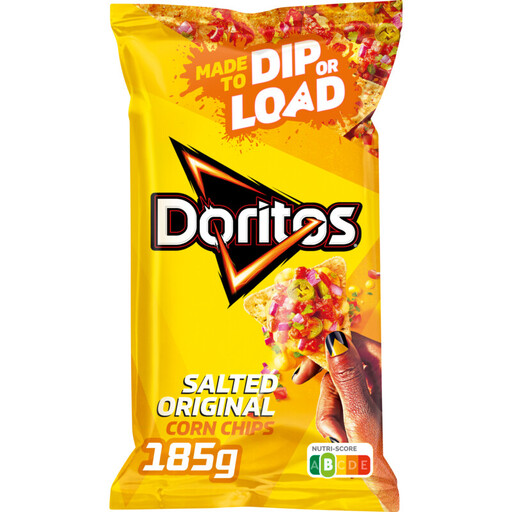 No image available
A good fit if you’re looking for plain tortilla chips to serve with dips or make into nachos.
The product information notes that it may contain cereals containing gluten, soya and wheat; check the packaging if this is relevant to someone eating with you.
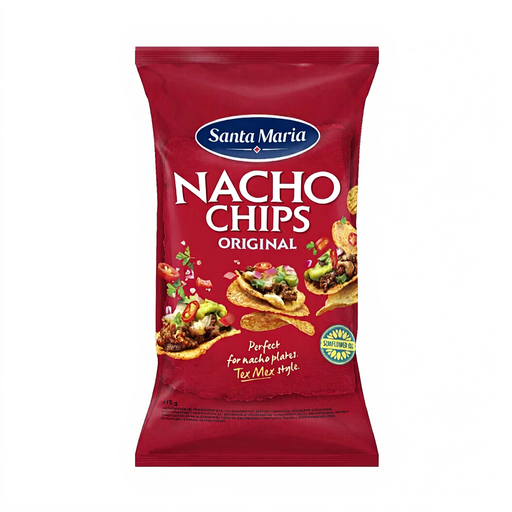 No image available
An option if you’re looking for Original nacho chips to serve with dips or share around.
The product information lists soya as an allergen; check the current packaging if this matters to someone eating with you.
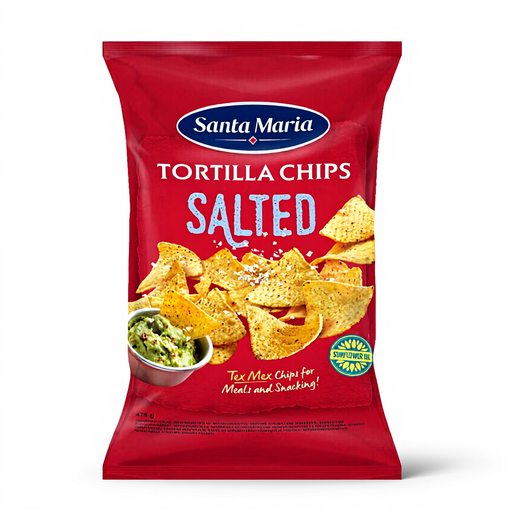 No image available
A good fit if you’re looking for salted tortilla chips to serve with dips or salsa.
The product information lists soya as an allergen; check the current packaging if this matters to someone eating with you.
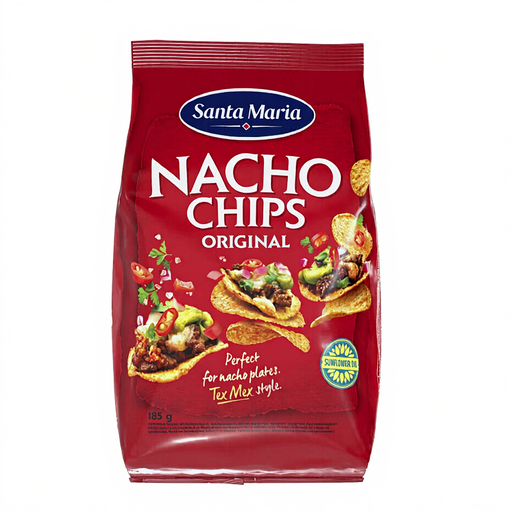 No image available
The product description suggests serving them as oven-baked nachos or with dips.
The product information lists soya as an allergen; check the current packaging if this matters to someone eating with you.
No. Voedingscentrum and the European Commission define ‘low fat’ for solid foods as no more than 3 g of fat per 100 g. The Nederlands Bakkerij Centrum describes a reduced content as a reduction of at least 30% compared with comparable products. So a lower fat figure alone doesn’t automatically make a product low fat or reduced fat.
Start with the values per 100 g, then calculate the figures for the same portion for both products. Albert Heijn lists 20 g of fat and 470 kcal per 100 g for AH Tortilla chips naturel; for a 25 g portion used for calculation, that works out to 5 g of fat and 117,5 kcal. This is a calculation, not a universal recommended portion.
Check the ingredients and allergen information for the exact variant, then read the current packaging when it arrives. The Doritos Naturel product page notes that it may contain soya and wheat (gluten); the AH Tortilla chips naturel page notes that it may contain soya. Check dips and toppings separately too.
Follow the storage advice on the packaging for the variant you’ve chosen. Albert Heijn advises resealing the packaging of AH Tortilla chips naturel after use; the product information for Doritos Naturel says to store in a cool, dry place.
The Netherlands Food and Consumer Product Safety Authority oversees nutrition and health claims and provides a way to report concerns about claims on products, social media and online shops. Keep a copy of the product description and the exact claim your report relates to.