What should you look for when choosing?
First decide which ingredient you need to avoid. Only then do flavour and pack size become useful points of comparison.
| What to consider |
What to look for |
Who is this relevant to? |
| Gluten information |
Check the claim on the exact pack. According to the European Commission, the gluten-free claim allows a maximum of 20 mg/kg of gluten. |
If I need to avoid gluten because of coeliac disease, I want to check the information for this exact flavour and pack. Around 34% of consumers make gluten information their top shopping priority. |
| Specific allergen |
Read the ingredients and warnings for the allergen you need to avoid, including when choosing a different flavour or a replacement product. |
If I need to avoid a specific allergen, I also want to check for warnings about possible cross-contamination. Around 33% of consumers prioritise avoiding a specific allergen. |
| Lactose or milk protein |
Look for information that suits your lactose restriction, and assess this separately from a milk allergy. |
If I’m lactose intolerant, I look for lactose information, rather than automatically checking for the same things as someone with a milk allergy. This is the main shopping concern for around 20% of consumers. |
| Size and use |
Compare the pack size with what you need, and check any dip separately for ingredients and warnings. |
For a quick top-up shop, I want to pick up a suitable amount and check any dip separately. Around 13% of consumers prioritise pack size and practicality. |
Brands to consider
Compare the exact product variety for each brand. A brand or flavour name alone does not confirm that a product is free from particular ingredients or that it is available.
Doritos
The Dutch Naturel variety may be worth considering as a base for dips or nachos. Doritos itself suggests these uses; this is not an independent assessment of the texture.
- Albert Heijn says Doritos Naturel 170 g may contain soya and wheat containing gluten.
- A plain flavour does not confirm that a product is suitable for a gluten-free or allergen-free diet.
Albert Heijn
The AH own-brand listing for plain tortilla chips is relevant if you want to look at own-brand options.
- Albert Heijn advises customers to read the pack before eating the product.
- An online product listing does not provide lasting confirmation of the ingredients or suitability of the pack you buy.
Jumbo
Jumbo describes its Naturel 300 g as salted maize chips for dipping.
- The Jumbo product description suggests using them as a base for dips and advises storing them in a cool, dry place.
- That description alone does not confirm that the product is gluten-free or free from other ingredients.
Lidl
Lidl Netherlands lists tortilla chips with a sweet paprika flavour as a variety to check separately.
- The product listing makes the flavour variety easy to identify.
- The flavour name does not tell you whether the chips are suitable if you need to avoid gluten, milk or soya.
ALDI
The Dutch listing for SUN SNACKS is for blue maize tortilla chips.
- The type of maize listed sets this product variety apart.
- The colour or name of the maize does not confirm that the product is allergen-free.
Mission
Mission Foods Europe describes tortilla chips in round and triangular shapes and lists a range of flavours.
- The European product information suggests serving them as snacks, with dips and in nachos.
- This information does not confirm that every flavour listed is available in the Netherlands or has the same ingredients and free-from status.
Tortilla chips at Joybuy
This selection includes two Santa Maria varieties described as gluten-free, as well as plain and seasoned Doritos. Also check for soya and other warnings on the exact pack: a gluten-free claim does not automatically cover other allergens.
 No image available
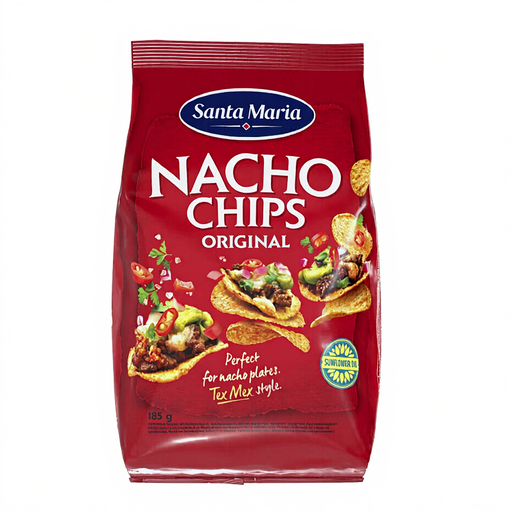
Santa Maria Original Nacho Chips, 185 g
The product description calls the chips gluten-free and lists soya as an allergen. If you need to avoid either, check both details on the pack.
Round maize chips for nachos and dips.
Joybuy
 No image available
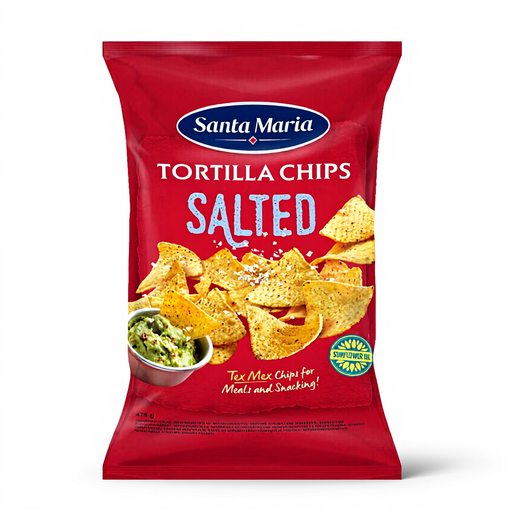
Santa Maria Tortilla Chips Salted, 475 g
The product description calls the chips gluten-free and lists soya as an allergen. Check this information on the exact pack to make sure it suits your dietary needs.
Salted maize chips in a 475 g pack; the product description suggests serving them as a snack or with dips.
Joybuy
 No image available
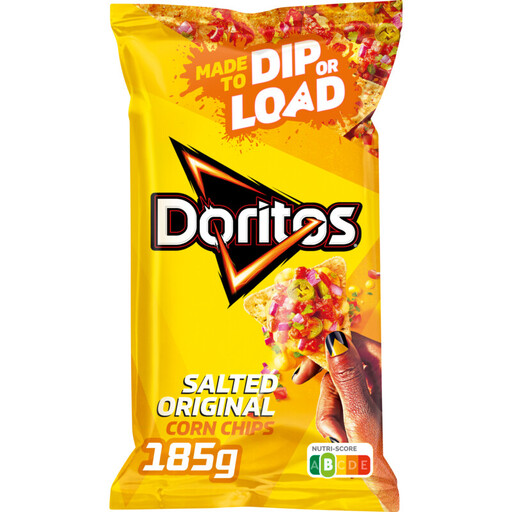
Doritos Dippers Naturel, 185 g
The product description calls these salted maize chips for dips and nachos. The product information warns that they may contain cereals containing gluten, soya and wheat.
The description states that they contain 83% maize.
Joybuy
 No image available
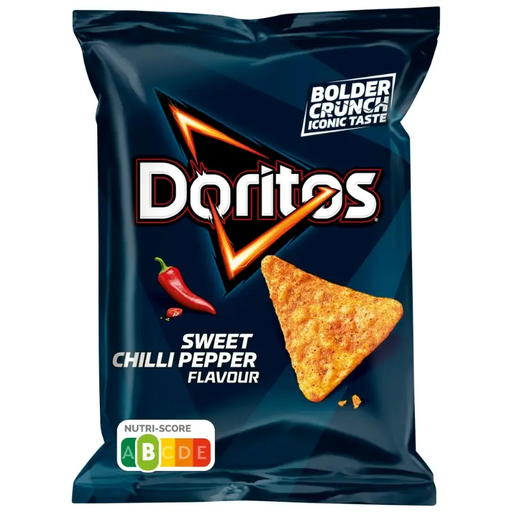
Doritos Sweet Chili Pepper Tortilla Chips, 44 g
The product information lists gluten and soya. If you need to avoid either, check the warnings on the exact pack.
The product title gives a pack size of 44 g, and the product information lists the flavour as Sweet Chili Pepper.
Joybuy
Frequently asked questions
What does ‘gluten-free’ mean on a bag of tortilla chips?
The EU gluten-free claim allows a maximum of 20 mg/kg of gluten. The European Commission sets out this limit under Regulation (EU) No 828/2014. The claim does not mean that the product is also free from milk, soya or other allergens.
Can I use lactose-free as a criterion if I have a milk allergy?
No. Lactose-free does not automatically mean milk-protein-free. Lactose is milk sugar, while a milk allergy is an allergy to milk protein; HagaZiekenhuis explains that lactose-free products may still contain milk protein.
Should I check the pack again if I buy the same chips regularly?
Yes, check the pack for the exact flavour each time. Albert Heijn advises customers to read the pack before eating the product. Check again if you switch to a different flavour or pack size, too.
Are the Dutch rules on warnings about possible cross-contamination already in force?
From 1 January 2026, the NVWA will oversee the new rules for allergen information on prepacked products. According to the NVWA, the production date is the key factor; older stock may still be sold after that date as long as the food is safe.
Should I check a dip separately as well?
Yes, assess a dip as a separate product. Check its ingredients and warnings in the same way as you do for the chips, because the information for the chips does not tell you what is in the dip.


