What should you look for when choosing?
First, check whether the exact variant is suitable for a gluten-free diet. Then compare the energy content for the same weight or decide how many grams you want to eat.
| What to consider |
What should you check? |
Who is this important for? |
| Suitability for coeliac disease |
Check the current ingredients and allergen information on the exact pack, including any warnings about cross-contamination. |
If I’m buying crisps for someone with coeliac disease, gluten-free suitability has to come first. Around 42% of consumers make this their top priority. |
| Energy content for the same weight |
Compare the kcal per 100 g of suitable variants; don’t compare different portion sizes as if they were the same amount. |
If I want to eat roughly the same amount, I want to know which suitable variant has less energy for the same weight. Around 33% of consumers prioritise this comparison. |
| Energy content of your portion |
Weigh your portion in grams and calculate the energy using the label value: kcal per 100 g × portion weight / 100. The Netherlands Nutrition Centre gives 63 kcal per 13 g as a general reference for various tortilla chips. |
If I mainly want to adjust my snack, I pay attention to how many crisps I actually serve myself. Around 17% of consumers make portion control their main concern. |
| The exact variant in store |
Check the flavour and pack you’re buying. Albert Heijn advises customers to read the packaging, as product and allergen information can change. |
If I want to choose as part of my usual shop, I need information that applies to that exact variant. Around 8% of consumers make it a priority to be able to check this as part of their routine. |
Tortilla chips at Joybuy
These Joybuy products are relevant when comparing tortilla chips and their energy information; the product details don’t confirm that they’re suitable for someone with coeliac disease.
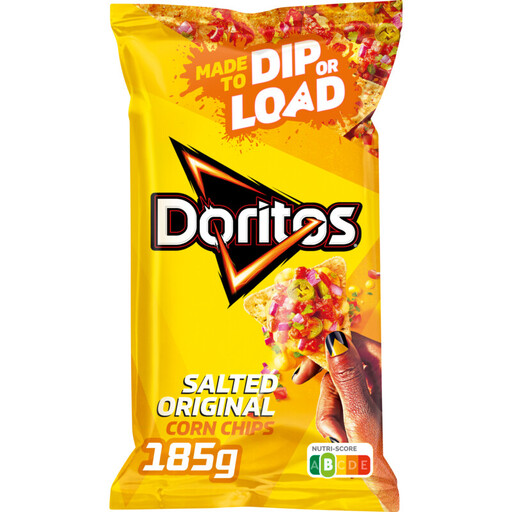 No image available
Doritos Dippers Naturel, 185 g
These tortilla chips are intended for serving with dips or nachos, among other things, but the product information says they may contain cereals containing gluten. It therefore doesn’t confirm that they’re suitable for someone with coeliac disease.
View product
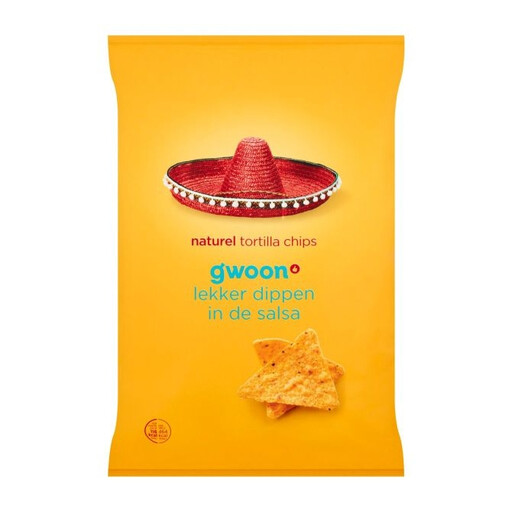 No image available
g'woon Tortilla Chips Natural, 165 g
These tortilla chips are worth considering for a product-by-product comparison, but the product information mentions possible traces of gluten and therefore doesn’t confirm that they’re suitable for someone with coeliac disease.
View product
Frequently asked questions
Does ‘low calorie’ mean fewer calories in my bowl?
No. A nutrition claim about a product’s composition is different from the energy in your portion, which also depends on how much you eat. Keep the product information separate from the portion size.
How do I calculate the energy in my portion of tortilla chips?
Multiply the kcal per 100 g shown on the exact pack by the weight of your portion in grams, then divide by 100. The Netherlands Nutrition Centre’s general reference of 63 kcal per 13 g doesn’t automatically apply to every flavour or variant.
What does a warning about possible cross-contamination mean?
The Dutch Coeliac Society describes such a warning as indicating a possible risk, not as proof that every pack contains gluten. From 1 January 2026, new rules apply in the Netherlands to warnings on labels about possible cross-contamination with allergens. Check the information on the exact pack.
Can I use information about a US Mission variant for a pack sold in the Netherlands?
Only use information for the corresponding product variant and market. Mission’s description of its European product range doesn’t confirm the allergen information or nutritional values of a specific pack sold in the Netherlands.
Where can I get advice about eating gluten-free with coeliac disease?
For support with a gluten-free diet, the Netherlands Nutrition Centre recommends seeing a dietitian who specialises in the area. If you have a question about the ingredients or allergens in a specific pack, check the latest product information and contact the supplier if necessary.


