
Host with gluten-free guests
You’re looking for chips for guests who need to avoid gluten, and want to distinguish between a corn base, a gluten-free label and warnings about possible cross-contamination.


Choose tortilla chips based on your guests’ specific dietary needs, and check the information for the exact product variant. A vegan label does not prove that chips are gluten-free or suitable for someone with a particular allergy. When serving suitable chips, keep them separate from other snacks too.
You’re looking for chips for guests who need to avoid gluten, and want to distinguish between a corn base, a gluten-free label and warnings about possible cross-contamination.
You want to know which allergen a guest needs to avoid, so you can check the information for the specific variety of chips and choose a suitable dip to go with them.
You’re looking for chips with a vegan claim that applies to the specific product, and treating this as a separate consideration from checks for gluten or other allergens.
Start by identifying each guest’s main dietary need. Then check the exact product variant and think about how you can serve the chips separately.
| What to consider | What should you look for? | Who is this important for? |
|---|---|---|
| Gluten-free suitability | Check for a gluten-free label or the Crossed Grain symbol, and read the information on the packaging of the exact product variant. | If you’re looking for chips for guests who need to avoid gluten, product information matters more than a “corn chips” label. Around 28% of consumers have gluten-free suitability as their main priority. |
| Avoiding a specific allergen | Read the ingredients and warnings about the possible presence of the allergen your guest needs to avoid. A lactose-free label does not answer the same question as information about milk proteins. | If a guest needs to avoid, for example, soya, milk or nuts, you’ll want to check the information for that specific allergen. Around 22% of consumers have one specific allergen as their main priority. |
| Vegan option | Look for a claim that applies to the exact flavour and packaging; check dips and toppings separately. | If your guests want to avoid animal-derived ingredients, a vegan claim for the chosen product variant is relevant, but it says nothing about gluten or allergens. Around 17% of consumers have vegan food as their main priority. |
| Serving separately | Use separate bowls and serving utensils, and leave the packaging next to the corresponding bowl. | If you want to protect suitable chips on the buffet from contact with other snacks, a separate bowl makes serving clearer. Around 22% of consumers have serving food separately as their main priority. |
| Quantity and storage | Compare the net weight with how much you expect to use. Seal opened packets of chips well and follow the storage instructions. | If you’re planning the food for a party, you’ll want to buy enough without having more opened packets of chips left over than you can store. Around 11% of consumers have quantity and budget as their main priority. |
Vegan food, lactose intolerance, cow’s milk allergy and gluten-free eating are different needs. A claim that addresses one need does not automatically address the others.
Ask each guest exactly what they need to avoid, then check every variety of chips, dip and topping accordingly.
The Dutch manufacturer states that Doritos Naturel Tortilla Nacho Chips 455 gr may contain soya and wheat. The product name is no substitute for the information on the packaging.
If gluten needs to be avoided, check the label and warnings for the exact product variant.
Crumbs or contact with other products can matter when you need to avoid gluten. In a shared bowl, it’s also less clear which packaging goes with the chips.
Serve suitable chips separately with their own serving utensils, keep the packaging by the bowl and top it up in small amounts if needed.
The Dutch product information distinguishes between specific flavours and pack sizes.
A supermarket own-brand option to assess by product and packaging.
Jumbo Tortilla Chips Naturel 300 g is described as salted corn chips for dipping.
The Dutch product listing includes tortilla chips with a sweet paprika flavour.
The Dutch product listing mentions SUN SNACKS Tortillachips blauwe maïs.
The European product information describes tortilla chips in round and triangular shapes, and in different pack sizes.
These Joybuy products may suit guests looking for vegan or gluten-free tortilla chips. Always check separately for any other allergens.
 No image available
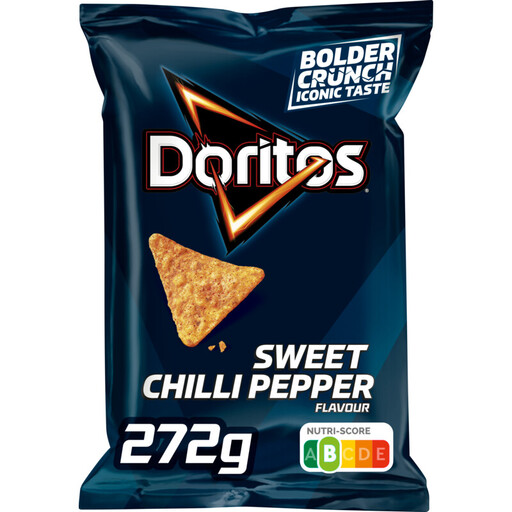
The Dutch manufacturer lists the 272 g Sweet Chilli Pepper variety as suitable for vegans; this claim says nothing about gluten or other allergens.
The product information states that the chips may contain wheat (gluten) and soya.
 No image available
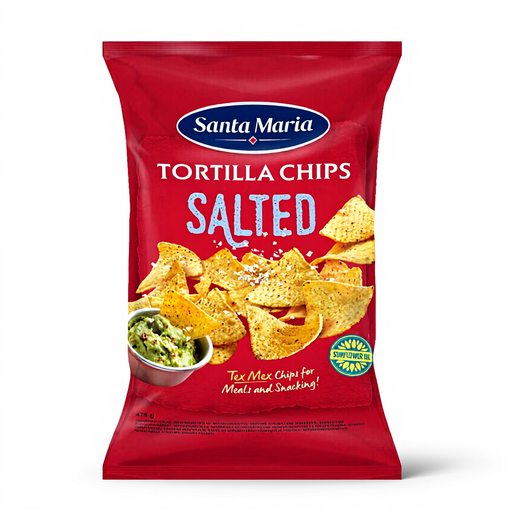
The product description identifies these salted tortilla chips as gluten-free; also check whether this variety meets your guests’ other dietary needs.
The description lists soya and a pack size of 475 g.
 No image available
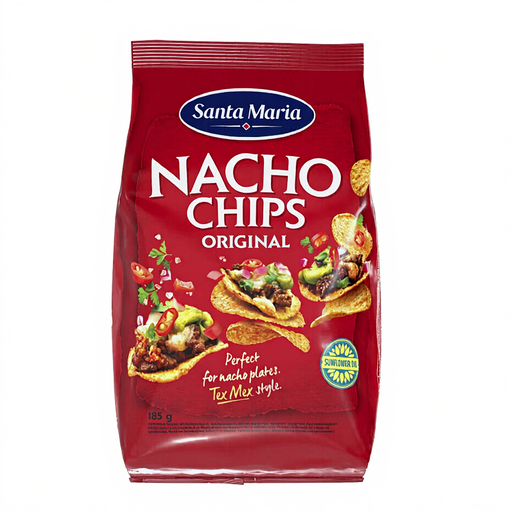
The product description identifies these round nacho tortilla chips as gluten-free and suggests serving them with oven-baked nachos, dips and salsa.
The pack contains 185 g; the description also lists soya.
No. Lactose intolerance concerns milk sugar, while a cow’s milk allergy involves the immune system reacting to milk proteins. So don’t rely on a lactose-free label alone as proof that a product is suitable for someone with a cow’s milk allergy.
If you want to avoid contact with gluten, using a separate bowl and serving utensil is a practical precaution. The Dutch Coeliac Association explains that gluten can get into a product through crumbs. Keep the correct packaging by the bowl too.
The Voedingscentrum’s general advice is to keep opened crisps in the kitchen cupboard for 2–5 days. Store them in a cool, dry, dark place in a well-sealed packet, and follow the label and best-before date for an unopened packet.
The Dutch policy on precautionary allergen labelling came into force on 1 January 2026. It sets out requirements for food businesses and does not automatically impose the same obligations on a private host. The Netherlands Food and Consumer Product Safety Authority oversees businesses’ compliance.
Yes. Commercial sellers must also make allergen information available for unpackaged products. This could be done using signs or verbally, as long as guests are clearly told they can ask for the information. This applies to businesses, not to a general labelling requirement for a private party.