If you want a lighter snack after exercise, compare fat and energy per 100 g as well as in the portion you actually eat; a smaller portion does not change the nutritional make-up of the crisps. After intense exercise, getting enough protein is important, while your need for carbohydrates also depends on the exercise and how soon you train again, according to the Netherlands Nutrition Centre and the Dutch Association of Sports Nutrition Experts. The Dutch plain products used here as a reference are standard tortilla chips, not confirmed lower-fat options.
Who might find this choice relevant?
A lighter snack after training
You fancy something savoury after exercise and are mainly watching fat, energy and portion size. Compare the same quantity of crisps: a smaller portion does not mean a different recipe. Product nutrition information is available from Albert Heijn and Jumbo.
People focused on recovery
You want to know whether a snack suits your needs after intense exercise. Protein, training load and the time until your next session all play a part; a lower-fat claim alone does not answer whether it supports recovery. The Netherlands Nutrition Centre and the Dutch Association of Sports Nutrition Experts discuss these nutritional needs.
Label-conscious snackers
You keep an eye on salt or need to check for a specific allergen. A flavour name, corn as an ingredient or a brand name is no substitute for the ingredients and allergen information on the packaging. The Netherlands Food and Consumer Product Safety Authority provides information about allergens on labels.
What should you look for when choosing?
For shoppers considering tortilla chips from the brands mentioned as a lighter post-exercise snack, each row highlights the deciding purchase priority.
| What to consider |
What to look for when buying |
Who is this most important for? |
| Less fat |
Check the fat per 100 g, any claim and the stated basis for comparison. |
I want to eat genuinely less fat after exercise for the same quantity, not just have a smaller portion. Around 36% of shoppers in this context prioritise a verifiable reduction in fat. |
| Nutrition for recovery |
Check the protein and carbohydrates in your own portion, and take into account what else you eat. |
After an intense workout, I want to know whether what I eat meets my recovery needs. For around 29% of shoppers, recovery nutrition comes first. |
| Portion and energy |
First compare per 100 g, then work it out for the same portion you plan to eat; count dips or toppings separately. |
If I mainly want a measured snack, I look at the energy in the amount I actually eat. This is the deciding priority for around 21% of shoppers. |
| Salt and ingredients |
Check the salt per 100 g and per portion, and read the current allergen information if you have an allergy. |
If salt or an allergen requirement that matters to me determines my choice, I check the exact product on the packaging. Around 14% of shoppers prioritise label suitability. |
Common mistakes
-
Assuming less fat means better recovery food
Fat content and recovery nutrition answer different questions. Getting enough protein is a separate need after intense exercise; a lower-fat claim does not, by itself, tell you whether a snack is suitable.
First consider what you need to eat after training, then decide whether tortilla chips could be part of your snack. The Netherlands Nutrition Centre explains how to get protein from everyday foods.
-
Mistaking a smaller portion for a lower-fat product
A portion weighing fewer grams contains fewer crisps, but it does not change the fat per 100 g. Portion sizes on packs also vary: Albert Heijn lists 25 g for its plain version, while Jumbo lists 30 g.
Compare the values per 100 g, then work them out for the same quantity of crisps you want to eat.
-
Treating a US claim as proof about a Dutch product
A US Doritos listing on Amazon.com describes a lower-fat version, but that does not prove the same version or claim applies to a product sold in the Netherlands.
Check the name, nutrition information and claim on the specific Dutch packaging. Don’t base your choice on a product listing for another market.
Brands as product references
Doritos
The Dutch range includes Original, Nacho Cheese and Sweet Chilli Pepper. The 185 g Original version is a specific example of an unseasoned tortilla chip.
- Albert Heijn lists 20 g of fat, 6.5 g of protein and 0.71 g of salt per 100 g for the Doritos Original version.
- These nutrition figures do not confirm a lower-fat claim or a recovery benefit.
Albert Heijn
The own-brand range includes plain tortilla chips in a 200 g bag. Albert Heijn also lists a serving size of 25 g.
- The product page lists 20 g of fat per 100 g.
- Claims such as gluten-free or lactose-free on this product page do not automatically apply to other Albert Heijn crisps.
Jumbo
Jumbo Original Tortilla Chips are a plain version in a 300 g bag. The product page shows nutrition information per 100 g and per 30 g portion.
- The ingredients list includes corn, sunflower oil and salt.
- This version contains 22.2 g of fat per 100 g, so it is not a confirmed lower-fat or recovery-focused option.
Lidl
The Snack Day range includes Nacho Cheese tortilla chips.
- The product name makes the flavour easy to identify.
- The flavour name is not a nutrition claim and, by itself, says nothing about fat content or recovery.
Aldi
Aldi lists SUN SNACKS Blue Corn Tortilla Chips as a product option.
- The product name distinguishes this version by the type of corn used.
- Blue corn does not prove a lower fat content or a sports nutrition benefit.
Mission
Mission Foods Europe describes Corn Chips as part of its European range.
- The European range page provides context about the crisp range and its product options.
- This information does not confirm a specific lower-fat version or recovery claim in the Netherlands.
Joybuy tortilla chips for a measured snack
The Joybuy options below are standard tortilla chips for a measured savoury snack; the product information shown does not indicate a lower-fat benefit compared with standard reference products.
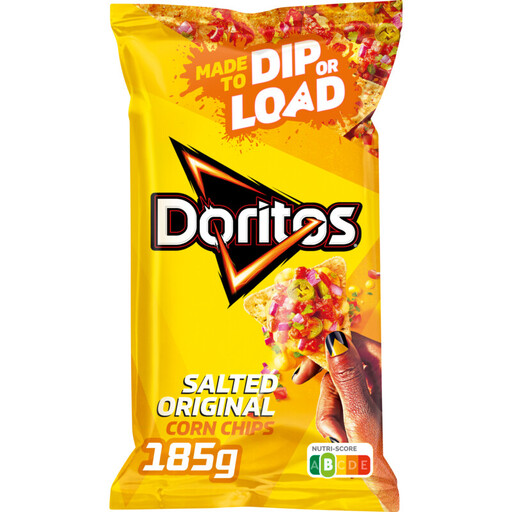 Image unavailable
Doritos Dippers Original, 185 g
A good fit if you want a standard tortilla chip and prefer to measure out your own portion; the stated fat content does not show a lower-fat benefit.
Joybuy product information lists 20 g of fat per 100 g and describes the crisps as suitable for eating with dips or salsa.
Joybuy
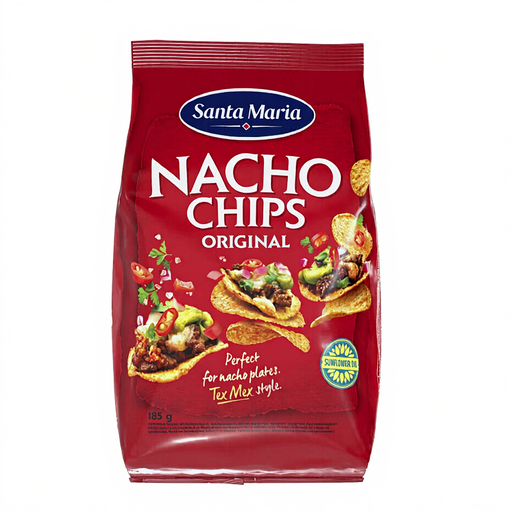 Image unavailable
Santa Maria Original Nacho Chips, 185 g
An option if you’re looking for standard tortilla chips and want to decide how much to eat; the product information does not show a lower-fat benefit.
Joybuy product information lists 20 g of fat per 100 g and names corn flour, sunflower oil and salt as ingredients.
Joybuy
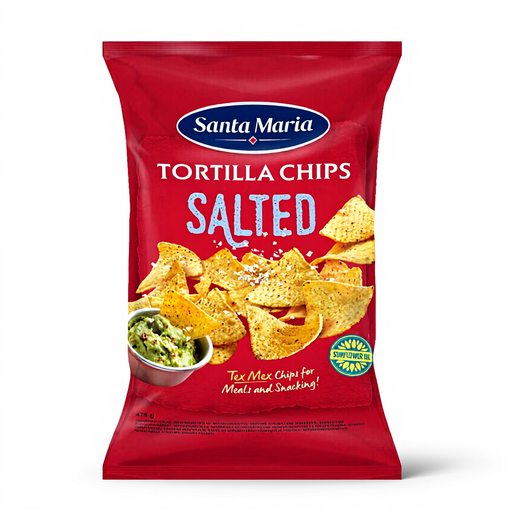 Image unavailable
Santa Maria Salted Tortilla Chips, 475 g
A good fit if you want a savoury tortilla chip and prefer to measure out your own portion; compare the salt content if that matters to your choice.
Joybuy product information lists 20 g of fat and 1.2 g of salt per 100 g. It also gives a serving size of 40 g.
Joybuy
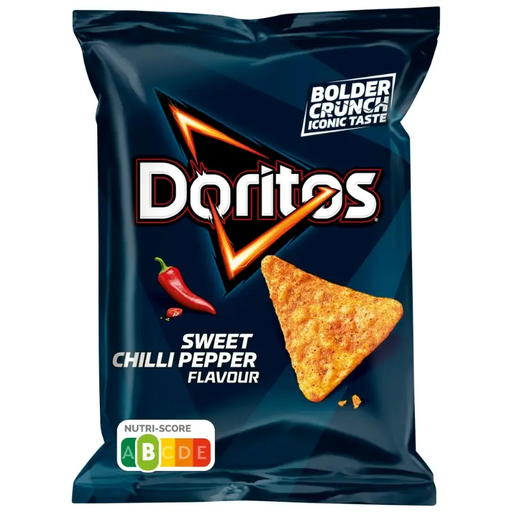 Image unavailable
Doritos Sweet Chilli Pepper Tortilla Chips, 44 g
The 44 g bag may suit you if you’re looking for a pre-portioned amount; the product information does not show a lower-fat benefit.
Joybuy product information lists 22 g of fat and 1.1 g of salt per 100 g.
Joybuy
Frequently asked questions
Does low-fat mean the same as less fat?
No. For the absolute claim ‘low fat’, the European Commission sets a maximum of 3 g of fat per 100 g for solid foods. A comparative claim such as ‘less fat’ uses a different measure; check the specific packaging to see what the comparison is based on.
Do you need to eat a special recovery snack straight after every workout?
No, after light exercise you can generally stick to your usual eating routine. The Dutch Association of Sports Nutrition Experts explains that refuelling quickly becomes more relevant after intense or prolonged exercise, especially if you’re doing another hard session soon.
How much protein is in a 30 g portion?
Based on the label values per 100 g, a 30 g portion of AH Original Tortilla Chips provides around 1.98 g of protein, while Doritos Original Tortilla Chips provide around 1.95 g. Jumbo lists 2.3 g per 30 g portion. The first two figures are calculated from Albert Heijn product information; these are not recommended recovery portions.
Can I assume tortilla chips are suitable for someone with an allergy because they’re made from corn?
No. Read the ingredients and allergen information for the exact product. The Netherlands Food and Consumer Product Safety Authority explains allergen labelling; the Doritos Original version viewed lists possible traces of cereals containing gluten, soya and wheat.
How should I store an opened bag of tortilla chips?
Follow the instructions on the packaging. Albert Heijn recommends sealing the pack securely after use; Jumbo and Doritos recommend storing it in a cool, dry place.


