For an everyday lunch in a childcare setting, the meal itself and the setting’s food policy should take priority, rather than tortilla crisps as a source of protein. Healthy Childcare recommends choosing foods from the Dutch Wheel of Five wherever possible; the Netherlands Nutrition Centre suggests options such as egg, cottage cheese and lower-salt hummus as toppings for young children. Consider crisps only for a separate snack time agreed with the childcare setting. If you do, compare the exact product for protein, salt, allergens and the amount you pack.
Who is this comparison for?
Planning a regular childcare lunch
You’re putting together lunch for a toddler or pre-schooler and want to know whether crisps are suitable. Healthy Childcare and the Netherlands Nutrition Centre offer guidance to help you make everyday meal choices your priority.
Comparing protein varieties
You want to know what the nutritional information for a specific variety says about the protein in the amount you pack. Don’t compare Dutch values per 100 g directly with a serving size given for a product from another country.
Taking allergens into account
You’re choosing food for a child or childcare group where ingredients and warnings matter. The Netherlands Food and Consumer Product Safety Authority explains the allergen information shown on packaged products; also check the childcare setting’s arrangements for each variety.
What should you look for when choosing?
An everyday lunch with other sources of protein
Choose this when: you’re planning a regular lunch for a toddler or pre-schooler.
Bear in mind: you’re not choosing crisps; tailor the meal to the child’s age, allergies and the childcare setting’s policy.
Regular tortilla crisps
Choose this when: the childcare setting has agreed to a separate crisps snack time and you can check the exact variety.
Bear in mind: plain crisps aren’t automatically a high-protein choice or a substitute for an everyday lunch.
Crisps with a protein claim
Choose this when: you first want to compare information for the exact variety on the same weight basis.
Bear in mind: a serving size given for a product from another market isn’t directly comparable with Dutch values per 100 g.
For an everyday childcare lunch, the meal and the setting’s arrangements come first. The Dutch product information from Albert Heijn and Jumbo provides examples; compare other varieties using their own labels.
| What to consider |
What should you check? |
Who is this important for? |
| Suitability for lunch |
The food policy and whether crisps are for a separate snack time. |
If I’m planning a regular lunch for a young child, I want to know whether it fits with the meal and the childcare setting’s arrangements. Around 33% of consumers put suitability for lunch first. |
| Protein per amount |
Protein on the same weight basis and the weight you pack. |
If I want to compare the protein in regular and protein varieties, I need values for the exact product and amount. Around 27% of consumers prioritise protein content. |
| Allergens |
The ingredients list, allergens and any warnings about traces. |
If there’s an allergy or the childcare setting has specific arrangements, I want to check the packaging for each flavour rather than rely on the product category. Around 27% of consumers make allergen compatibility their top priority. |
| Amount and packaging |
The agreed amount, salt per amount and storage instructions after opening. |
If I’m packing portions for an agreed snack time, I want to avoid letting the pack size dictate how much I choose. Around 13% of consumers prioritise portioning and cost. |
Common pitfalls
-
Assuming a protein claim means a product is suitable for a child’s lunch
A nutrition claim tells you something about a product’s composition, but on its own it doesn’t tell you whether the product fits with the meal and the childcare setting’s arrangements.
First consider the snack time and the meal. Then compare the composition of the exact variety.
-
Assuming the gluten warning applies to every product
AH Tortilla chips naturel is listed as gluten-free, but the product page warns that it may contain soya. So a gluten-free claim doesn’t automatically tell you anything about other allergens.
Read the ingredients and allergen information for each variety, and check the childcare setting’s arrangements.
-
Comparing a serving size from another country with values per 100 g
Mission lists 10 g of plant protein per serving for its US Protein range. That isn’t directly comparable with Dutch product values per 100 g.
Compare products on the same weight basis and check that they’re varieties from the same market.
-
Treating the whole bag as one child’s portion
The pack weight or a manufacturer’s serving size doesn’t determine how much you pack for a child. A pack that doesn’t suit the agreed amounts or storage options can also lead to waste.
Agree the amount and follow the storage instructions on the packaging.
Brands and varieties for reference
Doritos
Doritos Netherlands lists several flavours, including Nacho Cheese, Cool American and Sweet Chilli Pepper.
- The Dutch range information makes it clear that flavours and varieties differ.
- Being listed in the range doesn’t prove that a variety is high in protein or suitable for lunch for young children. Check the recipe and allergens for each flavour.
Albert Heijn
AH Tortilla chips naturel 200 g is a Dutch product variety with product information per 100 g.
- For this variety, Albert Heijn lists 6.6 g of protein and 0.9 g of salt per 100 g, and describes the product as gluten-free.
- The product page also says it may contain soya. This information applies to AH Tortilla chips naturel, not the whole range.
Jumbo
Jumbo Tortilla Naturel 170 g is a plain variety whose product information lists ingredients and values per 100 g.
- Jumbo lists maize, sunflower oil and salt as ingredients, with 7.8 g of protein and 0.90 g of salt per 100 g.
- The reference intake given on the product page is for an average adult and isn’t advice for a child.
Lidl
Lidl Netherlands lists Tortilla chips sweet paprika in a 60 g pack and also sells Snack Day Tortillachips zeezout.
- The Dutch product page identifies the sweet paprika variety and its pack size.
- Being listed in a sports nutrition range doesn’t prove the protein content or suitability for young children. Check the exact packaging before comparing varieties.
Aldi
The Dutch product page identifies SUN SNACKS Tortillachips blauwe maïs.
- The blue maize description helps you identify this specific variety.
- The type of maize alone doesn’t prove a higher protein content, gluten-free status or suitability for a child’s lunch. Check the ingredients and nutritional information for the exact product.
Mission
According to the manufacturer, Mission Protein Tortilla Style Chips is available in Chile Limón and Jalapeño flavours.
- Mission lists 10 g of plant protein per serving for its US Protein range; this is a manufacturer claim.
- The US launch doesn’t confirm that a Dutch variety is available in the Netherlands, or that it’s suitable for young children.
Tortilla and nacho crisps at Joybuy
These Joybuy products are tortilla and nacho crisps for a separate snack time agreed with the childcare setting; they don’t replace an everyday lunch.
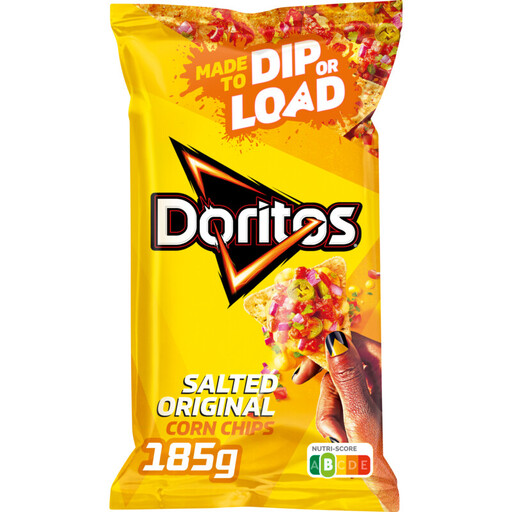 Image unavailable
Doritos Dippers Naturel, 185 g
For a separate snack time when you want to check the protein and salt information.
The product information lists protein and salt values; check the packaging to see what amount those values are based on.
The allergen information lists possible traces of cereals containing gluten, soya and wheat.
View at Joybuy
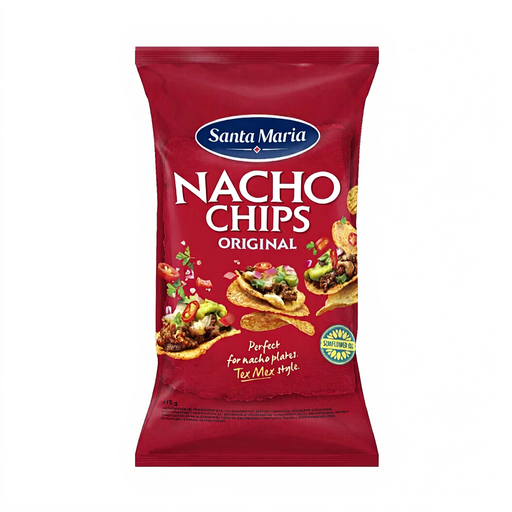 Image unavailable
Santa Maria Nacho Chips Original, 475 g
For a separate snack time when you want to compare the protein and salt values for the exact variety.
The nutrition table lists 6.6 g of protein and 0.9 g of salt; check the packaging for the corresponding weight basis. The ingredients list includes maize flour, sunflower oil and salt.
The allergen information lists soya.
View at Joybuy
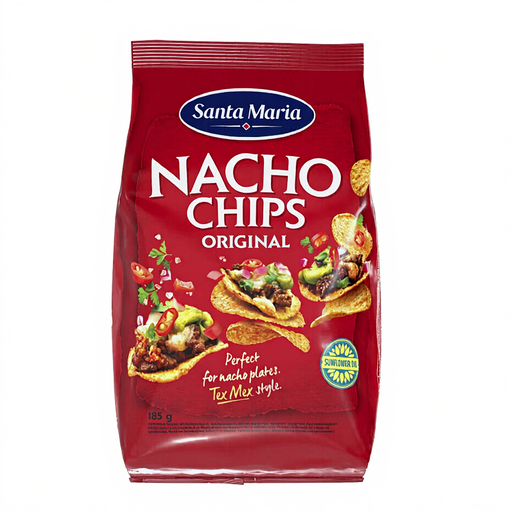 Image unavailable
Santa Maria Original Nacho Chips, 185 g
For a separate snack time when the values for the exact variety form part of your comparison.
The nutrition table lists 6.3 g of protein and 0.9 g of salt; check the packaging for the corresponding weight basis. The ingredients list includes maize flour, sunflower oil and salt.
The allergen information lists soya.
View at Joybuy
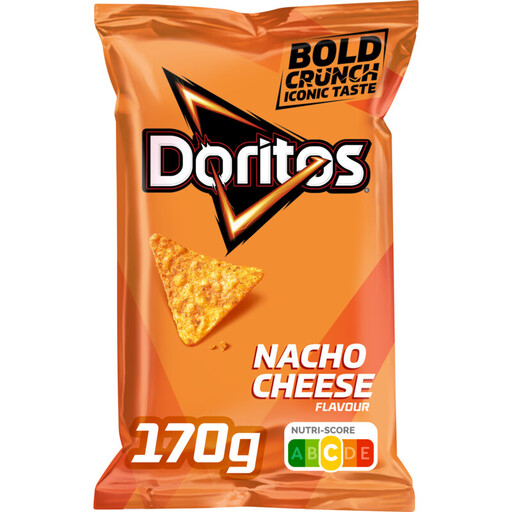 Image unavailable
Doritos Nacho Cheese Tortilla Crisps, 170 g
For a separate snack time when you also want to check the allergens in this cheese flavour.
The nutrition table lists 6.8 g of protein and 0.89 g of salt; check the packaging for the corresponding weight basis.
Contains milk; the allergen information also lists possible traces of cereals containing gluten, soya and wheat.
View at Joybuy
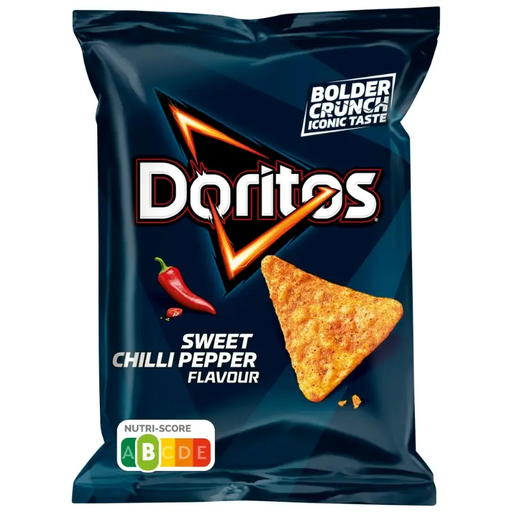 Image unavailable
Doritos Sweet Chili Pepper Tortilla Chips, 44 g
The smaller pack may be useful when you’re packing a separate amount for snack time.
The nutrition table lists 6.4 g of protein and 1.1 g of salt; check the packaging for the corresponding weight basis.
The allergen information lists gluten, soya and wheat.
View at Joybuy
Frequently asked questions
Is a protein snack automatically suitable as an everyday childcare lunch?
No, a protein claim doesn’t automatically make a snack suitable as an everyday lunch. Healthy Childcare recommends choosing foods from the Dutch Wheel of Five wherever possible; for toddlers and pre-schoolers, the Netherlands Nutrition Centre also suggests everyday toppings such as egg and lower-salt hummus.
Can I compare regular plain crisps with crisps that carry a protein claim?
Yes, as long as you compare values for the exact varieties on the same weight basis. Albert Heijn lists 6.6 g of protein per 100 g for AH Tortilla chips naturel, while Jumbo lists 7.8 g per 100 g for Jumbo Tortilla Naturel; those figures alone don’t tell you which variety is suitable for a child or snack time.
Do all tortilla crisps contain gluten?
No. Albert Heijn lists AH Tortilla chips naturel as gluten-free. Always check the exact variety: that same product page says it may contain soya.
Is 25 g automatically a recommended portion for a child?
No, 25 g isn’t a recommended portion for a child. For your comparison, use the amount agreed with the childcare setting; the Jumbo product page bases its reference intake on an average adult.
What allergen information should I check on the packaging?
Check the ingredients list, allergen information and any warnings about possible traces on the packaging for the exact variety. According to the Netherlands Food and Consumer Product Safety Authority, allergen information for prepacked products must appear on the label; also check the arrangements followed by the childcare setting.
How should you supervise a young child while they’re eating?
Make sure the child is sitting calmly and stay nearby while they eat, as the Netherlands Nutrition Centre advises. This general advice doesn’t confirm that every shape or texture of crisp is suitable for every child.


