
Buffet planners who want to manage portions
You want to serve tortilla chips without leaving the amount each guest has entirely up to how often they help themselves from a large bowl.


Choose tortilla chips for your buffet based on the energy per 100 g and the amount you serve, not just a term such as ‘low calorie’. Flink, Jumbo and Albert Heijn list 470–485 kcal per 100 g for three specific plain varieties. So it’s important to measure out portions and check the label, especially if any guests have allergies.
You want to serve tortilla chips without leaving the amount each guest has entirely up to how often they help themselves from a large bowl.
You compare plain varieties by kcal per 100 g, while also checking portion size, ingredients and other nutritional information.
You want to check the ingredients, allergen warnings and dietary information on the packaging of a specific variety.
First, compare the same measure on the label. Then decide how many chips to put out and check the information that matters to your guests for each variety you choose.
| What to consider | What to check when buying | Who does this matter to? |
|---|---|---|
| Energy per 100 g | Compare the kcal per 100 g for the exact flavours and varieties you’re considering, not just a claim on the front of the pack. | When choosing between plain chips, I want to know which variety provides less energy per 100 g without immediately calling it low calorie; around 36% of consumers prioritise this comparison. |
| Buffet portion | Check the stated portion size and decide separately how many chips you’ll serve at a time. | For self-service, I want to stop a large bowl from quietly changing the amount I’d planned; portion control is the main concern for around 29% of consumers. |
| Allergens and dietary information | Read the ingredients and allergen warnings on the packaging of your chosen variety; check dietary information separately. | If a guest has an allergy or dietary requirement, I want to know what’s stated on that particular pack; around 21% of consumers prioritise this check. |
| Serving with dips | Check that your chosen chips go with the dips you’re planning, and treat dips and toppings as separate parts of the buffet. | If I’m serving chips with dips, my choice needs to suit that way of serving them; around 14% of consumers prioritise this use. |
For the three plain varieties compared, Flink, Jumbo and Albert Heijn list 470, 481 and 485 kcal per 100 g respectively. A difference between them doesn’t make any of these products low calorie: under European Regulation (EC) No 1924/2006, the ‘low energy’ claim for solid foods has a limit of 40 kcal per 100 g.
Use kcal per 100 g to compare specific varieties, but don’t use the result to make a nutrition claim about the product.
The amount served determines how many chips someone actually eats. For example, Jumbo lists 144 kcal for a 30 g portion of Jumbo Tortilla Chips Naturel; Voedingscentrum gives 215 kcal for a 40 g bowl of average crisps, not specifically tortilla chips.
Serve measured portions and include dips and toppings separately in your buffet plans.
Ingredients and allergen warnings vary by product. For example, Albert Heijn states that AH Biologisch Tortilla chips naturel may contain soya; a label such as gluten-free doesn’t answer that separate question about allergens.
Check the current packaging before serving and take the needs of the guest concerned into account.
A product range can include several flavours and pack sizes. So the nutritional values or allergen information for a plain variety aren’t a reliable guide to a sweet paprika or cheese variety.
Check the nutritional information, ingredients and exact variety you’re buying in store.
The information below relates to the product ranges or specific varieties mentioned, not every tortilla chip from each brand.
Flink lists a 185 g pack of Doritos Naturel Tortilla Chips, with 470 kcal per 100 g.
Albert Heijn lists 485 kcal per 100 g and a 25 g portion for AH Biologisch Tortilla chips naturel.
Jumbo Tortilla Chips Naturel is listed in a 300 g pack for serving with dips.
Lidl Netherlands shows a 60 g pack of sweet paprika tortilla chips.
ALDI Netherlands lists SUN SNACKS tortilla chips in plain, cheese and sweet chilli varieties, and shows a 300 g pack.
Mission Foods offers several types of tortilla chips in its general range.
These tortilla chips are suitable for serving alongside dips at a buffet. Compare the packaging and decide how much to serve; a product name or pack size doesn’t prove that the chips are low calorie.
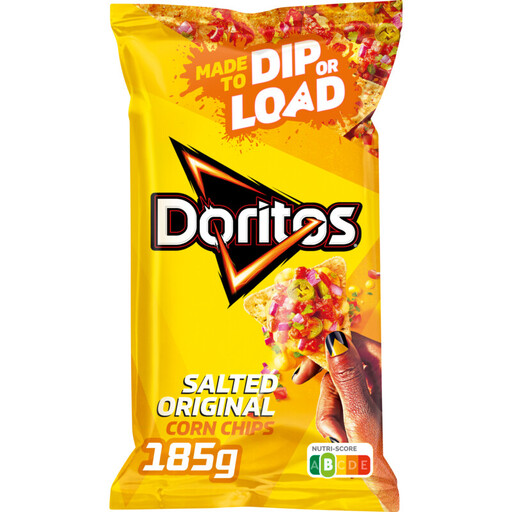 Image unavailable
For anyone wanting to serve plain chips with dips. The pack contains 185 g; measure out a portion each time and check the latest nutritional information and allergen details on the packaging.
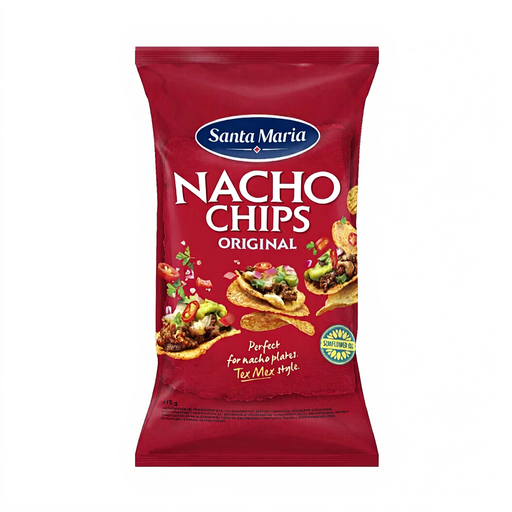 Image unavailable
For a buffet serving nacho chips with dips. The pack contains 475 g; portion out the amount you want and read the nutritional information and allergen details before serving.
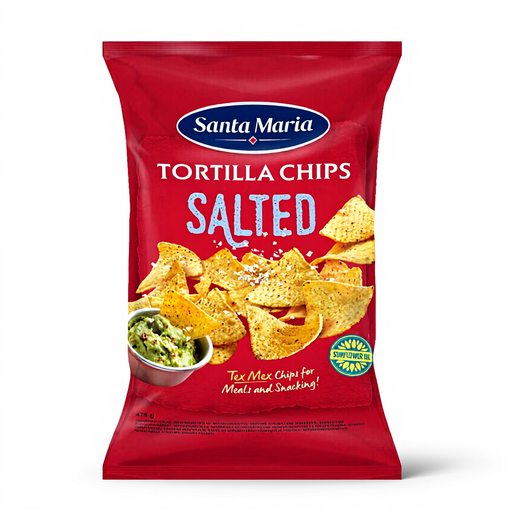 Image unavailable
For anyone wanting to serve salted tortilla chips with dips. The pack contains 475 g; measure out buffet portions separately and check the latest nutritional information and allergen details for this variety.
No, the three plain varieties mentioned don’t meet the threshold for a ‘low energy’ claim for solid foods. Flink lists 470 kcal per 100 g for Doritos Naturel, Jumbo lists 481 kcal for its Naturel variety and Albert Heijn lists 485 kcal for AH Biologisch Naturel. European Regulation (EC) No 1924/2006 sets a maximum of 40 kcal per 100 g for this claim.
Decide in advance how many chips you’ll put in a small bowl or serving dish at a time, and consider the rest of the buffet too. Jumbo lists 144 kcal for 30 g of Jumbo Tortilla Chips Naturel; dips and toppings are separate items.
Yes, check the packaging of the exact variety if a guest has a relevant allergy. For AH Biologisch Tortilla chips naturel, Albert Heijn states that the chips may contain soya; a corn base doesn’t remove the need to check for allergens.
No, these labels answer different questions from how much energy a product provides. Albert Heijn labels AH Biologisch Tortilla chips naturel as organic, vegan and gluten-free, and also lists 485 kcal per 100 g; check these two types of information separately.
Also check the packaging you’re actually going to serve, especially for ingredients and allergens. Product information can vary between varieties or pack sizes, and those details can be crucial for a guest with an allergy.