
Anyone with a narrow laundry area
You’ll need to work out whether width, depth or clearance for the door is the limiting factor. A top-loader and a shallow front-loader each need a different layout.


If width is the main constraint and there’s enough space above the machine to open the lid, compare top-loaders. If depth is the main issue, look at a shallow front-loader. Remember to measure the clearance needed for the open door or lid, hoses and connections. Choose the programme and load size based on the care label on your pillow covers, not just the maximum capacity.
You’ll need to work out whether width, depth or clearance for the door is the limiting factor. A top-loader and a shallow front-loader each need a different layout.
You’ll want to choose a programme and load size that suit the care label on your removable covers. The maximum cotton capacity isn’t necessarily the right guide.
You may wash covers alongside other suitable items and want a drum that suits your usual load, as well as a machine that can be connected in your laundry area.
Choose this if: width is tight, but the lid can open fully above the machine and there’s no worktop overhead.
Bear in mind: the clearance needed above the machine and its capacity. Consumentenbond reports that the top-loaders it tested washed less effectively than a standard front-loader.
Choose this if: you have around 60 cm of width and enough room in front of the door, but your laundry area is limited in depth.
Bear in mind: the stated cabinet depth isn’t the same as the space needed for installation. Check the door, hoses and connections too.
| What to consider | What should you check? | Who is this important to? |
|---|---|---|
| Fit in the laundry area | Measure the width, height and depth. Also check the movement of the door or lid, the hoses and the installation instructions. | If your laundry area is tight, you’ll want to know which measurement determines whether the machine will fit and whether the door or lid can move freely. Around 36% of consumers are most concerned about fit. |
| Washing the covers | Read the care label on each cover and compare its permitted temperature and programme load with the programme table. | You’ll want to wash your covers according to their own care instructions, rather than assuming a cotton programme is suitable. Around 29% of consumers prioritise fabric care above all else. |
| Choosing the right drum capacity | Compare a typical sorted load with the capacity and programme limits for the cycles you plan to use. | If you also wash other household laundry, you’ll want a drum that suits your usual loads, not just your covers. Around 21% of consumers focus above all on finding the right load capacity. |
| Energy use and installation | Compare label information on a like-for-like basis and ask what delivery and installation include. Also check the water protection features. | You’ll want to know in advance what the eco programme’s stated energy use is and what’s included with installation. Around 14% of consumers are most concerned about energy use and aftercare. |
A top-loader mainly saves width, while a shallow front-loader can be a better fit when depth is limited. A front-loader needs extra room for its door to open.
Measure the full space needed for installation and use, then compare it with the installation instructions for the exact model.
The permitted load for delicates or synthetics may be lower than the maximum cotton capacity. The care label on a cover may also rule out tumble drying.
Check the fabric care label and programme table before choosing a machine.
For the Beko BM3WFU3741S, the colour and energy rating details differ between Joybuy listings. Beko lists the model as white with an A energy rating.
Compare the full model number, version and official product information sheet before assessing a specific offer.
Installation and leak protection are separate considerations. Don’t assume a particular service or safety feature is included without checking.
Ask what delivery and installation cover, and check which water protection features the model you’ve chosen has.
The AEG LTR87ULM is an example of a narrow top-loader. AEG lists a width of 397 mm, a capacity of 6 kg and a height of 903 mm.
For the HW70-BP14357TU1, Haier lists dimensions of 595 × 468 × 850 mm (width × depth × height) and a capacity of 7 kg.
Beko lists the BM3WFU3741S as a freestanding 7 kg front-loader, 60 cm wide and 49.6 cm deep, with programmes for delicates, wool and hand washing.
The Whirlpool TW 622S FRESHCARE BE is an example of a top-loader with stated dimensions of 40 × 60 × 90 cm.
A selection of Joybuy washing machines to consider for a small laundry area and washing pillow covers.
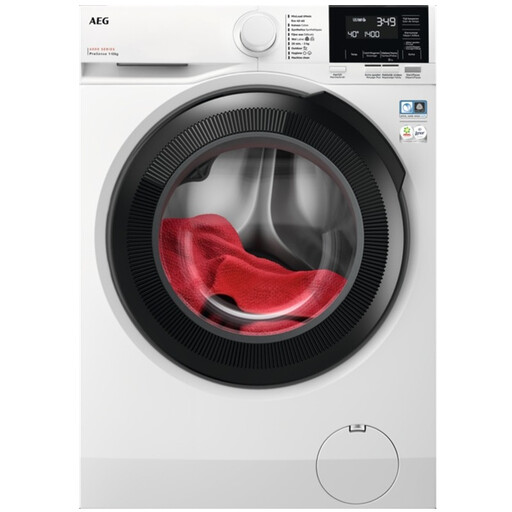 Image unavailable
Compare this model with the space available for installation, and choose a programme and load size that suit the care label on your pillow covers.
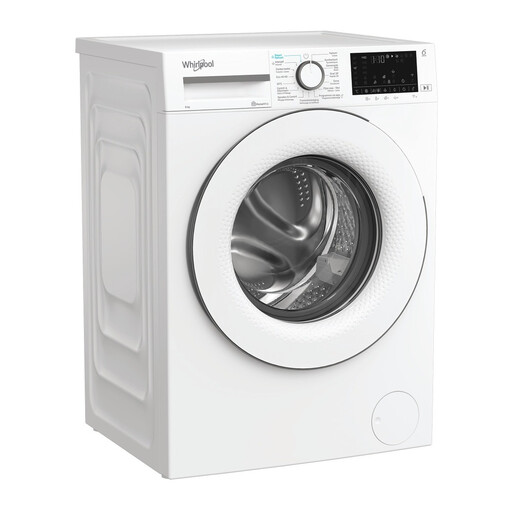 Image unavailable
The product name lists a capacity of 7 kg and 1200 rpm. Consumentenbond explains that the maximum load applies to cotton, so check the programme limit for delicates too.
 Image unavailable
The product name lists a capacity of 6 kg and a depth of 45 cm. Check the installation space needed for the door and connections as well as the stated depth.
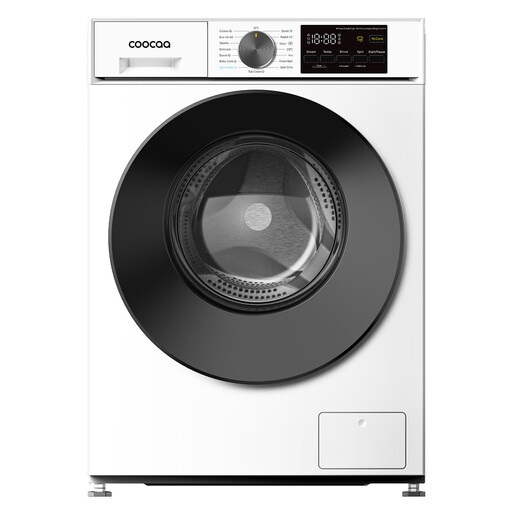 Image unavailable
The product name lists a capacity of 7 kg and 15 programmes. Compare the suitable load and programmes with the care label on your covers and your usual laundry loads.
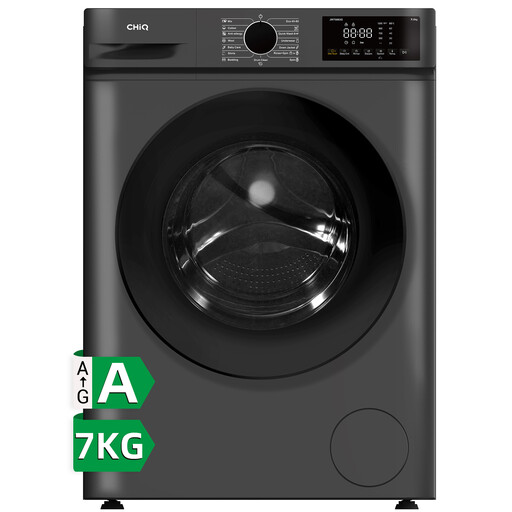 Image unavailable
The product name lists a 7 kg front-loader with a spin speed of 1200 rpm. Check the installation depth required and the permitted load for the programme you plan to use for your covers.
No, follow the care label on the cover. According to the product information, the IKEA KRYDDBUSKE cover we looked at can be machine-washed at up to 40 °C and shouldn’t be tumble-dried. These instructions don’t automatically apply to other covers.
No, the maximum capacity applies to cotton. Consumentenbond recommends a smaller load for delicate or synthetic items. Check the limit for your chosen programme in the manual.
Measure the available space and allow for the door or lid, hoses and connections. Compare these measurements with the installation instructions for the exact model, and ask in advance what delivery and installation include.
The EU energy label includes energy-use information for the eco programme, but not measured use for every other programme or your specific load. The European Commission describes the energy label scale for washing machines as running from A to G.
Yes. According to the Dutch Government, when you buy a new appliance of a similar type, the retailer must take your old one away for free. Agree with the seller how the handover will work when your new machine is delivered.