Who is this choice relevant to?

If you have a narrow laundry area

You need to know whether the machine will fit, whether you can open the door or lid, and whether the connections will remain accessible. The Consumers' Association notes that top-loaders are generally narrower than standard front-loaders. Measure the space and the room needed to open the machine before choosing a model.

If you wash delicate summer dresses

You’ll want to choose how to wash them based on the fabric and the care instructions on the label. GINETEX explains that the wash-tub symbol indicates the maximum washing temperature; the Consumers' Association describes delicate and silk programmes for delicate fabrics.

If you wash small or varying loads

You’re looking for a drum capacity that suits the amount of laundry you usually collect, and want to compare consumption figures on a like-for-like basis. Milieu Centraal recommends choosing a drum capacity that suits your household.

What should you look for when choosing?

Narrow top-loader

Choose this option if: width is the main constraint in your laundry area and you have room above the machine to open the lid.

Bear in mind: top-loaders are generally around 40 cm wide, compared with around 60 cm for standard front-loaders, but need clear space above the lid. The Consumers' Association describes this general difference; check the dimensions and programmes of the specific model.

Front-loader

Choose this option if: the width works for your space and you have enough room in front of the machine for the door to open.

Bear in mind: a shallower front-loader isn’t necessarily narrower. Compare its full dimensions, door clearance and the permitted load for the programme you want to use for your dresses.

What to consider What should you check? Who should give this more weight?
Getting the right fit Measure the width, height and depth, and allow for the space needed to open the door or lid and connect the hoses. I want to be sure in advance that I can fit and use the machine in my laundry area. Around 29% of consumers put the right fit and access first.
Caring for dresses Follow the care label and check the temperature, the appropriate programme and its maximum load. I want to care for my washable dresses according to their fabric and care instructions, rather than relying on the programme name alone. Around 29% of consumers put proper clothing care first.
Load capacity and consumption Compare the rated load capacity with the amount you usually wash. Compare energy labels on a like-for-like basis; they don’t show the exact consumption for every delicate-wash programme. I want a drum that suits my usual laundry and to be able to compare consumption figures fairly. Around 24% of consumers prioritise a suitable load capacity and running costs.
Noise and installation Check the stated spin noise level and make sure the floor and connections are suitable. Follow the installation instructions for the specific model. I want to install the machine without causing unnecessary disruption in my home. Around 18% of consumers prioritise noise levels and a practical installation.

Pitfalls to avoid

  • Confusing ‘narrow’ with ‘less deep’

    A machine can be less deep without being narrower. The space needed to open the door or lid also affects how practical your laundry area is to use.

    Measure the width, height and depth of the space, and check the required clearance and connections before choosing a type.

  • Assuming the rated load capacity applies to a delicate-wash load

    The machine’s maximum capacity doesn’t necessarily apply to every programme. A programme for delicate laundry may specify a smaller load.

    Check the programme table and your dresses’ care labels. Don’t base your choice on the kg figure in the product name alone.

  • Treating the energy label as a guide to consumption for every wash

    EU label values are based on the Eco 40-60 programme and don’t show the exact consumption of a delicate-wash programme.

    Use the label values to compare machines under the same conditions, not as an exact estimate of the consumption for a load of dresses.

Brands to consider

AEG

The AEG LTR87ULM is a top-loader with stated external dimensions of 903 × 397 × 599 mm. AEG lists programmes for delicate fabrics and wool/silk.

  • The published dimensions and programmes make it easier to compare a narrow installation and clothing-care options.
  • Check that there’s enough room to open the lid. Results AEG attributes to PowerCare and steam are manufacturer claims, not independent confirmation for every machine from the brand.

Whirlpool

The Whirlpool TW 622S FRESHCARE BE is a top-loader with stated dimensions of 40 × 60 × 90 cm. Whirlpool Netherlands lists energy class B.

  • The dimensions give you a specific starting point when assessing a top-loader for a narrow space.
  • The product title says 6,5 kg, while the product details state 6 kg. Check the product information sheet for the exact variant before taking its load capacity into account.

Bosch

According to Bosch Netherlands, the Bosch WAN2827GNL is a front-loader with official dimensions of 845 × 598 × 590 mm and a stated load capacity of 8 kg.

  • The dimensions help you assess whether a front-loader will fit when you have around 60 cm of width available.
  • The dimensions and load capacity alone don’t tell you how well the model washes. Also check the room needed for the open door and the programmes you want.

Haier

Haier lists dimensions of 595 × 583 × 850 mm and a load capacity of 8 kg for the HW80-B14959EU1.

  • The stated depth is a useful point of comparison if the depth of your laundry area is a key consideration.
  • Allow for connections and the space needed for installation too; the external dimensions don’t represent the full depth required. Claims about washing performance, quietness and Refresh come from the manufacturer.

Washing machines at Joybuy

These Joybuy product picks are for anyone looking for a front-loader who wants to factor in the available space, load capacity and clothing care labels.

AEG LF61R840 Series 6000 washing machine, 8 kg, 1400 rpm

AEG LF61R840 Series 6000, 8 kg, 1400 rpm

A front-loader to consider if the available space works for you and the stated load capacity of 8 kg suits your laundry needs.

Check the programme table and the garment care label before machine-washing a summer dress.

Joybuy

Midea MF110W80BA10/W-NL washing machine, 8 kg, 1400 rpm

Midea MF110W80BA10/W-NL, 8 kg, 1400 rpm

This front-loader is worth comparing if its stated load capacity of 8 kg suits the amount of laundry you usually collect.

For delicate dresses, check whether the machine has a programme that matches their care instructions.

Joybuy
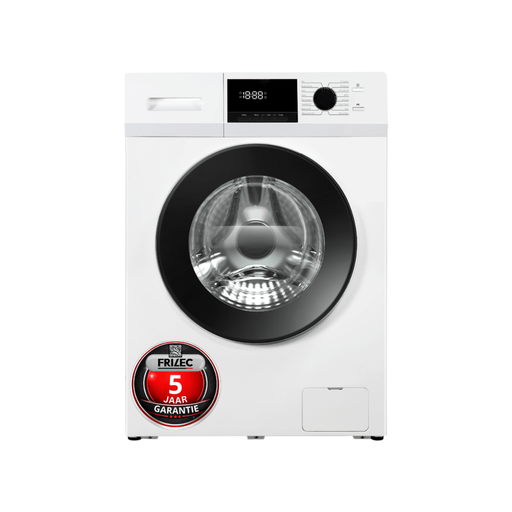
Frilec KOBLENZ8314WA-342 washing machine, 8 kg

Frilec KOBLENZ8314WA-342, 8 kg

A front-loader to include in your comparison if its stated load capacity of 8 kg suits how you do your laundry.

Check that the available programmes and maximum load are suitable for the dresses you want to wash.

Joybuy

Comfee CFP01EW70W-JD washing machine, 7 kg, 400 mm deep

Comfee' CFP01EW70W-JD, 7 kg, 400 mm deep

Its stated depth of 400 mm makes this model worth comparing if depth is limited in your laundry area.

Also measure the available width and check that there’s enough room for the machine and its connections. For dresses, check that the programme is suitable and follow the care label.

Joybuy

Beko BM3WFU38412CW washing machine, 8 kg, 1400 rpm

Beko BM3WFU38412CW, 8 kg, 1400 rpm

A front-loader to compare if it fits your available space and its stated load capacity of 8 kg suits your usual laundry.

Check that the programme and permitted load match the care instructions for your dresses.

Joybuy

Frequently asked questions

Can every washable summer dress go on Eco 40-60?

No, Eco 40-60 isn’t suitable for every fabric. Check the care label on each dress and only choose a treatment that’s appropriate. GINETEX explains that the wash-tub symbol indicates the maximum washing temperature.

What should I check before the first wash after installation?

Follow the instructions for the specific model and check that the machine is stable and level. Remove the transit bolts before use; Bosch warns that leaving them in place can stop the drum from turning.

How can I keep the machine fresh if I often wash at low temperatures?

The Consumers' Association recommends running a wash at 60 °C once or twice a month, without selecting Eco 40-60. Only wash items whose care labels allow this temperature, and follow the machine’s maintenance instructions too.

Who can help if my new washing machine turns out to be faulty?

In the Netherlands, the retailer is responsible for ensuring a product is of satisfactory quality and must offer a solution if it’s faulty. According to the Dutch government, the retailer can’t simply refer you to the manufacturer. Consider any additional warranty alongside your statutory rights.

Can I have my old washing machine taken away when my new one is delivered?

According to the Dutch government, when a private customer buys a new, similar appliance, the free take-back scheme applies, including to online purchases. If the old appliance can’t be collected at the time of delivery, the government outlines alternatives through the online retailer.
