
For a narrow alcove
If you’re short on width, a top-loader could be an option as long as there’s enough clearance to open the lid. The Consumentenbond also recommends leaving room for hoses, the door and ventilation.


If width is your main constraint, compare top-loaders. If depth is limited, a shallower front-loader could work, provided there’s enough width and room for the door and connections. Measure the entire installation space, then choose a capacity and programme to suit your usual cotton load and the care labels. A large drum or high energy rating alone doesn’t determine whether a machine will fit.
If you’re short on width, a top-loader could be an option as long as there’s enough clearance to open the lid. The Consumentenbond also recommends leaving room for hoses, the door and ventilation.
If you have enough width but a machine would stick out too far, compare the full installation depth of shallower front-loaders. Remember to allow room for the door and hoses, as recommended by the Consumentenbond.
If you usually wash modest amounts of cotton, choose a capacity that suits your typical load. The Consumentenbond points out that the stated load capacity applies to cotton; always follow the care label on each T-shirt.
Suitable for: a narrow alcove with enough space above the machine to open the lid. AEG lists the LTR6363A as 397 mm wide; Whirlpool gives a width of 40,0 cm for the TW 6521S SENSE WASH BE.
Bear in mind: narrow doesn’t necessarily mean shallow. AEG lists the LTR6363A as up to 599 mm deep, while Whirlpool gives a depth of 60,0 cm for its model.
Suitable for: a space with enough width but limited depth, where the front door can open. Haier lists the HW70-BP14357TU1 as 595 mm wide and 468 mm deep.
Bear in mind: the appliance depth isn’t the full installation depth; allow room for hoses and the door to open.
Suitable for: a space that can accommodate the machine, connections and open door, with drum capacity to suit your usual laundry load.
Bear in mind: a larger drum won’t save space and isn’t automatically the right choice for small, frequent loads.
| What to consider | What to look for | Who should pay particular attention? |
|---|---|---|
| Width and access from above | Measure the alcove at several points and check the width, depth and height of the exact model. Make sure the lid can open freely. | I’m short on width and want to know whether a top-loader will fit and whether I can open it; around 28% of consumers say available width is their main concern. |
| Depth and door clearance | Check the appliance and installation dimensions, including hoses and the space needed for the door. | If the machine can’t stick out too far, I also need to leave enough room for connections and an open door; around 22% of consumers say depth is their main concern. |
| Capacity for T-shirt loads | Weigh a typical sorted load and follow the care labels. Then compare the cotton load capacity and available programmes. | I want a drum and programme to suit my usual amount of cotton T-shirts and their care labels; around 22% of consumers prioritise a suitable laundry load. |
| Consumption per programme | Compare Eco 40-60 label figures on a like-for-like basis. Don’t assume those figures apply to another cotton programme. | If the machine runs frequently, I want to assess energy and water consumption for the programme I actually use; around 17% of consumers put consumption first. |
| Noise and installation | Check the stated spin noise level and follow the installation instructions, including levelling the machine and removing the transit bolts. | I want to install the machine properly and take noise into account if it’s near my living space; around 11% of consumers say noise and placement are their main concerns. |
A top-loader needs space for the lid to open; a front-loader needs room for the door. Hoses and ventilation also need clearance.
Measure the space at several points and check the exact model’s installation and opening clearances before ordering.
If a machine doesn’t fit in the alcove, you may need to do extra installation work or choose a different machine.
The stated maximum load capacity applies to cotton. A much larger machine isn’t automatically a better choice if you usually wash small loads.
Weigh a typical sorted load and compare it with the cotton capacity.
The energy and water figures on the label are based on Eco 40-60. They don’t necessarily tell you how much another cotton programme uses.
Compare models using the same label basis. If you usually use a different programme, look for separate test data for that type of use.
The AEG LTR6363A is a top-loader which AEG lists as 397 mm wide.
Whirlpool lists the TW 6521S SENSE WASH BE, which was reviewed, as a 40,0 cm-wide top-loader.
Haier lists the HW70-BP14357TU1 front-loader with appliance dimensions of 595 × 468 × 850 mm (width × depth × height).
The Bosch WAN2809XNL is an example of a front-loader for a space that can accommodate standard dimensions.
This selection includes front-loaders and compact, foldable mini washing machines. Check that each model’s dimensions and capacity suit your space and usual cotton load.
 No image available
This front-loader could be a contender if it fits your available space and its capacity suits your usual laundry load.
Capacity: 8 kg. Maximum spin speed: 1400 rpm.
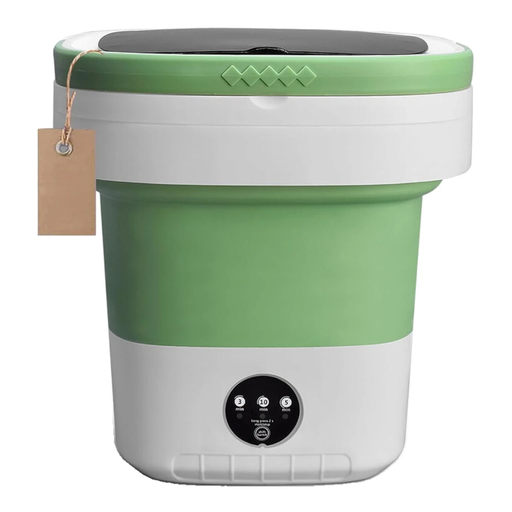 No image available
A compact, foldable option if you’re weighing up small washes and limited storage space. Check that the capacity and washing instructions suit the T-shirts and the amount you want to wash.
Capacity according to the product name: 12 litres. Includes a spin basket.
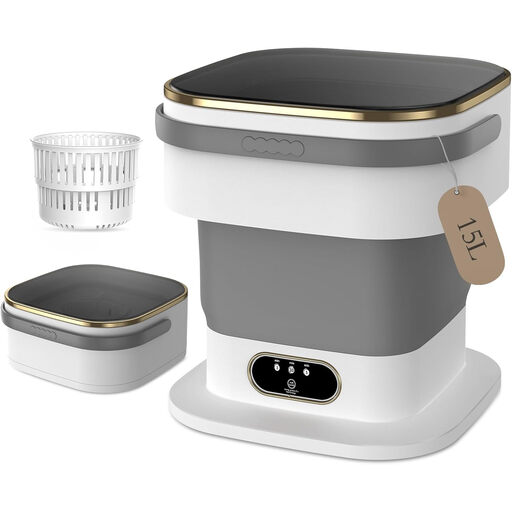 No image available
A foldable mini washing machine for anyone looking for a compact appliance for small washes. Check that its capacity and wash settings suit your T-shirts and laundry routine.
Capacity according to the product name: 15 litres. Three wash settings and a spin basket.
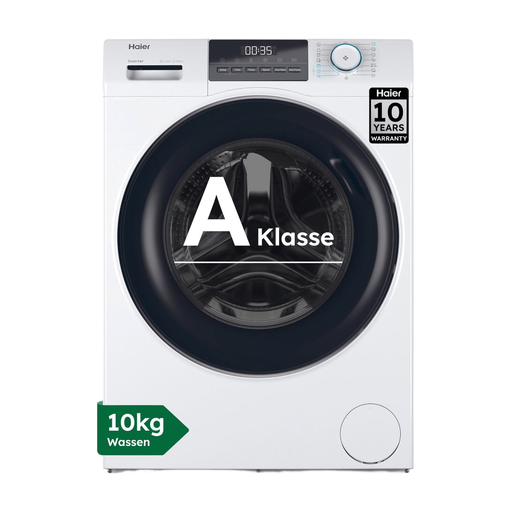 No image available
This front-loader is only suitable if you have enough space and a 10 kg capacity fits your laundry routine; compare it with your usual T-shirt load.
Capacity: 10 kg. Maximum spin speed: 1400 rpm.
 No image available
Its stated depth of 400 mm makes this model worth considering if depth is your main constraint. Check the other appliance and installation dimensions too.
Capacity: 7 kg. Stated depth: 400 mm.
No. Eco 40-60 is designed for normally soiled cotton that can be washed at 40 or 60 °C according to its care label. Follow the care label for garments that need a lower temperature or a gentler programme.
Follow the model’s installation instructions, level the machine and remove the transit bolts as directed. AEG warns that using the machine with the transit bolts still in place can cause damage.
The EU energy label includes figures such as energy consumption per 100 Eco 40-60 cycles and water use. Don’t assume these figures also apply to another cotton programme.
Report the fault to the seller. According to the Rijksoverheid, the seller can’t simply refer you to the manufacturer if a product is faulty; the appropriate solution depends on the circumstances.
When you buy a similar appliance, the Dutch take-back scheme for household equipment applies; the shop can’t charge you to take the old one. The scheme also applies to online purchases and delivery, with alternatives set out by the government if the old appliance can’t be collected at the same time.