
Vandaag of morgen in huis

Kwaliteit gegarandeerd

Welkomstaanbiedingen ontgrendelen: GRATIS bezorging | Tot 80% korting | Gratis 30 dagen JoyPlus-proefperiode
Download de app
A tube of toothpaste may seem like a simple purchase, but the options vary considerably in fluoride content, volume, flavour, purpose and packaging. If you only go by phrases such as “whitening”, “extra fresh” or “complete protection”, you may end up paying for an effect that does not suit your own routine.
This buying guide will help you compare toothpaste in practical terms. You’ll learn what to look for in whitening toothpaste, fluoride toothpaste, fresh breath toothpaste and multipacks such as a 3-pack of toothpaste. You’ll then find some popular options suited to different user profiles.
Whitening toothpaste is generally designed to remove surface stains caused by coffee, tea or smoking, for example. This is different from bleaching the natural colour of your teeth. Check whether the product information refers to removing surface stains or superficial discolouration.
For example, Oral-B 3D White states that, according to Oral-B’s own research, its formula removes up to 87% of surface stains. Treat this as a brand claim, not a guarantee for every set of teeth. A whitening option may also feel less comfortable if you react sensitively to certain ingredients.
Fresh breath toothpaste can provide a powerful cooling sensation while brushing and immediately afterwards. That does not automatically indicate how long the feeling will last. Pay attention to the flavour description, but also check the fluoride content and full ingredient label.
If you find very strong flavours unpleasant, a milder option may be better. Choosing a toothpaste you enjoy using makes it more likely that you’ll brush consistently twice a day.
A 3-pack or 4-pack of toothpaste can be convenient for families or if you use the same option regularly. However, compare the price per 100 ml. A pack containing three 75 ml tubes contains 225 ml, while a 100 ml tube gives you a different price comparison.
Also check the expiry information on the packaging. Do not buy a large stock if you like to switch regularly between, for example, whitening toothpaste and toothpaste for sensitive teeth.
For everyday oral care, it is sensible to check the fluoride content. The range includes several options with 1450 ppm fluoride, including Colgate Fresh Gel, Prodent Fresh Breath and various Oral-B products. Parodontax Extra Fresh states that it contains 1400 ppm fluoride.
Fluoride toothpaste is used for everyday protection of tooth enamel. The exact directions for use, age restrictions and warnings are shown on the packaging. Do not swallow toothpaste and keep tubes out of the reach of young children. If you receive fluoride from multiple sources, product labels advise consulting a dentist or doctor.
A 75 ml tube of toothpaste is a common size for one user or for taking with you. Multipacks may be more practical for a household:
Do not look only at the number of tubes; consider the desired function too. A multipack of fresh breath toothpaste makes less sense if one family member actually needs toothpaste for sensitive teeth.
Whitening formulas often contain cleaning ingredients such as hydrated silica. The Oral-B 3D White options list this substance for removing surface stains. Parodontax Extra Fresh contains, among other ingredients, sodium bicarbonate and lists limonene on the label.
An ingredient may be less suitable for some users. Stop using the product if irritation occurs and follow the safety information on the packaging. If symptoms persist or you have bleeding gums, toothpaste is not a substitute for professional advice.
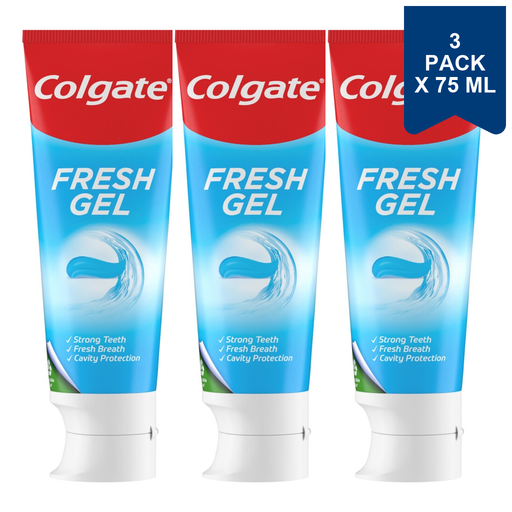
Why it suits this profile: This multipack contains three 75 ml tubes of fresh gel toothpaste and 1450 ppm fluoride, according to the product information.
The volume and fluoride information are clearly specified, so you can compare the multipack without relying solely on a marketing name.
3 × 75 ml, a fresh gel texture and 1450 ppm fluoride according to the product label.
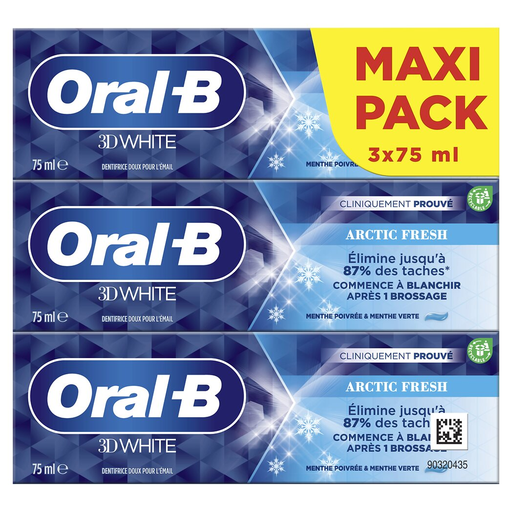
Why it suits this profile: For anyone looking to tackle surface stains while also choosing a fluoride toothpaste for everyday use.
The product description explicitly mentions surface stains and 1450 ppm fluoride. This makes it clearer what whitening does and does not mean in this case.
3 × 75 ml, Arctic Fresh flavour and a formula containing hydrated silica and sodium fluoride according to the product label.
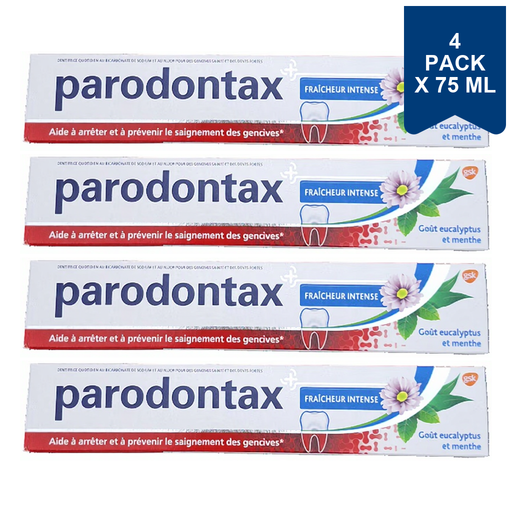
Why it suits this profile: Designed for adults specifically looking for toothpaste for bleeding gums and a supply for everyday use.
The formula and target audience are clearly described. The plaque-removal claim is based on Parodontax’s own research and is not a general guarantee.
4 × 75 ml, sodium bicarbonate and 1400 ppm fluoride according to the product information.
We’ve put together a complete, up-to-date list of products that fully meet these strict selection criteria and the applicable European safety regulations.
Look for a fluoride toothpaste and check the exact content on the packaging. Several products in the range state that they contain 1450 ppm fluoride. Use the toothpaste as directed on the label and do not swallow it. Children require different quantities and supervision instructions.
Look for a product specifically designed for sensitivity, such as Sensodyne Extra Fresh Gel. According to Sensodyne’s product information, this toothpaste has been developed for sensitive teeth and contains 1450 ppm fluoride. If you experience persistent or worsening sensitivity, ask a dentist for advice.
The expiry date, batch information and any period after opening are shown on the packaging. Keep the tube closed, dry and at room temperature. A multipack is particularly practical if you use the option regularly; otherwise, a single 75 ml or 100 ml tube of toothpaste may be a better choice.
