
Vandaag of morgen in huis

Kwaliteit gegarandeerd

Welkomstaanbiedingen ontgrendelen: GRATIS bezorging | Tot 80% korting | Gratis 30 dagen JoyPlus-proefperiode
Download de app
Tightening a loose screw, clamping woodwork, decorating a card or repairing a garment: there are tools and hobby supplies for every project. The range is extensive, but a high piece count or striking product name does not automatically mean an item is right for your job.
That is why you should focus mainly on the intended use, dimensions and included components. This helps you avoid buying a tool set made up largely of duplicate or unusable accessories.
A set with 80 or 100 components may look appealing, but check what it actually contains. With a drill and screwdriver bit set, the bit sizes, materials and fittings matter more than the number of pieces alone. A set with lots of variants that do not fit your drill offers little benefit.
With hand tools and glue clamps, the clamping width, length and jaw depth determine whether you can secure a workpiece properly. A 150 mm clamp is suitable for smaller projects, but not necessarily for wide furniture panels. Also check the maximum clamping force and do not use it beyond the stated limit.
Terms such as “multi-functional” or “professional” tell you little without technical details. Check the material, compatibility and safety instructions. According to information provided by the manufacturers of some products, an accessory set may be suitable for several materials; that does not mean every accessory is intended for every speed or application.
For regular use, materials such as S2 steel, chrome vanadium steel, hardened steel or reinforced nylon are relevant details. S2 steel is often used for bits because it combines hardness with impact resistance. Chrome vanadium steel is widely used for sockets and other hand tools.
For metal components, also check the finish. A black oxide or phosphate coating can help protect against corrosion, but clean the tool after use and store it somewhere dry. No coating eliminates the need for maintenance.
When choosing DIY tools, check:
A universal fitting is convenient, but always check that your machine is compatible with it. With a rotary tool, the operating speed and maximum speed of the accessories are also important.
When using rotating, grinding or cutting accessories, wear safety goggles and follow the manufacturer’s instructions. Check accessories for cracks or damage before you start. Secure the workpiece and unplug a power tool before changing accessories or cleaning the device.
The same applies to sewing and craft supplies: small parts and sharp components should be kept out of the reach of young children. Store cutting dies, needles and knives in a closed box or case.
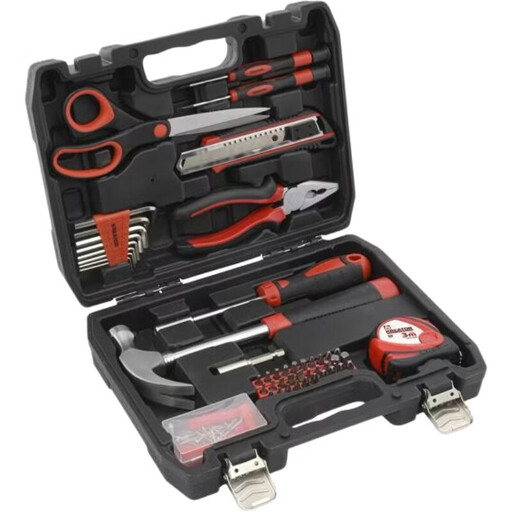
Why it suits this profile: This tool set provides a versatile foundation for small repairs, assembly and general maintenance around the home.
Each component has its own place in the case. This makes it easier to see which tools are included and reduces the chance of buying duplicate accessories.
107 components, a compact 26.5 × 20 × 8.3 cm case and a clear layout.
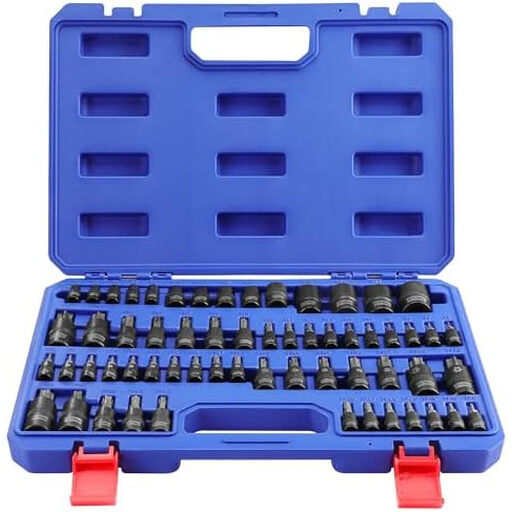
Why it suits this profile: The combination of Torx, Torx Plus and external E-sockets is suitable for maintaining cars, bicycles, machinery and equipment.
The sizes are marked on the sockets and the storage case. This reduces searching time and helps prevent the wrong size from being used.
60 pieces, S2 alloy steel for the bits, Cr-V steel for the sockets and three drive sizes: 1/4, 3/8 and 1/2 inch.
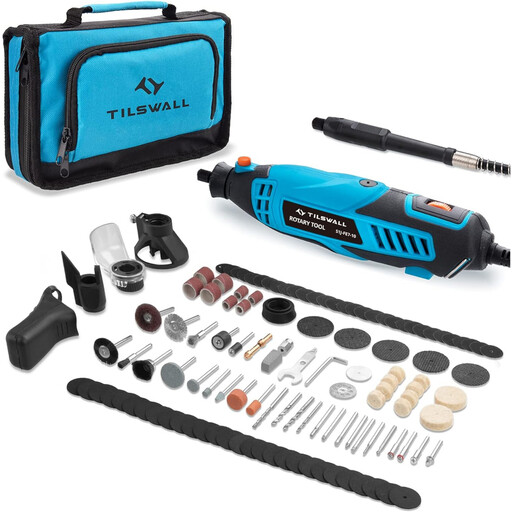
Why it suits this profile: This rotary tool is designed for engraving, grinding, polishing, cutting and fine drilling in creative and technical projects.
The speed can be adjusted across six settings from 8,000 to 33,000 rpm. Always choose the setting based on the material and accessory.
160 W power, 145 accessories, LED lighting and an additional handle for greater control during detailed work.
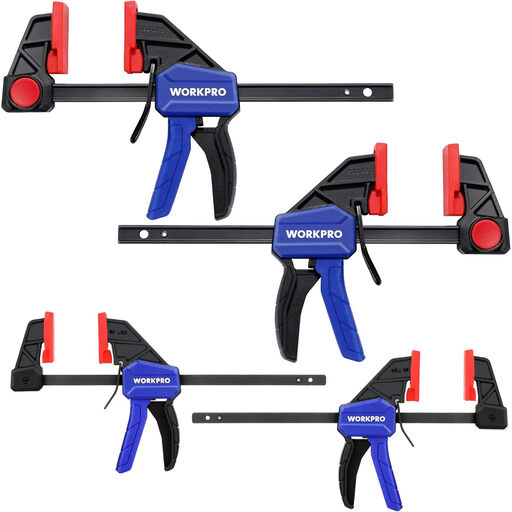
Why it suits this profile: The combination of two sizes is practical for smaller woodworking projects, assembly and light metalwork or DIY tasks.
The set contains 120 and 150 mm clamps. TPU jaw pads help limit contact marks on surfaces; however, make sure you position the workpiece correctly.
Four clamps, one-handed operation, reversible jaws and stated clamping forces of 23 and 68 kg.
We have compiled a complete, up-to-date list of products that fully meet these strict selection criteria and the applicable European safety regulations.
For paper crafts, metal cutting dies are suitable for cutting shapes from paper or card when used with a compatible die-cutting machine. Check the dimensions and machine type beforehand. For sewing, a compact sewing kit or sewing supplies case is practical for small repairs. Check the contents: a product with 56 accessories may be useful for basic tasks, but make sure needles, thread, scissors and bobbin accessories are actually included.
If you mainly paint or cook, an oil brush and scraper may be useful. With these types of items, check the material and length, and only use the product for the purpose intended by the manufacturer.
A basic set with screwdrivers, bits, hex keys, pliers and measuring tools is a practical starting point. Add a drill and screwdriver bit set if you regularly work with wood, metal or masonry. Always choose bits based on the material and screw head.
Their lifespan depends on the material, frequency of use, force applied and storage conditions. Damaged bits can slip and damage the screw head. Clean tools after use, check for wear and store metal components in the supplied case in a dry place.
That depends on the work you do. A set is often practical when you need several basic tools. For a specific job, individual tools may offer better value because you avoid buying components you are unlikely to use. So check the contents, fitting and sizing first, then compare the price.
