
Vandaag of morgen in huis

Kwaliteit gegarandeerd

Welkomstaanbiedingen ontgrendelen: GRATIS bezorging | Tot 80% korting | Gratis 30 dagen JoyPlus-proefperiode
Download de app
A tool set can look appealing on paper: lots of pieces for one price, neatly stored in a case. But the number of pieces says little about how useful it will be. A set with dozens of almost identical bits may offer less value than a smaller selection with good pliers, the right sockets and clearly marked sizes.
For DIY enthusiasts, homeowners and professionals, the choice comes down to the contents, materials and type of work you do. Read on to find out what to look for before buying a complete tool set, a hand tool set or individual tools.
A tool case with 100 or more pieces sounds comprehensive, but check what’s actually included. Loose bits, small fixings and adapters may all count towards the total. So look for tools you’ll genuinely use:
For car and motorbike maintenance, sockets and ratchets are more important than, for example, a large number of small accessories.
Chrome vanadium steel, carbon steel and alloy steel are useful specifications, but they don’t tell you everything about the tool’s construction. Also check the finish, size markings, the joint on pliers and the grip of the handle.
According to the brands’ own product information, some models are heat-treated or have a protective coating. This can help improve strength or protect against corrosion, but keep tools away from moisture and store them somewhere dry. No material makes maintenance unnecessary.
An adjustable spanner is handy for different sizes, but it isn’t always suitable for loosening seized fittings with force. Water pump pliers are designed to grip round and angular objects, among others; don’t use them as a substitute for every type of spanner.
Take care with electrical work, too. Ordinary pliers aren’t automatically suitable for working on live installations. The product description should clearly state what a tool is intended for. If you can’t fully assess the situation, get a qualified professional to work on electrical installations.
For everyday household use, Cr-V steel, heat-treated alloy steel and good-quality carbon steel are common choices. Also look for:
A coating isn’t a reason to put tools away wet. Wipe metal parts dry after use and store the set somewhere dry.
When choosing a socket set, check the drive size, for example 1/4 inch or 3/8 inch, and whether the sockets are metric, SAE or both. Metric sizes are generally practical for household jobs in the Netherlands. A ratchet with a reversing switch and quick-release mechanism can make changing sockets easier.
For adjustable pliers and spanners, the maximum jaw opening and adjustment mechanism matter more than length alone. For example, water pump pliers with a maximum opening of 50 mm are designed for larger fittings than a small pair of universal pliers.
Don’t automatically go for a professional tool set if you mainly assemble furniture and carry out small repairs. A home tool set with screwdrivers, bits, a hammer, tape measure and combination pliers may be enough.
For garage work, a socket set, ratchet, extensions and hex keys are more useful. For plumbing, water pump pliers and an adjustable spanner come in handy. For electronics work, compact screwdrivers, fine pliers and ESD properties are important.
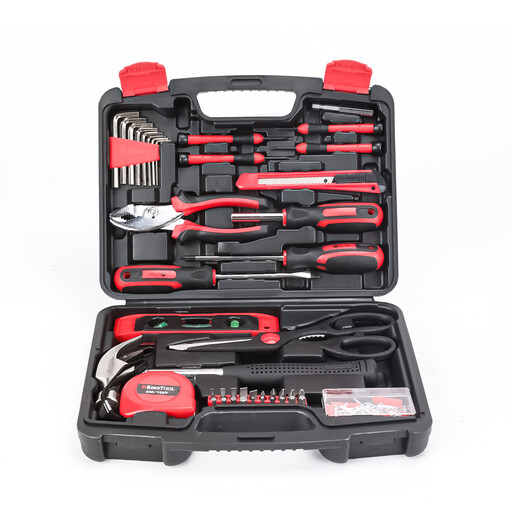
Why it suits this user: This household set combines basic tools, bits, a hammer, tape measure, spirit level and fixings in one plastic case. It’s a good choice for occasional repairs, assembly and everyday DIY.
The contents are listed in detail, so you can check in advance that the set includes more than just bits and small accessories. Each piece has its own place in the case.
149 pieces, including combination pliers, screwdrivers, a hammer, tape measure, spirit level and storage case.
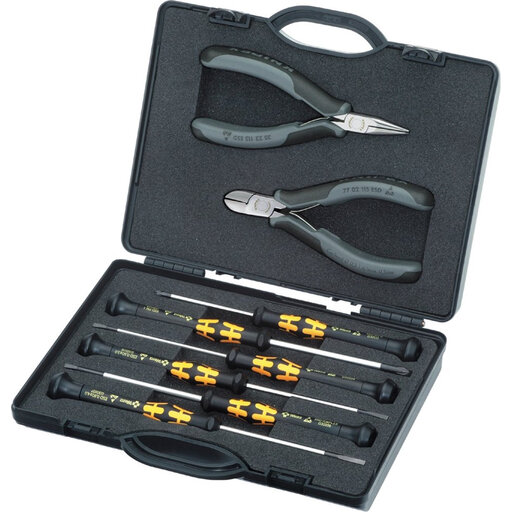
Why it suits this user: This compact set is designed for fine assembly work, electronics and components where controlled dissipation of static electricity may be important.
Rather than padding out the set with large household tools, it contains two electronics pliers and six compact screwdrivers. Its intended use is clearly defined.
ESD design according to the product description, 8 pieces and a shock-resistant storage case with foam lining.
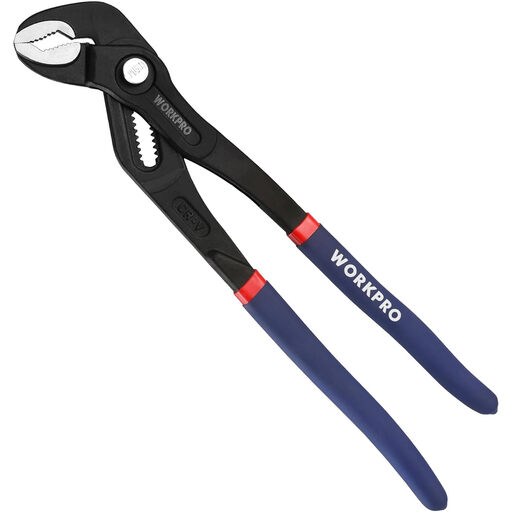
Why it suits this user: These standalone water pump pliers are suited to plumbing, assembly and mechanical work where a wider jaw opening is needed.
Instead of buying a broad set with unused pieces, you get a tool suited to a specific task. The maximum opening of 50 mm is clearly stated.
305 mm long, made from Cr-V steel, with push-button adjustment and a jaw opening of up to 50 mm.
We’ve put together a complete, up-to-date list of products that meet these strict selection criteria and the applicable European safety regulations.
A tool set will stay in good condition if you follow a few simple care steps:
Many consumer products in the European Union come with a legal guarantee of at least two years. Additional rights may depend on the circumstances and national legislation.
For home use, a set with screwdrivers, bits, combination pliers, a hammer, tape measure and spirit level is a practical starting point. Also check whether the case has designated compartments and whether the sizes are clearly marked.
It depends on what’s included. A complete set can be good value if you need several basic tools. If you mainly need one pair of water pump pliers, electronics pliers or a specific ratchet, buying it separately means you won’t pay for pieces you won’t use.
Its lifespan depends on the materials, workload, maintenance and storage. Use each piece for its intended purpose, avoid applying excessive force and replace tools as soon as you notice cracks, heavy wear or play.
