
Vandaag of morgen in huis

Kwaliteit gegarandeerd

Welkomstaanbiedingen ontgrendelen: GRATIS bezorging | Tot 80% korting | Gratis 30 dagen JoyPlus-proefperiode
Download de app
A good tool set is the foundation for any serious DIYer or mechanic. But the search can be frustrating. The market is flooded with sets that promise a lot but fall short in practice. Before you invest in new hand tools, it's crucial to know what to look for to avoid buying tools that become unusable after just a few uses.
As a Joybuy Product Recommendation Officer, I'll help you see through the marketing jargon. We'll look at the specifications that really matter, so you can choose a tool set that fits your projects and will last for years.
Many sets look impressive at first glance but hide flaws that only surface when you're on the job. These are the most common pitfalls:
To avoid a bad purchase, focus on a few key technical specifications. These determine the durability and usability of your tools.
The type of steel is a direct indicator of quality. Always look for the following terms:
A good ratchet wrench makes all the difference. The number of teeth in the mechanism determines the swing arc: the angle you need to engage the next tooth.
Besides the tooth count, also look for a smooth, clearly marked reverse lever and a sturdy quick-release mechanism.
Ask yourself which tools you will actually use. For automotive tools, metric sizes (8 mm to 19 mm) are essential. A good ratcheting wrench set can save a lot of time. Check if the set includes the right sockets, extensions, and any specific tools like spark plug sockets that are relevant to your projects.
Based on these objective criteria, we have selected a number of products that suit different user profiles.
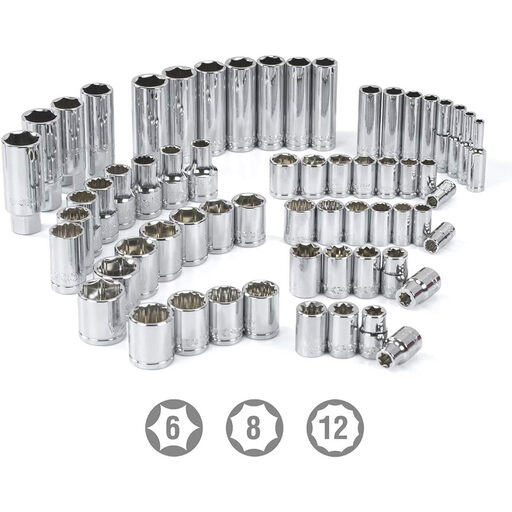
Why This Fits Their Persona: An excellent starting point for those who tackle a wide range of jobs, from assembling furniture to basic car maintenance. This set offers a huge variety of tools in one organized case.
Instead of useless filler, this set offers a functional mix of sockets, wrenches, and bits made from Cr-V steel. The manufacturer, WORKPRO, states that the tools are heat-treated and chrome-plated for corrosion resistance.
Includes 1/4", 3/8", and 1/2" ratchets and sockets, ensuring you have the right size for almost any bolt or nut. Everything is organized in a sturdy blow-molded case.
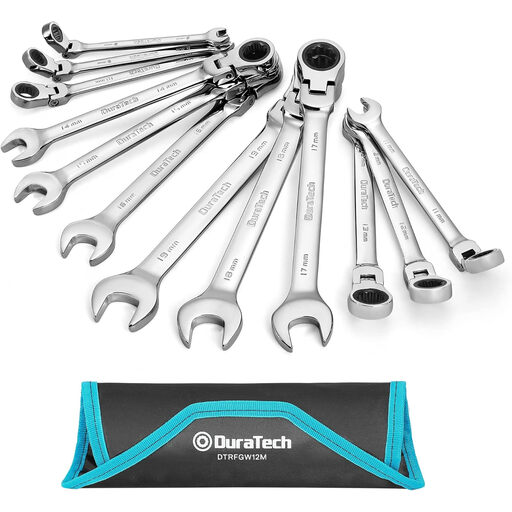
Why This Fits Their Persona: Perfect for the mechanic who regularly works in compact engine bays or around complex components where a standard wrench won't fit.
This isn't a general-purpose set, but a specialized tool. The 180-degree flex head and 72-tooth ratchet are designed to solve a specific problem (lack of space), rather than being a gimmicky feature.
Reaches bolts where a standard ratchet fails. The 5-degree swing arc allows for efficient work. Made from Cr-V steel with a mirror-polish finish for corrosion resistance.
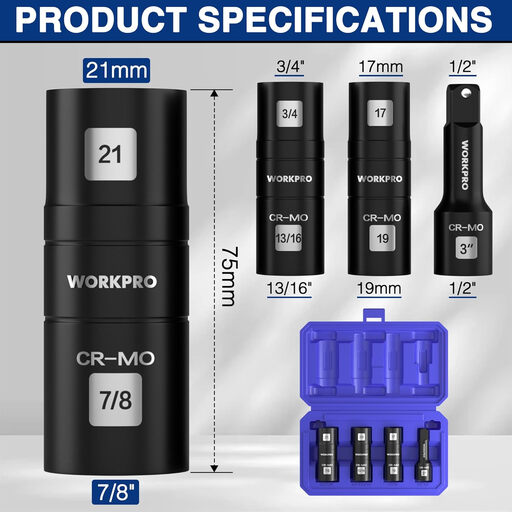
Why This Fits Their Persona: Specifically designed for heavy-duty work, like changing wheels or undercarriage repairs. These are tools that must withstand the force of an impact wrench.
This is not 'soft' metal. The sockets are made from Cr-Mo steel, which the manufacturer states is heat-treated to withstand the high torque of an impact wrench without cracking or deforming.
The double-sided 'flip' sockets combine the most common metric and SAE lug nut sizes into one compact set. Includes a 3" extension for better reach.
We've compiled a complete, up-to-date list of products that fully meet these strict selection criteria and current safety standards.
Chrome Vanadium (Cr-V) is an excellent all-around choice for hand tools. It is hard and wear-resistant. Chrome Molybdenum (Cr-Mo) is tougher and better at withstanding sudden, high forces (impact). That's why it's used for impact sockets that are used with an impact wrench. For general use, Cr-V is more than sufficient.
More teeth mean a smaller swing arc, which is useful in tight spaces. A 72-tooth ratchet (5° arc) is a versatile standard. A 90- or 144-tooth ratchet offers extra precision, but the overall quality and durability of the mechanism are more important than just the tooth count.
Not necessarily. A large set can contain a lot of unnecessary 'filler'. It's better to invest in a smaller, high-quality set with the tools you actually need than in a giant set where half the components are of inferior quality. Focus on the composition and material, not just the piece count.
