
Vandaag of morgen in huis

Kwaliteit gegarandeerd

Welkomstaanbiedingen ontgrendelen: GRATIS bezorging | Tot 80% korting | Gratis 30 dagen JoyPlus-proefperiode
Download de app
Buying a new tool set feels like a major upgrade. You're ready for any job. But the reality is often different. You open the case to find a pile of shiny steel that bends after a single use, or a 150-piece set that's missing the one socket you actually need. Sound familiar?
As a Product Recommendation Officer at Joybuy, I see the challenges DIYers and hobbyists face every day. Let's expose the two most common pitfalls so your next purchase is a perfect fit.
Marketing terms mean very little. The material of your tools determines their lifespan and reliability. Look for these two standards:
The "drive" is the square connector on the ratchet where the socket attaches. The size determines what type of job the ratchet set is suitable for.
Sometimes a standard set isn't enough. For precisely tightening bolts to a specific torque, a torque wrench is indispensable, especially for modern cars and bicycles. Working on brake lines? A standard open-end wrench can damage the hex on a fitting. A special flare nut wrench grips the fitting more securely and prevents rounding. For speed and convenience in tight spaces, a cordless ratchet is a game-changer.
Below are a few choices tailored to different user types. These aren't "winners," but functional options that meet specific needs and avoid the pitfalls mentioned earlier.
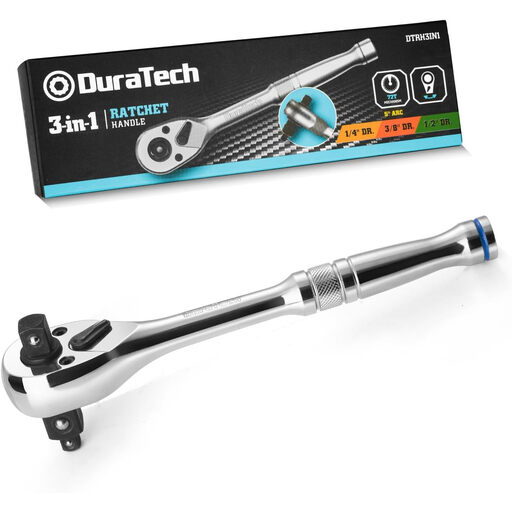
Why This Fits Their Persona: Perfect for those starting out who don't want to buy three separate ratchets immediately. This single ratchet fits the most common socket sizes (1/4", 3/8", and 1/2"), making it ideal for jobs around the house, on a bike, or for basic car maintenance.
Instead of a case full of filler, you're investing in one multifunctional and solid piece of core equipment. No superfluous parts, just pure functionality.
One ratchet for three different socket drive sizes saves space and money. The head is made of strong CR-MO steel for durability.
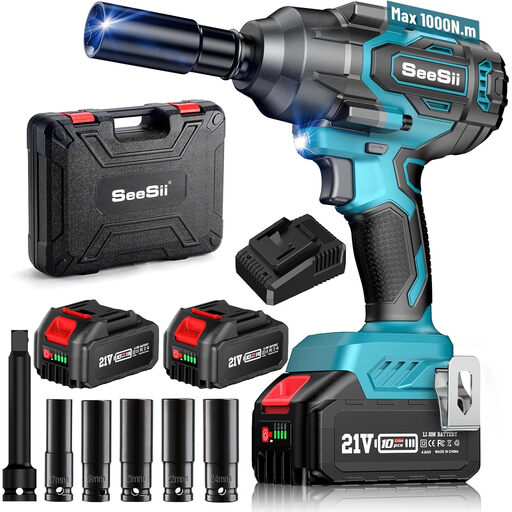
Why This Fits Their Persona: For those who regularly change their own tyres or work on their car's suspension. With a breakaway torque that the manufacturer claims is 1000 Nm, you can loosen even the most stubborn, rusted-on lug nuts effortlessly.
This is not a weak tool. Its specifications (1000 Nm of torque, two 4.0Ah batteries) are performance-focused. It's built for heavy-duty work, not just to fill out a spec sheet.
Immense power for loosening bolts and nuts. It comes as a complete kit with two batteries, a charger, and the most common lug nut sockets.
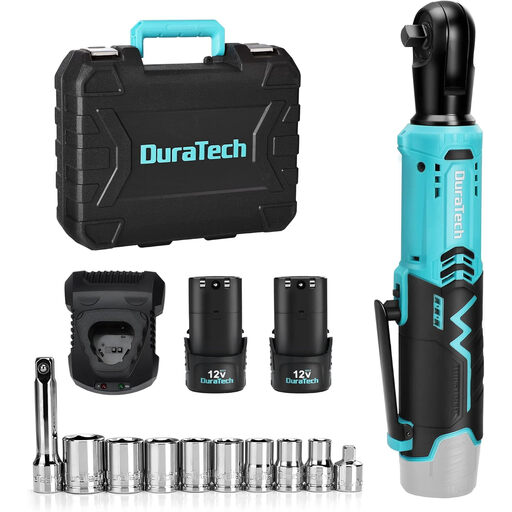
Why This Fits Their Persona: Ideal for jobs in places where you have little room to swing a standard ratchet, such as in an engine bay. The electric drive does the work for you, saving time and frustration.
This isn't a gimmick. A cordless ratchet is a functional upgrade that genuinely speeds up your work. The kit is complete with batteries and sockets, so you can get started right away.
Quickly and effortlessly tighten and loosen nuts and bolts in tight spaces. The kit includes two batteries, a charger, and a selection of sockets in a storage case.
We've curated a complete, up-to-date list of products that fully meet our strict selection criteria.
This refers to the size of the square connector on the ratchet. Simply put: 1/4-inch is for small, precision work; 3/8-inch is the most versatile size for general use; and 1/2-inch is for heavy-duty applications that require a lot of force, like with automotive tools.
For a standard city bike, usually not. But for a performance road bike or mountain bike, especially one with carbon components, a torque wrench is essential. Over-tightening parts can cause costly and invisible damage. A range of 2-20 Nm is often sufficient for most bicycle-related jobs.
Keep it simple. Clean and dry your tools after use to prevent rust. Store them in their original case or another dry area. A drop of lubricating oil in a ratchet's mechanism every few months will keep it running smoothly and significantly extend its lifespan.
