
Vandaag of morgen in huis

Kwaliteit gegarandeerd

Welkomstaanbiedingen ontgrendelen: GRATIS bezorging | Tot 80% korting | Gratis 30 dagen JoyPlus-proefperiode
Download de app
A tool kit may seem simple to choose at first: the more pieces it contains and the higher the wattage, the more appealing the deal. In practice, a large number of accessories doesn’t always mean a kit is useful. For example, a set might contain lots of bits but no suitable sockets, spare parts or sturdy storage case.
Whether you need tools for your home, student room, garage or workshop, three things matter most: the contents should suit the jobs you do, the key materials should stand up to repeated use, and any power tools should provide the right level of power. Read on to find out what to consider before buying a complete tool kit or tool set in a case.
A 149-piece tool kit sounds comprehensive, but check what’s actually included. Small nails, wall plugs and bits can quickly increase the piece count, while useful essentials such as pliers, a hammer, spirit level or tape measure may be missing. Check the individual items rather than relying on the total number.
Cordless drills and cordless impact wrenches often come with maximum figures in their specifications. A higher number doesn’t automatically mean the tool is suitable for every job. When driving screws into furniture, control at low speed is important. For wheel nuts or seized fixings, suitable sockets, a sturdy drive and an appropriate torque setting matter more.
So, assess specifications such as 21V or 800 N.m in relation to the job you need to do. According to the manufacturer’s own information, the CONENTOOL impact wrench delivers up to 800 N.m. This is a stated maximum, not a guarantee that every bolt will come loose in every situation.
A storage case is useful when every tool has its own place. Without a good layout, bits, sockets and small accessories can easily go missing. Check the dimensions and weight too, and make sure the case will fit wherever you plan to store it, whether that’s a cupboard, van or student room.
Common materials for hand tools include CR-V steel, hardened carbon steel and stainless steel. The material name alone doesn’t tell you how durable a tool will be. Look at the heat treatment, protective finish and quality of the handles too.
If you use tools in a damp garage, it’s important to store them somewhere dry. Clean metal parts after use and avoid leaving them exposed to water for long periods. Don’t use tools that are damaged or worn, especially for jobs that involve applying force.
For general home maintenance, useful items include combination pliers, screwdrivers, bits, Allen keys, a hammer, tape measure, spirit level and knife. For furniture assembly, a range of Phillips and flat-head bits is important. For car or construction work, sockets and a powered drive are usually more useful than dozens of small hand tools.
A home tool kit doesn’t need the same contents as a professional tool kit. Choose a set with a good range of basics if you only occasionally hang something or make a repair. For daily maintenance, a better-organised case, an extra battery and suitable spare accessories are often more valuable.
When choosing a cordless drill set, check at least the following:
A variable-speed trigger helps you start gently. An adjustable clutch can prevent small screws from being driven too far when assembling items. With an impact wrench, it’s also important to check the drive size, included impact sockets and direction switch.
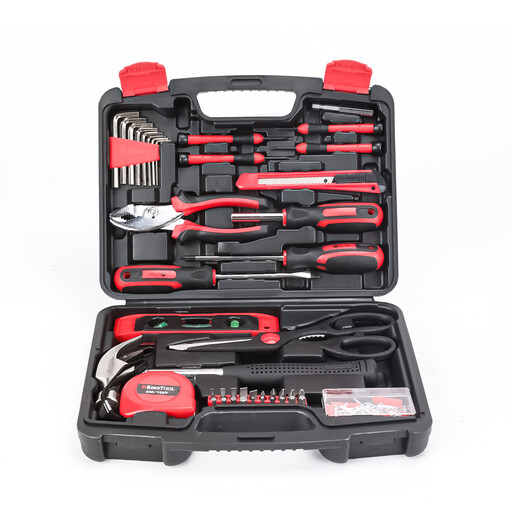
Why it suits this type of user: This set is designed for everyday home maintenance, furniture assembly, hanging items on walls and carrying out small repairs in a student room, office or garage.
The contents are listed individually and stored in a plastic case with separate slots. This makes it easier to check exactly what’s included.
149 pieces, including screwdrivers, pliers, a hammer, spirit level, tape measure, bits and fixings.
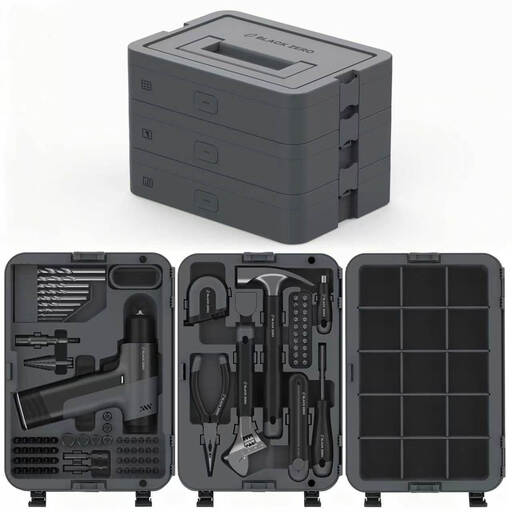
Why it suits this type of user: The three-layer case and separate drill compartment are ideal if you want to keep your tools organised for regular maintenance or DIY projects.
The product description specifies a separate compartment for the drill and fixed sections for accessories, so you can check how everything is organised.
16V drill, 1.600mAh battery and a compact case measuring 329,5 × 236,5 × 75 mm.
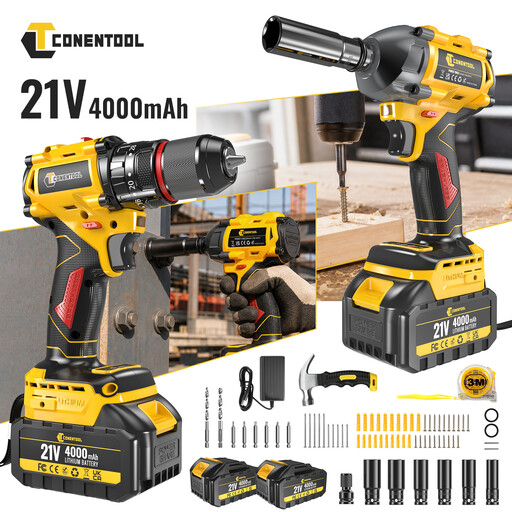
Why it suits this type of user: This combination is designed for assembly, maintenance, drilling and jobs where you need to use an impact wrench and cordless drill side by side.
The set includes two 21V 4.000mAh batteries, a charger, accessories and a storage case. Before buying, check that the included socket sizes suit your fixings.
71 pieces, a drill with up to 55 N.m of torque, an impact wrench with a 1/2-inch drive and two batteries.
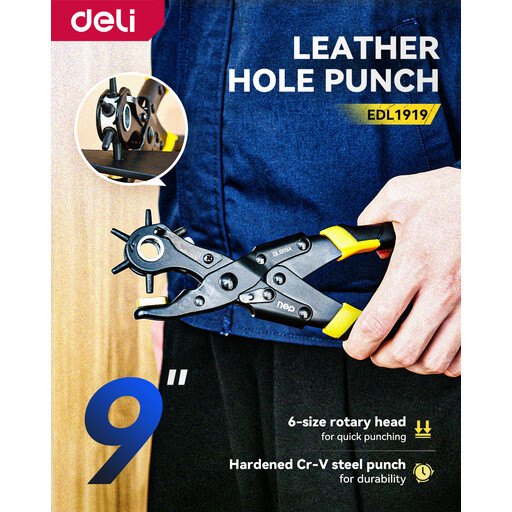
Why it suits this type of user: For leather, canvas, fabric and similar materials, specialist pliers are more practical than a general tool kit containing only standard hand tools.
The six interchangeable heads are specified as 2, 2,5, 3, 3,5, 4 and 4,5 mm, so you can choose the right size for your material in advance.
Coated steel, non-slip handles and a double-lever mechanism, according to the product description.
We’ve put together a comprehensive, up-to-date list of products that meet these strict selection criteria and the applicable European safety requirements.
For home maintenance, a set with screwdrivers, bits, pliers, a hammer, tape measure, spirit level, Allen keys and a knife is usually enough. A cordless drill is useful if you regularly assemble furniture or drill into wood and metal.
Its lifespan depends on the materials, how heavily it’s used, how well it’s maintained and how it’s stored. A set kept in a dry place and not used with excessive force will generally remain useful for longer. Regularly check the handles, jaws, bits and ratchet mechanisms for wear.
A 21V tool kit can be useful for assembly, maintenance and demanding DIY jobs. For professional use, you should also consider how much it will be used each day, whether spare batteries are available, the warranty terms, the accessories and the exact torque and speed settings.
