
Vandaag of morgen in huis

Kwaliteit gegarandeerd

Welkomstaanbiedingen ontgrendelen: GRATIS bezorging | Tot 80% korting | Gratis 30 dagen JoyPlus-proefperiode
Download de app
A tool kit can look tempting because of a high piece count. But “149-piece” means little if the right sockets are missing, the case is chaotic or the materials don’t suit your jobs. For home maintenance, assembling furniture, bicycle repairs or a renovation project in the Netherlands, a targeted choice is usually more practical than buying as many pieces as possible.
These pitfalls are common:
Start by deciding what you’ll use the tool kit for. For general maintenance you’ll often need a mix of:
For car and motorbike maintenance, metric sockets, extensions and different drive sizes matter more than a large number of small screwdriver bits. Check whether the set includes 1/4-, 3/8- or 1/2-inch drives and whether sizes are clearly marked on the sockets.
Much hand tool steel is chrome vanadium, abbreviated Cr-V. You’ll often see it used for sockets, ratchets and spanners. Heat treatment can affect hardness and wear resistance. Bits are often made from S2 steel. Also look for:
Material information isn’t a guarantee that every component is suitable for heavy professional use. Always use tools within their stated application and replace damaged parts.
For a cordless screwdriver, torque, speed, charging type and bit holder all matter. Lower torque is often desirable for electronics and furniture assembly, while a higher setting gives you more scope with tougher screws. An electric screwdriver with a manual spindle lock can also be used without the motor, but do check the stated limits.
With a cordless drill, look at the chuck type, the speed ranges, the number of torque settings and the batteries supplied. Also check whether a battery is included with the product. For an impact wrench, the stated torque is key. A high figure doesn’t mean every vehicle component should be tightened with it: for wheel bolts, the specified torque wrench setting remains the rule.
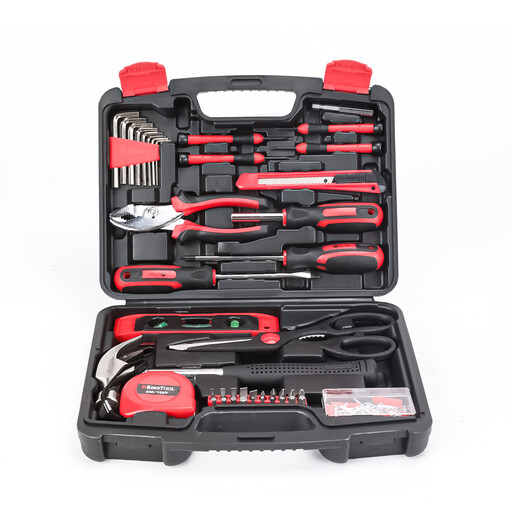
Why this suits the profile: This complete tool kit is geared to everyday jobs around the home, such as assembling furniture, hanging items or carrying out small repairs.
The contents are described clearly, including screwdrivers, pliers, a hammer, spirit level, tape measure, bits and fixings. That way you can see in advance what you actually get.
149 pieces, a plastic case with individual slots and a 3-metre tape measure. Suitable as a starter set for home and office.
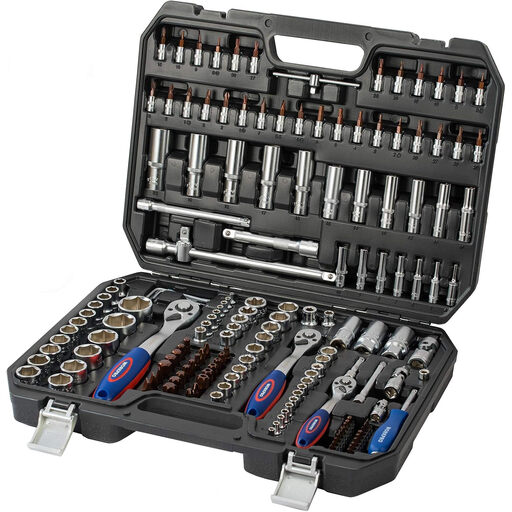
Why this suits the profile: The comprehensive set suits mechanics and keen DIYers who maintain different vehicles, bikes and household fixings.
The product description lists sizes, drives, extensions and ratchets separately. You don’t have to rely on the overall piece count.
172 pieces, three 72-tooth ratchets, metric sockets and a robust storage case. The set includes 1/4-, 3/8- and 1/2-inch drives.
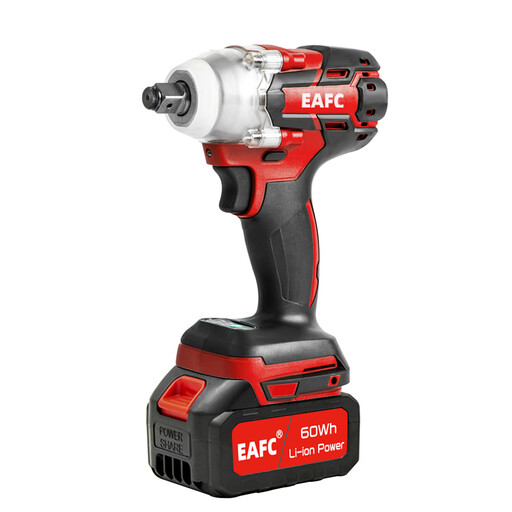
Why this suits the profile: This electric wrench is mainly intended for users who regularly work with larger bolts, for example during car maintenance.
The stated specifications list 200 N.m maximum torque, a 21V battery, M10–M24 as the application range and a square drive. Check before buying that this matches your sockets.
Cordless design, LED work light, forward/reverse switch and an included 60 Wh lithium-ion battery according to the product information.
If you mainly assemble furniture, computers or other light structures, you don’t always need a large tool case. According to the product description, the Fanttik S1 Pro electric screwdriver has three torque settings of 1.5, 3 and 4.2 N.m, a maximum hard torque of 6 N.m and 16 S2 bits. The 2,000 mAh battery charges via USB‑C. Take a look at the Fanttik S1 Pro if compact hand tools for furniture or PC assembly are your main aim.
For plasterwork and wall repairs, individual tools often make more sense than a complete set. The 2.5-inch ROLLINGDOG putty knife is intended for filler, grout and scraping. For wider joints there is also a 5-inch version. Do not use such knives for food preparation or electrical work, and follow the safety instructions for the material you’re working with.
Clean metal parts after use and dry them immediately. Store bits and sockets in the accompanying case so sizes don’t go missing. Check pliers, cutting edges, ratchets and batteries regularly for damage. Don’t use damaged tools, and wear safety glasses and suitable gloves for cutting tasks.
With power tools, avoid moisture and overloading. For electrical work, only use tools designed for that job and isolate installations safely. A tool kit can support many day-to-day tasks, but it is no substitute for appropriate protection or competent execution for high-risk installation work.
We have compiled a complete, up-to-date list of products that fully meet these strict selection criteria and current European safety regulations.
For general use, a set with screwdrivers, pliers, a hammer, measuring tools, hex keys and a few metric sockets makes a practical base. If you often work on bikes or cars, add a ratchet set with 1/4- and 3/8-inch drives.
Not always. A large set is only good value if you use the contents. Compare the contents, material type, size spread and storage quality. A smaller, well-rounded tool kit can be more suitable if you mainly assemble furniture or carry out small home repairs.
Lifespan depends on material, load, maintenance and storage. Dry tools after use, avoid excessive force, and use each spanner, plier or bit only for its intended job. Wear on cutting edges, grip or ratchet mechanisms is a reason to replace the part.
