
Vandaag of morgen in huis

Kwaliteit gegarandeerd

Welkomstaanbiedingen ontgrendelen: GRATIS bezorging | Tot 80% korting | Gratis 30 dagen JoyPlus-proefperiode
Download de app
A tool case may seem simple at first glance: choose a size, check the number of compartments and place your order. In practice, the layout, material and carrying comfort largely determine whether your purchase remains convenient to use months later. This applies to DIY enthusiasts, homeowners and tradespeople who regularly take their tools to different work locations.
The most important question is therefore not how many compartments a case has, but which tools you want to store in it and how you intend to use the case.
A tool set with lots of pieces sounds appealing, but a large number of bits, screws or small accessories is not automatically useful. Check whether the set suits the jobs you need to do. Assembling furniture requires different tools from car maintenance or installation work.
Look out for:
A deep box without dividers can hold a lot, but small parts are easily misplaced. An open tool bag often offers more flexibility, but without compartments, pliers and screwdrivers can end up mixed together.
Choose a layout that suits your routine. Individual slots are useful for a fixed tool set. Open compartments and elastic loops are more practical when you want to grab something quickly while working.
A large toolbox can hold plenty, but it quickly becomes heavy. A compact case is easier to carry, but may not have enough room for a drill or longer handles.
Check the following before buying:
For everyday use, a sturdy plastic or metal housing is practical. Plastic is generally lighter and suitable for tools for the home. Aluminium may be a good choice if you want a hard case with a lockable design. For metal models, check how the edges, hinges and catches have been finished.
For a tool bag, the thickness of the fabric is important. The WORKPRO 16-Inch Heavy Duty Tool Bag product description specifies 1680D polyester, a hard plastic base and a design with 39 pockets. The manufacturer’s description also mentions protection against wear and a water-resistant base. Treat this as brand-provided product information and always check the current specifications on the product page.
A wide opening is helpful when you often need different types of tools. A tool case with removable drawers or fixed holders is more convenient if you want to return everything to a designated place.
Transparent lids are useful for small items such as wall plugs, screws and nuts. This means you do not have to open the entire case. A tool organiser with separate trays can also prevent small parts from disappearing among larger tools.
The catch should be sturdy enough to keep the case closed during transport. An opening for a padlock can be particularly practical in a shared workshop. Also check that the hinges and handles are securely attached to the housing.
Dry metal tools after use and do not store them in a damp bag for long periods. If you have a tool bag with a hard base, it is advisable to clean the base regularly. This helps prevent dirt and metal particles from settling in the seams.
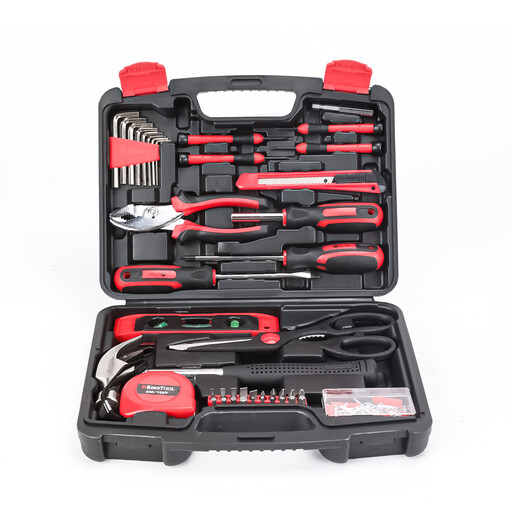
Why it suits this user profile: This set combines a wide range of essential tools with a plastic case. It is designed for assembling furniture, attaching items to walls, carrying out minor repairs and handling everyday DIY tasks around the home.
According to the description, the tools are stored in individual slots. This keeps the set more organised than an open box containing mixed tools.
149 pieces, 20 bits, a hammer, pliers, spirit level, tape measure and a plastic case with dedicated slots.
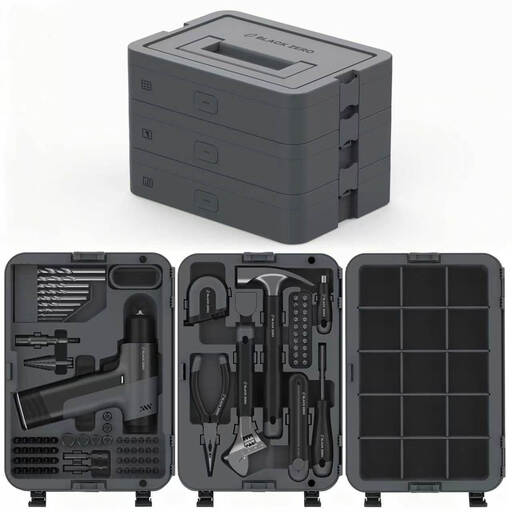
Why it suits this user profile: This set is designed for users who want a dedicated place for a cordless drill and hand tools, without needing a separate case for each item.
The dedicated drill compartment and three-part layout help prevent power tools and accessories from becoming mixed up.
16 V DC, 1600 mAh battery capacity and case dimensions of 329.5 × 236.5 × 75 mm according to the product information.
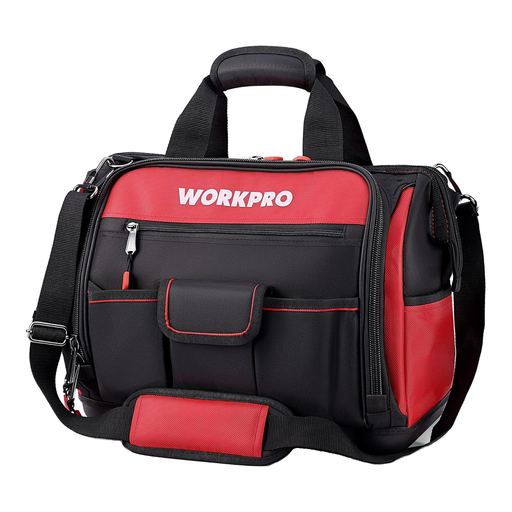
Why it suits this user profile: This bag is suitable for electricians, plumbers, carpenters, vehicle mechanics and other users who regularly take their tools to different locations.
The wide opening, compartments of different depths, elastic loops and hooks keep tools accessible without having to empty the bag.
1680D polyester, dimensions of 42 × 24.5 × 34 cm, 39 storage spaces and an adjustable shoulder strap according to the product description.
A tool bag is suitable if you need quick access and frequently change its contents. A hard tool case offers better protection against knocks and keeps items in their designated places. A larger toolbox is better suited to a garage or workshop, particularly when you need several drawers or trays.
For a compact home set, the KingTool case and BLACKZERO set are sensible options to compare. For mobile work, a WORKPRO bag offers greater flexibility. For each model, check the current contents, warranty, dimensions and any accessories before ordering.
We have compiled a complete, up-to-date list of products that fully meet these strict selection criteria and the applicable European safety regulations.
Start by looking at the longest and heaviest items you want to carry. A compact case is often sufficient for basic household tools. If you want to carry a drill, several pairs of pliers and measuring tools, you will need more depth and load capacity. Also measure the storage space in your car, cupboard or work van.
That depends on how you intend to use it. A bag is usually flexible and easy to access, while a hard case offers more structure and protection. A bag with a shoulder strap may be more comfortable if you regularly travel to customers. For fixed storage and an organised tool set, dedicated slots in a case are often more convenient.
Return each item to its designated place after use, remove dirt and keep metal tools dry. Store sharp accessories in separate compartments and do not overfill the case. Check the catches, hinges and handles from time to time. This keeps your tools organised and helps limit unnecessary wear.
