
Vandaag of morgen in huis

Kwaliteit gegarandeerd

Welkomstaanbiedingen ontgrendelen: GRATIS bezorging | Tot 80% korting | Gratis 30 dagen JoyPlus-proefperiode
Download de app
A toilet brush with holder should always be readily available in the bathroom, but not every model is equally practical. A toilet brush may look neat in photos yet disappoint quickly because of an unstable holder, overly soft bristles or water that remains in the container after use.
For households, offices, hotels and guest bathrooms, three factors matter most: the brush must reach the toilet bowl effectively, the holder should take up minimal space and the entire set should be easy to clean. Below, I explain what to look for and which models suit different use cases.
A toilet brush holder with a modern design may complement the bathroom beautifully, but its appearance reveals little about stability or maintenance. Always check the dimensions, materials and how water drains from the holder.
A closed holder can help contain splashes, but it needs adequate ventilation or a practical drainage compartment. Otherwise, the toilet brush may remain damp for an extended period.
The description toilet brush with sturdy bristles is not always sufficiently clear. Instead, look at the bristle material and length. Polypropylene, often referred to as PP, is a commonly used plastic for toilet brushes. Ideally, the product description should specify how long or firm the bristles are.
Also bear in mind that firm bristles do not automatically mean the brush is suitable for every surface. Use a toilet brush according to the manufacturer’s instructions and avoid applications for which the product was not designed.
In a small toilet room, a wide base can become an obstruction. Measure the space beside the toilet before placing your order. A compact toilet brush with holder often has a base measuring approximately 10 to 13 cm, but always check the exact dimensions.
For hotels and offices, height is also important. A longer handle can make use more comfortable, while an excessively tall model may collide with a shelf or washbasin.
A plastic toilet brush is generally lightweight, moisture-resistant and easy to rinse. Polypropylene is a common material for both the brush and the holder. Some models feature a stainless-steel handle combined with a holder made from another material, such as polyresin.
A combination of materials is not automatically better. Pay particular attention to the components that regularly become wet and follow the care instructions.
A bathroom toilet brush should be long enough to reach the inside of the bowl and the area beneath the rim. The models in this selection are approximately 36 to 40 cm tall. A 37 cm handle, for example, provides useful reach without taking up unnecessary space.
A brush head or bristles measuring 25 mm can help reach curved surfaces and the underside of the rim. According to the product description for the 37 cm model, the PP bristles are designed for this purpose. This is a product specification, not a guarantee of a particular cleaning result in every toilet bowl.
A toilet brush with holder is more practical when the brush can drain after use and the holder is easy to clean. Rinse the brush thoroughly after use, return it to the holder and clean both components regularly with a mild cleaning product or a suitable bathroom disinfectant.
Do not use abrasive products if the product description advises against them. Replace the brush when the bristles are visibly worn or misshapen.
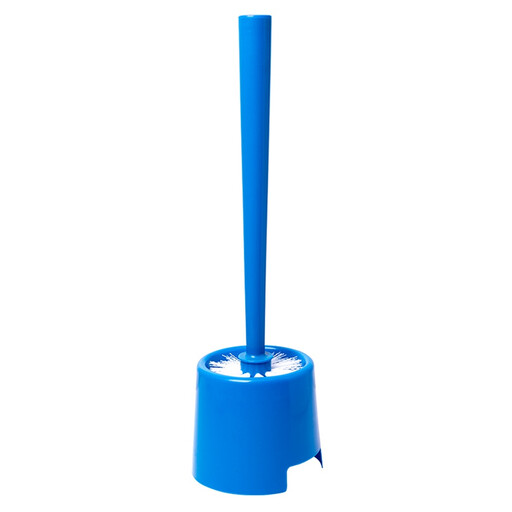
Why it fits: A straightforward set for an apartment, student room or guest bathroom where space efficiency and everyday practicality are priorities.
The product description specifies a holder and an 11.5 x 11.5 cm base, making it relatively easy to check the required space in advance.
A total height of 37 cm, 25 mm PP bristles and an all-plastic design according to the product specifications.
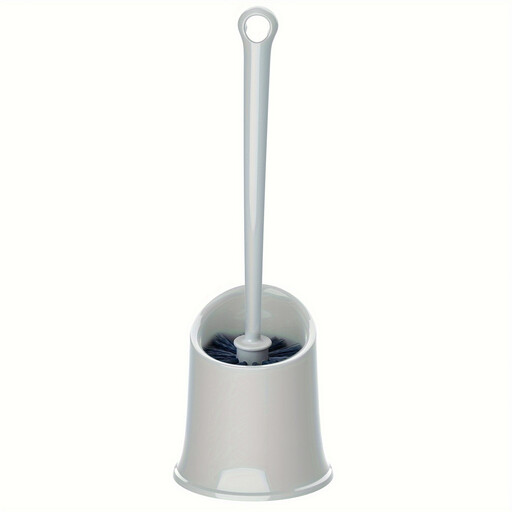
Why it fits: Ideal for bathrooms where a covered toilet brush holder in a neutral colour is preferred.
According to the product description, the set includes a covered holder designed to allow water to drain away. Nevertheless, check regularly that the holder remains dry.
Polypropylene construction, approximately 36 cm high and around 12.5 cm wide; no installation is required.
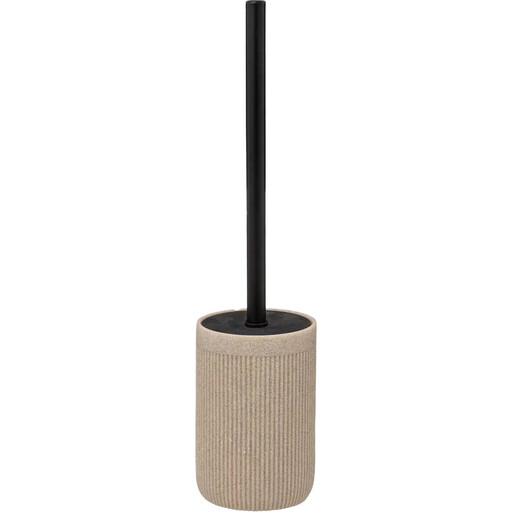
Why it fits: A freestanding model for a modern bathroom where materials and design matter alongside everyday functionality.
The dimensions are clearly specified as 9 x 9 x 40 cm, so you know in advance how much floor space and headroom are required.
A polyresin holder, stainless-steel handle and polypropylene brush according to the product information.
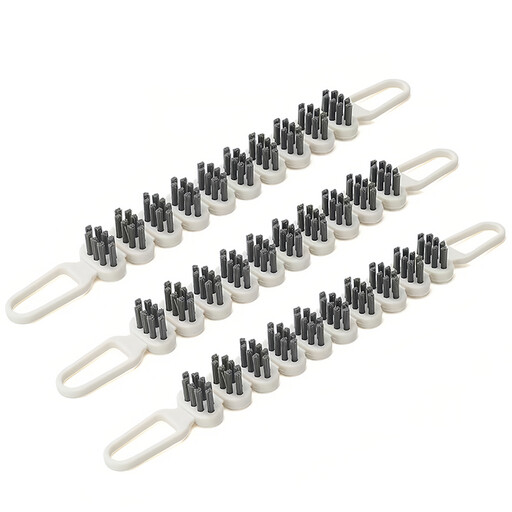
Why it fits: This is not a replacement for a toilet brush, but a useful addition for rims, grout lines, taps and other hard-to-reach areas in sanitary spaces.
You can use the right tool for narrow gaps instead of putting unnecessary strain on a toilet brush.
A set of three brushes with a flexible design and soft bristles according to the product description.
Browse a current selection of cleaning brushes and compare materials, sizes and applications before placing your order.
A hygienic toilet brush is primarily the result of regular maintenance. Rinse the bristles after every use and allow excess water to drain before returning the brush to its holder. Clean the holder periodically and check that no standing water remains at the bottom.
Use the toilet brush only for the toilet bowl. For the rim, floor or grout lines, it is better to use a separate cleaning brush. Replace the brush when the bristles start coming loose, bend over or no longer spring back properly.
That depends on the available space. Measure the width and depth beside the toilet and take the height of shelves or washbasins into account. Compact models often have a base measuring approximately 9 to 12.5 cm.
There is no fixed replacement schedule for every household. Check the bristles regularly and replace the brush as soon as they become worn, loose or misshapen. With intensive use in an office or hotel, replacement may be necessary sooner than at home.
Polypropylene and other plastics are widely used for toilet brushes because they are lightweight and easy to rinse. Always check the product specifications and care instructions. Service life depends, among other things, on frequency of use, cleaning products and how the brush is stored.
