
Vandaag of morgen in huis

Kwaliteit gegarandeerd

Welkomstaanbiedingen ontgrendelen: GRATIS bezorging | Tot 80% korting | Gratis 30 dagen JoyPlus-proefperiode
Download de app
A toilet brush with a holder may seem like a simple household product, but small design differences determine how convenient it is to use every day. A holder that retains water, limp bristles or an overly wide base can quickly become frustrating. This applies at home, but also in an office, hotel or guest accommodation where the toilet brush is used more frequently.
When choosing one, therefore, do not focus solely on the colour or the promise of a “fresh” bathroom. Pay particular attention to the bristles, dimensions and the way water drains away after use.
A closed stand may look neat, but if moisture remains at the bottom of the holder, cleaning becomes more difficult. Check whether the toilet brush holder allows water to drain away or dry out. A separate, easy-to-clean holder is often more practical than a design with hard-to-reach edges.
Terms such as “antibacterial”, “extra hygienic” or “maximum cleaning” mean little without a technical explanation. Instead, look for verifiable information such as the material, bristle length, dimensions and care instructions. According to the product information provided by some brands, a handle may have an antibacterial treatment; this is a brand claim, not a general guarantee regarding the hygiene of the entire toilet brush set.
Overly soft bristles may be less effective at removing dried-on dirt. Very hard or incorrectly shaped bristles can be awkward to use on ceramic surfaces and around the rim. Also check whether the brush head reaches beneath the rim and along curved sections. A sturdy handle is also important for intensive use.
Many toilet brushes use polypropylene (PP) or nylon. According to the product descriptions of the models mentioned, PP is a plastic that is resistant to moisture and many commonly used cleaning products. This does not mean that every harsh product is suitable: always follow the cleaning product’s label.
The length of the bristles affects their reach. A model with 25 mm-long PP bristles, such as the blue 37 cm toilet brush, is designed to reach beneath the rim and along curved surfaces. Also check that the bristles are firm enough for your cleaning routine, and replace the brush when they are visibly bent or worn.
Measure the space beside the toilet before ordering. A compact toilet brush may be suitable for a small bathroom, but also for a toilet area in an office or hotel. Pay attention to:
A base measuring 11.5 x 11.5 cm takes up relatively little floor space. Other models may measure approximately 9 x 9 cm or 12.5 cm in width. Compare the measurements with the space available instead of relying solely on the product photo.
A plastic toilet brush model is generally easy to wipe clean. According to the product specifications provided, polypropylene is lightweight and moisture-resistant. A holder with a lid or enclosed design can keep the brush out of sight, while an open or drip-through design helps it to dry.
Rinse the brush in the toilet bowl after use, allow as much excess water as possible to drain away and then place it back in the holder. Clean the brush and stand regularly with a suitable bathroom cleaning product. Do not use abrasive products if the manufacturer advises against them.
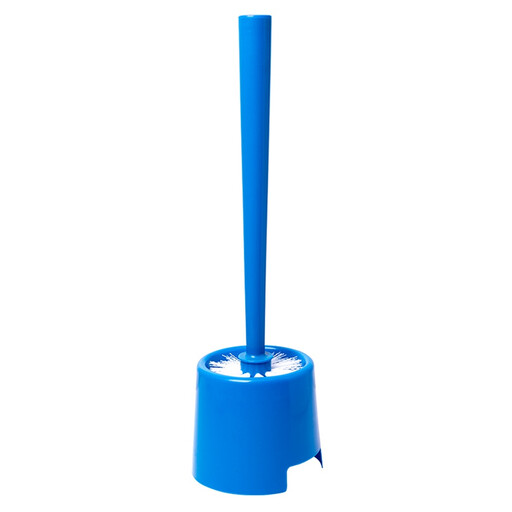
Why it suits this profile: This toilet brush set has a plastic holder and a base measuring 11.5 x 11.5 cm. This makes it suitable for anyone looking for a simple toilet brush for a bathroom, toilet area or guest toilet.
The product information clearly states the material, dimensions and bristle length. This means you do not have to rely solely on general cleaning claims.
37 cm overall height, 25 mm PP bristles and a compact polypropylene holder.
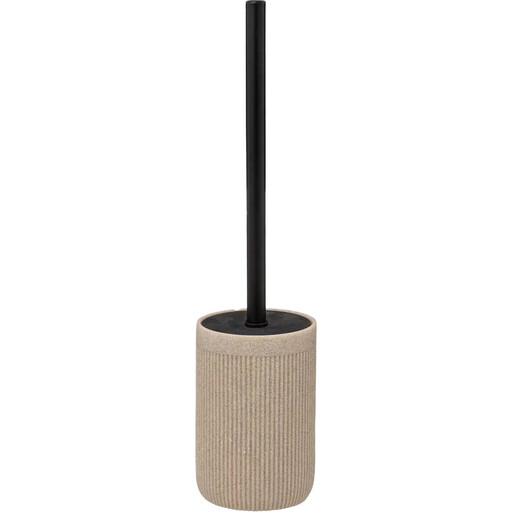
Why it suits this profile: The combination of a stainless steel handle, a PP brush and a polyresin holder suits a modern bathroom where the choice of materials and appearance matter.
The specifications list the materials separately. This allows you to compare the construction with fully plastic models.
Dimensions of 9 x 9 x 40 cm, freestanding placement and a stainless steel handle.

Why it suits this profile: According to the product description, the loop-shaped brush head is designed for hard-to-reach areas, such as beneath the rim and around the curve of the bowl. This can be useful in offices, hotels and other heavily used toilet facilities.
The brush shape is described specifically, rather than being promoted only with a general term such as “thorough cleaning”.
Nylon bristles, compact dimensions of 13.8 x 14.2 x 11 cm and a handle that, according to the product information, has an antibacterial treatment.
We have compiled a complete, up-to-date list of products that fully meet these strict selection criteria and the applicable European safety regulations.
Use a toilet brush only for the toilet bowl. Do not mix cleaning products, particularly if one of them contains bleach. Keep cleaning products and toilet blocks out of the reach of children, and follow the safety information on the packaging.
Replace the brush when the bristles are worn, bent or discoloured, or when cleaning is no longer sufficient. With intensive use in an office, hotel or guest accommodation, this may be necessary sooner than in a household. There is no fixed replacement period that applies to every model.
Place the holder beside the toilet on a flat, stable surface. Leave enough space to remove the brush from the stand without it touching walls or furniture. In a small bathroom, choose a compact toilet brush with a base whose width and depth you have checked in advance.
A holder provides a designated place and prevents the used brush from being left on the floor. However, hygiene also depends on regularly rinsing, drying and cleaning the stand. A holder with good drainage is therefore more practical than a model in which water collects.
