
Vandaag of morgen in huis

Kwaliteit gegarandeerd

Welkomstaanbiedingen ontgrendelen: GRATIS bezorging | Tot 80% korting | Gratis 30 dagen JoyPlus-proefperiode
Download de app
A toilet brush with holder may seem like a simple household product, but small design choices determine how convenient it is to use. A toilet brush that cannot reach under the rim, a holder that retains water or a base that takes up too much space can quickly become a source of frustration and lead to premature replacement.
This buying guide helps households, tenants, offices and accommodation providers distinguish marketing claims from practical product specifications.
A round brush head may be suitable for cleaning the inside of the toilet bowl, but awkward areas such as the rim, curves and the connection to the drain can sometimes be difficult to reach. So check whether the product description explicitly mentions under the rim, a curved head or an additional rim-cleaning section.
A closed holder can keep splashes and residue out of sight, but moisture that remains at the bottom makes cleaning more difficult. Look for a drainage or drip-dry design and check whether the holder can be cleaned regularly. “Hygienic” is not a fixed product characteristic; in practice, it also depends on rinsing, drying and maintenance.
Silicone, nylon and polypropylene each have different properties. A silicone brush is often presented as resistant to odours or bacteria. According to information provided by the SNSP brand, the brush is easy to clean and resistant to bacteria and odours. This is a brand claim, not a universally guaranteed result. Pay particular attention to the actual shape, firmness, dimensions and care instructions.
For a toilet cleaning brush, firm bristles are useful for removing dried-on residue, but bristles or metal parts that are too hard can damage surfaces. A brush made from PP, or polypropylene, is lightweight, moisture-resistant and easy to rinse. For example, the blue version has 25 mm-long PP bristles. According to the product description, these are designed to clean under the rim and along curved surfaces.
A silicone brush usually has flexible fins instead of individual bristles. This can make rinsing easier, but check whether the head reaches the entire inner rim of your toilet. A nylon brush, on the other hand, may provide a more traditional scrubbing feel.
A longer handle means you do not have to work as close to the surface being cleaned. A length of around 36 to 40 cm is common for many toilet brushes. Also measure the space beside the toilet. A compact toilet brush with holder measuring approximately 9 to 12.5 cm wide will often fit better in a smaller bathroom than a wider model.
Pay attention to the height of the holder too. A 37 cm set may be practical for use beside a standard toilet, while a 40 cm model may be more noticeable in an open bathroom layout.
A freestanding holder is easy to position and requires no tools. This is useful in rented properties or when you regularly change the layout. A wall-mounted model can save floor space, but check beforehand that the fixing method is suitable for the tiles, grout and wall surface. “No-drill” does not automatically mean that every adhesive fixing will remain securely attached to every damp wall over time.
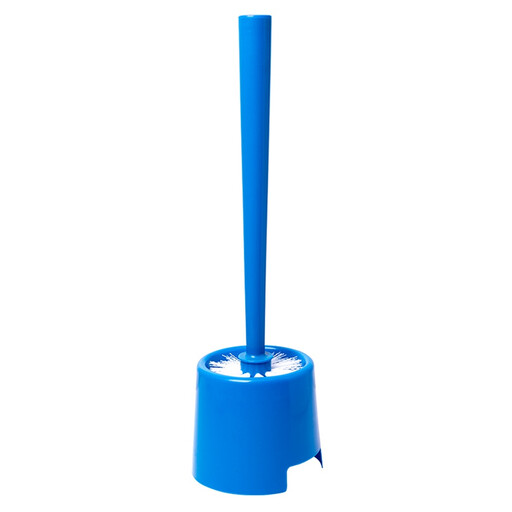
Why it suits this profile: A straightforward brush and holder set for anyone who wants to position a toilet brush beside the toilet without complicated installation.
The product information specifies firm PP bristles measuring 25 mm and includes a holder. This makes the material and dimensions clearer than a description without technical details.
37 cm total height; compact base measuring 11.5 x 11.5 cm; suitable for bathrooms, offices or guest rooms.
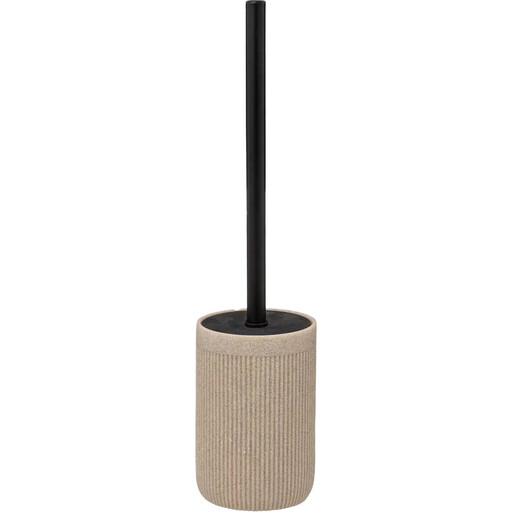
Why it suits this profile: Ideal for a modern bathroom where the toilet brush is on display and the appearance of the holder matters.
The freestanding set has specified dimensions of 9 x 9 x 40 cm. This allows you to check in advance whether it will fit beside the toilet.
Polyresin holder; stainless steel handle; polypropylene brush; weight listed as 450 grams.

Why it suits this profile: For anyone specifically looking for a toilet brush that can reach under the rim and along curved sections of the bowl.
The product description mentions a loop-shaped head for hard-to-reach areas. The claimed antibacterial treatment of the handle comes from the brand’s product information.
Nylon bristles; loop-shaped brush head; compact set measuring 13.8 x 14.2 x 11 cm; combination of plastic and rubber.
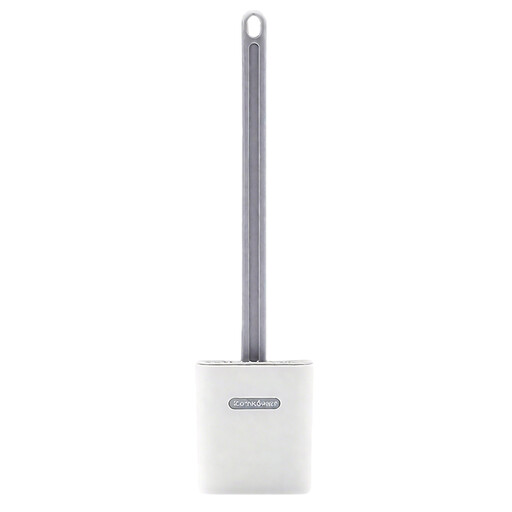
Why it suits this profile: The option of using it freestanding or wall-mounted offers flexibility when floor space is limited.
According to the product description, the silicone head is designed for hard-to-reach curves. Before installation, check that the wall and adhesive fixing are suitable for your bathroom.
Silicone brush; choice of wall mounting or floor placement; white design; designed for areas that are difficult to reach directly.
A good toilet brush will remain useful for longer when you use it correctly:
Use a toilet brush only for the toilet bowl. A separate grout brush or toilet cleaning brush for the floor helps prevent dirt from being spread between different surfaces.
We have put together a complete, up-to-date list of products that fully meet these strict selection criteria and the applicable European safety regulations.
Place a freestanding model on a flat, dry surface beside the toilet. For wall mounting, follow the supplied fixing instructions and first check that the surface is clean, flat and suitable. Position the brush so you can pick it up without knocking against the wall or toilet bowl.
There is no fixed lifespan. It depends on how often it is used, the cleaning products involved and the quality of the bristles. Replace the toilet brush as soon as the bristles no longer spring back, start falling out or no longer reach the rim properly. Clean the holder as well; a new brush in a dirty holder will not solve the maintenance problem.
Not necessarily. Silicone may be easy to rinse because of its smooth shape, while PP or nylon bristles can sometimes provide more scrubbing contact. The right choice depends on the shape of the toilet bowl, how easy the area under the rim is to reach and your cleaning routine. Do not expect guaranteed performance based on the material alone.
