Not as an everyday snack: the Netherlands Nutrition Centre recommends choosing foods from the Wheel of Five for babies and toddlers, such as vegetables, fruit or wholemeal bread. Lower fat doesn’t change that recommendation. If you’re buying paprika crisps for an older family member, also compare the portion size, nutritional information and allergens on the current packaging.
Who is this choice relevant to?
Parents looking for an everyday snack for a toddler
For a baby or toddler, the first question isn’t how much fat a crisp contains, but what you offer them as an everyday snack. The Netherlands Nutrition Centre recommends options such as vegetables, fruit and wholemeal bread.
Families comparing paprika crisps for older family members
If you’re looking to cut down on fat within the crisps category, you can compare the nutritional information of different varieties. Also compare energy, salt and portion size: a lower fat content doesn’t make crisps an everyday snack for a toddler.
Shoppers who need to check allergens
Ingredients vary from product to product. According to the product listings at Jumbo, Lay's Oven Baked Paprika contains milk, while Chio Oven Chips Paprika contains barley and carries warnings about the possible presence of other allergens. If you have a relevant allergy, check the label on the packaging you buy.
What should you look for when choosing?
First, decide whether the snack is for a baby or toddler. Only if you’re buying crisps for an older family member does it make sense to compare lower-fat paprika crisps.
| What to consider |
What to check when buying |
Who is this most important for? |
| Everyday snack for a toddler |
For a baby or toddler, choose a suitable food from the Wheel of Five, such as vegetables, fruit or wholemeal bread, instead of crisps. |
When I choose an everyday snack for my toddler, I want it to fit their routine. For around 45% of consumers, suitability is the most important factor. |
| Portion size and frequency |
Decide in advance whether it’s an occasional treat and how much you’ll serve; also compare the nutritional information for the portion you intend to have. |
I want to keep an occasional treat deliberately small, without making it a regular snack. Around 27% of consumers prioritise portion size and frequency. |
| Fat content within the crisps category |
When buying crisps for older family members, compare fat, saturated fat, energy and salt per 100 g and per portion. |
I’m looking for lower-fat paprika crisps for myself, but I don’t want to rely on that one claim alone. For around 18% of consumers, comparing fat content within the crisps category is the top priority. |
| Allergens |
Read the ingredients and allergen warnings on the current packaging, especially if someone has a relevant allergy. |
If I have a food allergy, I need to know which ingredients and warnings apply to this specific product. For around 10% of consumers, checking this is their main concern when buying. |
Common mistakes
-
Assuming ‘lower fat’ means ‘suitable for toddlers’
A lower fat content doesn’t change which foods the Netherlands Nutrition Centre recommends as everyday snacks for babies and toddlers.
For that snack, start with a suitable Wheel of Five option. Only compare lower-fat paprika crisps if they’re for an older family member.
-
Comparing fat content alone
Jumbo lists 9,2 g of fat per 100 g for Chio Oven Chips Paprika, but also 1,6 g of salt per 100 g. A single nutritional value doesn’t tell you everything about a product.
Compare fat, saturated fat, energy and salt on the same per-100 g basis, then check the portion size you plan to have.
-
Relying on an old product listing
Albert Heijn lists AH Light chips paprika as discontinued. An old listing therefore doesn’t confirm that you can buy this variety now.
Check what’s currently available and read the nutritional information and allergen details on the packaging itself when you buy.
Brands compared
Lay's
Lay's Oven Baked Paprika is an oven-baked variety to compare within the crisps category.
- Jumbo lists 13 g of fat per 100 g for this variety and claims it has 50% less fat than regular crisps.
- The product listing names milk as an allergen. Check the label on the current packaging to compare salt content.
Chio
Chio Oven Chips Paprika is a second oven-baked paprika variety to compare within the crisps category.
- Jumbo lists 9,2 g of fat per 100 g and claims it has 60% less fat than regular potato crisps.
- The same product listing gives 1,6 g of salt per 100 g, lists barley as an ingredient and warns of the possible presence of milk, sesame, soya and wheat.
Albert Heijn
AH Light chips paprika was a 170 g own-brand paprika variety.
- Albert Heijn lists this variety as discontinued. Check what’s currently available before assuming you can buy it.
Paprika crisps for older family members
These lower-fat paprika crisps are for comparing within the crisps category when you’re buying for yourself or an older family member, not as an everyday snack for a baby or toddler.
 No image available
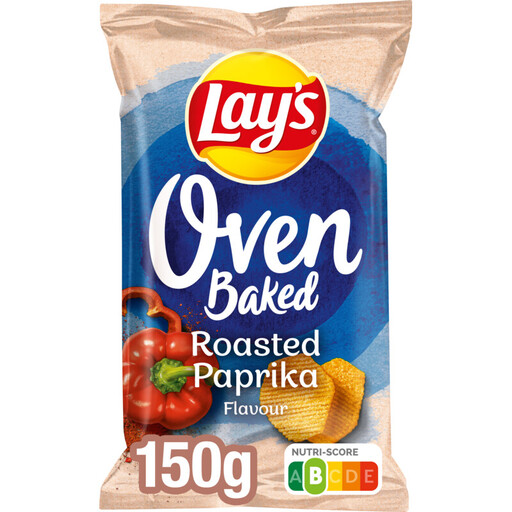
Lay's Oven Baked Paprika, 150 g
A variety for older family members who want to compare the fat content of paprika crisps within the crisps category; not intended as an everyday snack for toddlers.
Joybuy product information lists 13 g of fat, 1,5 g of saturated fat and 440 kcal per 100 g. The product contains milk. Also check the salt content on the current packaging.
View on Joybuy
Frequently asked questions
Are lower-fat paprika crisps suitable as an everyday snack for a toddler?
No. The Netherlands Nutrition Centre recommends foods from the Wheel of Five as snacks for babies and toddlers, such as fruit, vegetables or wholemeal bread. Lower fat in crisps doesn’t change that basic recommendation.
What does ‘50% less fat’ or ‘60% less fat’ on crisps mean?
It’s a comparison with regular crisps, not an indication of whether they’re suitable as a snack for a toddler. The Jumbo product listings for Lay's Oven Baked Paprika and Chio Oven Chips Paprika use these kinds of claims; also compare the nutritional information per 100 g and per portion.
Can Nutri-Score tell me whether crisps are suitable as a snack for my toddler?
No. According to the Dutch government, Nutri-Score helps you compare products of the same type; the score doesn’t determine whether crisps are suitable as an everyday snack for a toddler.
Should I check the allergens on the packaging of paprika crisps?
Yes, especially if someone has a relevant allergy. The Netherlands Food and Consumer Product Safety Authority requires allergens to be clearly listed on the labels of prepacked foods, so read the label on the packaging you’re actually using.


