Choose sachets if quick preparation is your priority, or fine loose porridge oats if you want to decide how much to make for your toddler. Whichever option you choose, compare the ingredients, nutritional information and preparation instructions on the exact pack. If you have coeliac disease, oats need an extra check: according to the Netherlands Nutrition Centre, a suitable oat product must carry the official Crossed Grain trademark.
Who is this choice relevant to?
Parents short on time in the morning
You want to make a warm breakfast and are looking for a preparation method that fits into your morning routine. As well as preparation time, check the ingredients and how much you’ll actually make for your toddler.
Parents who check allergens carefully
If you have coeliac disease or follow a gluten-free diet, the words ‘porridge oats’ alone aren’t enough to choose a product. The Netherlands Nutrition Centre highlights the risk of gluten contamination in oats, so check the certification and the current label on the pack you choose.
Families who want to decide the amount themselves
With loose porridge oats, you can measure out a portion yourself. This lets you take into account how much your child usually eats, but it does involve an extra step compared with using a sachet.
What should you look for when choosing?
Start by checking any allergen restrictions. Then compare the ingredients and choose a preparation method and quantity that suit your morning routine.
| What to consider |
What to check when buying |
Who it matters to |
| Ingredients and fibre |
Read the ingredients list and compare the fibre per 100 g and per intended portion on the label. |
If I serve porridge oats as an alternative to bread, I want to know what’s in the portion I choose. For around 36% of consumers, the ingredients come first. |
| Preparation |
Check the timings and instructions for the hob or microwave, including how much liquid you’ll need. |
On a busy morning, I want to be able to make warm porridge without a lengthy preparation step. Quick preparation is the main concern for around 29% of consumers. |
| Gluten and other allergens |
Read the current allergen information. If you have coeliac disease, check for the official Crossed Grain trademark, as advised by the Netherlands Nutrition Centre. |
If gluten needs to be avoided, I need to be able to judge whether this particular pack is suitable. Allergen checks are a priority for around 21% of consumers. |
| Packaging and portioning |
Compare sachets with loose oats and consider whether you want to measure out the amount yourself. |
I want to match the amount to what my toddler usually eats, rather than automatically using a whole sachet. Measuring it out yourself matters most to around 14% of consumers. |
Common mistakes
-
Assuming all porridge oats are gluten-free
Oats can come into contact with gluten during processing. The regular Quaker Oats Express Naturel and Brinta Havermout varieties described by Albert Heijn also warn that they may contain cereals containing gluten.
If you have coeliac disease, check every new pack for the official Crossed Grain trademark, as advised by the Netherlands Nutrition Centre, and read the other allergen information too.
-
Seeing porridge oats as a complete replacement for bread
The Netherlands Nutrition Centre describes porridge oats as an alternative to bread, not as a permanent one-for-one replacement: iodine is added to bread in the Netherlands, but not to porridge oats.
Vary your breakfast foods rather than simply removing bread from your diet.
-
Using the pack’s serving size as a fixed toddler portion
How much a toddler eats varies from child to child and from one occasion to another. A sachet or serving suggestion on a pack doesn’t automatically determine how much your child needs.
Make an amount that suits what your child usually eats, and don’t offer more just because the pack says it’s one serving.
Brands to consider
Quaker
The Oats Express Naturel variety is sold in sachets for preparation in the microwave or on the hob.
- Albert Heijn lists this variety as 100% wholegrain oats, with 9 g of fibre per 100 g and a two-minute preparation time.
- The product information states that it may contain soya, barley and wheat. It isn’t an automatic choice for someone with coeliac disease.
Brinta
According to the product information, Brinta Havermout consists of loose, extra-fine porridge oats that you can measure out yourself.
- Albert Heijn lists it as 100% porridge oats and describes the fine flakes as quick to prepare.
- The label states that it may contain wheat and rye; check the pack if you need to avoid gluten.
AH
As well as regular porridge oats, AH offers a separate Glutenvrij Volkoren porridge oats variety.
- Albert Heijn says this variety is produced in a completely gluten-free environment and contains 11 g of fibre per 100 g.
- If you have coeliac disease, you still need to check the current label and look for the Crossed Grain trademark mentioned by the Netherlands Nutrition Centre.
Jumbo
Jumbo Grove Vlokken Volkoren are loose oats that you measure out yourself.
- Jumbo lists this variety as containing 10 g of fibre per 100 g.
- The preparation instructions say to cook the coarse oats over a low heat, so bear this step in mind if you’re short on time.
Golden Bridge
ALDI lists Golden Bridge Fijne Volkoren Havermout as a pack of loose oats.
- The pack described by ALDI contains 500 g of fine wholegrain porridge oats.
- If you have specific dietary requirements, check the ingredients, nutritional information and allergens on the pack before use.
Oat products at Joybuy
These products show two different ways to prepare oats: Quaker Express, which is quick to make, and Brinta as loose porridge oats. If you need to follow a gluten-free diet, don’t choose based on convenience alone; check that the product is suitable by reading the pack.
 Image unavailable
Quaker Express porridge oats 324 g
An option if you want something quick to prepare on a busy morning; Joybuy describes Quaker Express as taking two minutes to prepare. Decide how much to make for your toddler and check the current label for allergens.
View at Joybuy
 Image unavailable
Brinta porridge oats 450 g
Loose porridge oats are a good choice if you want to measure out the amount yourself. Albert Heijn and Joybuy describe these Brinta porridge oats as extra-fine and quick to prepare; check the current label if you need to avoid gluten.
View at Joybuy
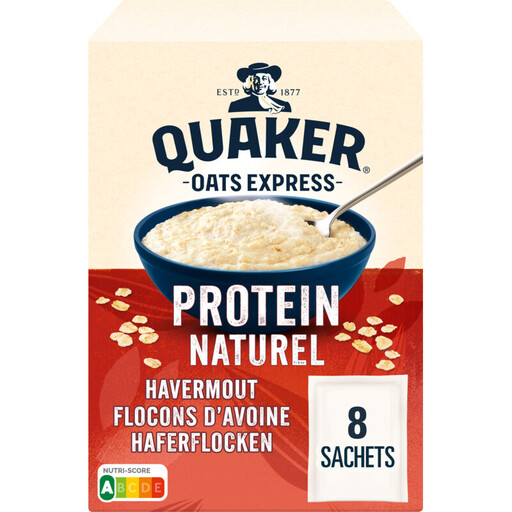 Image unavailable
Quaker Oats Express Protein 302 g
This Express variety is different from regular Quaker Express porridge oats. Albert Heijn describes the Protein variety as porridge oats with added soya protein; before buying, check the exact variety, ingredients and allergens on the pack.
View at Joybuy
Frequently asked questions
Can porridge oats completely replace bread at breakfast for a toddler?
It’s better to serve porridge oats as an alternative rather than as a permanent, complete replacement for bread. The Netherlands Nutrition Centre points out that iodine is added to bread in the Netherlands, but not to porridge oats.
Are regular porridge oats suitable for a toddler with coeliac disease?
Regular porridge oats aren’t automatically suitable for someone with coeliac disease. According to the Netherlands Nutrition Centre, oats can be contaminated with gluten, and a suitable oat product must carry the official Crossed Grain trademark on the pack. Always check the current label too.
Does my toddler have to eat a whole sachet of porridge oats?
No, a sachet isn’t automatically the right amount for every child. The Netherlands Nutrition Centre emphasises that needs vary by child and age; tailor the amount you prepare to your toddler and don’t pressure them to eat.
Do I need a Protein variety to get fibre from porridge oats?
No, added protein isn’t necessary when comparing the fibre content of oat products. Check the nutritional information for the exact variety; the Quaker Oats Express Protein described by Albert Heijn also contains added soya protein, which is relevant if you need to avoid soya.


