
Parents weighing up chocolate flavour and nutritional value
You’re looking for a chocolate option, but don’t want to rely on the front of the pack. Compare fibre, sugars and salt per 100 g, and read the ingredients list before choosing.


When choosing chocolate breakfast cereal for a toddler, don’t look at fibre content alone: compare sugars, ingredients, salt and allergens too. For children aged 1 to 3, the Netherlands Nutrition Centre recommends wholegrain breakfast cereals with no added sugar or salt as an alternative to bread. If you’re considering a chocolate option, check the specific pack and think about how it fits into your child’s breakfast choices.
You’re looking for a chocolate option, but don’t want to rely on the front of the pack. Compare fibre, sugars and salt per 100 g, and read the ingredients list before choosing.
You want to decide which breakfast cereals you can serve regularly. For children aged 1 to 3, the Netherlands Nutrition Centre recommends porridge oats, muesli and other wholegrain breakfast cereals with no added sugar or salt as an alternative to bread.
If your child has a known allergy or there are rules about food brought in, the exact product matters. Check the current pack for cereals containing gluten and other relevant allergens, and ask your childcare provider or school what rules apply.
First decide whether you’re looking for a breakfast cereal for regular use or specifically want a chocolate flavour. For the latter, compare the nutritional information and ingredients per 100 g; fibre content alone doesn’t tell you everything about a product.
| What to consider | What to check | Who it matters to |
|---|---|---|
| Everyday breakfast choice | Wholegrain ingredients and added sugar and salt. | I’m looking for breakfast cereals I can regularly serve as an alternative to bread, while following the Netherlands Nutrition Centre’s advice for children aged 1 to 3. For around 42% of consumers, this everyday choice comes first. |
| Chocolate flavour and fibre | Fibre and sugars per 100 g; compare the same product type where possible. | If chocolate flavour matters, I want to know how much fibre the specific product contains without losing sight of the sugars. Around 33% of consumers give this combination top priority. |
| Allergens and taking food in | The current ingredients list, any cross-contamination warnings, and the rules at the childcare setting or school. | If my child has a relevant allergy or I want to send breakfast cereal in with them, I first need to know whether the exact product and the location’s rules allow it. This matters most to around 25% of consumers. |
Fibre content doesn’t tell you how much sugar, fat or salt a chocolate option also contains. Jumbo lists 16 g of sugars per 100 g for Quaker Cruesli Chocolade and 22 g per 100 g for Kellogg's Coco Pops Chocos.
Read the full nutritional information per 100 g. If you’re looking for a regular breakfast choice for a toddler, also bear in mind the Netherlands Nutrition Centre’s advice on wholegrain options with no added sugar or salt.
Ingredients vary between products, even within the same brand. The Kellogg's Extra with dark chocolate and hazelnuts listed by Albert Heijn contains, among other things, oats, wheat, milk, soya, hazelnut and barley.
Check the current pack of every product you choose, including any warnings about possible cross-contamination. If your child has an allergy, don’t rely on a pack you bought before with a different name.
Comparing products on chocolate flavour alone can hide differences in their ingredients. Jumbo lists 19 g of fat per 100 g for Quaker Cruesli Chocolade and 2.2 g per 100 g for Kellogg's Coco Pops Chocos; their fibre and sugar content also differs.
Decide which type of product you’re looking for, then compare the nutritional values per 100 g, rather than just the name or a stated serving size.
Ingredients and nutritional values may change with a new pack or a reformulated product. This is particularly important if allergens or added sugar are key to your choice.
Use online information to compare products, then read the pack you actually have before serving it.
The Quaker products mentioned are chocolate crunchy muesli, not simple chocolate cereal. Compare the standard version separately from Zero Sugar Chocolade.
Coco Pops Chocos and Extra with dark chocolate and hazelnuts are different types of product; the nutritional values for one don’t apply to the other.
AH Chocosmaak kussentjes are filled breakfast cereal pillows; assess them as that specific type of product.
Jumbo’s range includes different types of chocolate breakfast cereal, including crunchy muesli, chocolate pillows and chocolate chips.
ALDI’s Golden Bridge range includes chocolate flakes, crunchy chocolate muesli and chocolate pillows, among other products.
These two products are chocolate muesli and chocolate crunchy muesli, and should be assessed separately. Use the nutritional information on the pack you choose to compare them with a wholegrain breakfast cereal with no added sugar or salt.
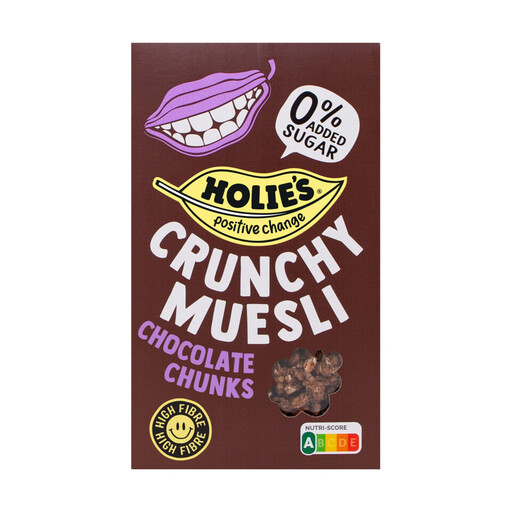 No image available
A crunchy muesli with chocolate pieces for anyone looking for this particular type of product. Check the pack for fibre and sugars per 100 g, and check the allergens before choosing it for your toddler or sending it in with them.
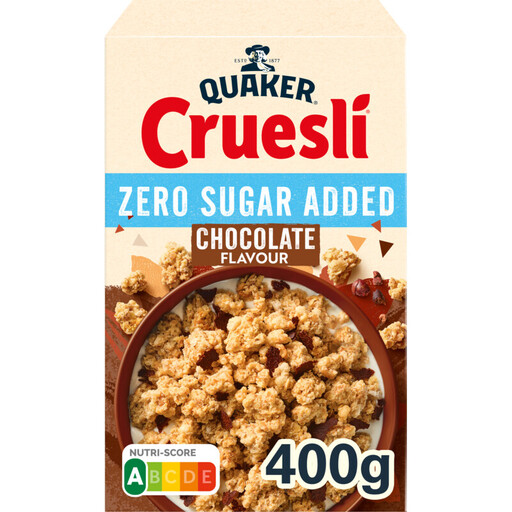 No image available
A chocolate crunchy muesli for anyone looking to compare an option with no added sugars. Joybuy Netherlands lists 3.4 g of sugars per 100 g; check the pack for fibre per 100 g if you’re comparing fibre content. If your child has a relevant allergy, also read the information about milk, cereals containing gluten and possible traces of nuts.
No, fibre content alone doesn’t tell you that. Compare sugars, salt and ingredients too. For children aged 1 to 3, the Netherlands Nutrition Centre recommends wholegrain breakfast cereals with no added sugar or salt as an alternative to bread.
Compare fibre, sugars, fat and salt per 100 g, so differences in stated serving sizes don’t mislead you. Then read the ingredients list for added sugar and allergens, among other things, and bear in mind the differences between muesli, crunchy muesli and other chocolate cereals.
Yes. Under European Commission rules, allergens present as ingredients must be clearly indicated, including cereals containing gluten. If your child has a relevant allergy, also check the current pack for any warnings about possible cross-contamination.
Follow the storage instructions on the pack of the exact product. After opening, keep the pack closed as indicated on the label, so you’re following the instructions for that product.