
Parents looking for an everyday breakfast staple
You’re choosing breakfast for a child aged 1 to 3 and wondering whether toast can replace bread. The Netherlands Nutrition Centre recommends wholemeal and brown bread for children of this age.


If you’re looking for an everyday breakfast staple for a child aged 1 to 3, start with wholemeal or brown bread: these are the bread options recommended for this age group by the Netherlands Nutrition Centre. Melba toast can be a practical alternative, but check each variety individually for fibre, salt and allergens. If you’re on a budget, also consider the pack size and how much you’re likely to use.
You’re choosing breakfast for a child aged 1 to 3 and wondering whether toast can replace bread. The Netherlands Nutrition Centre recommends wholemeal and brown bread for children of this age.
You want to know whether a pack of toast fits into your breakfast routine. As well as pack size, check the nutritional information: plain and wholemeal melba toast can differ.
Check the allergens on the pack and ask about the school or childcare setting’s food policies before sending it in. The toast varieties reviewed list cereals containing gluten, among other ingredients; other allergens vary by product.
First decide what works as an everyday bread staple; then compare toast varieties by checking the label and considering how much you need. The percentages below show what proportion of consumers say each factor is their main consideration.
| What to consider | What to check when buying | Who is this most important to? |
|---|---|---|
| Everyday bread staple | Check whether the bread is labelled wholemeal or brown. For toast, compare the fibre per 100 g. | If I prepare bread for my toddler every morning, I don’t want to assume that melba toast is the same choice as a slice of bread. For around 29% of consumers, this everyday staple is the priority. |
| Salt and allergens | Check the salt per 100 g and the current ingredients and allergen information on the pack. | If I need to take allergens or salt content into account, the label determines which toast I can consider. This is the main concern for around 29% of consumers. |
| Budget and pack size | Check the pack weight and think about how much you’ll use before the quality starts to deteriorate. | I don’t want to buy a large pack if we only eat toast occasionally and the rest goes to waste. Around 24% of consumers prioritise how much of the pack they’ll use. |
| Breakfast convenience | Check the storage instructions and consider whether the texture is suitable for your child. | On busy mornings, I want to be able to prepare a small portion without losing sight of mealtime. For around 18% of consumers, this is the most important consideration. |
The AH Melba Toast Plain reviewed lists 3.9 g of fibre and 1.93 g of salt per 100 g. The page shown by Albert Heijn for Van der Meulen Melba Toast Luxe Wholemeal & Spelt lists 9.4 g of fibre and 1.7 g of salt per 100 g. These figures apply to these two varieties, not to all plain or wholemeal toast.
A pack you don’t finish may not suit how often you serve toast.
Choose an amount you’ll use, and check how the product should be stored once opened.
The Netherlands Nutrition Centre recommends wholemeal and brown bread for children aged 1 to 3. The nutritional values of toast vary by variety.
Compare the fibre and salt per 100 g, then decide how toast fits alongside regular bread.
The products reviewed also list other ingredients that may be relevant for some children, including soya or sesame.
Read the full allergen information on the current pack. If you’re sending food in, ask about the school or childcare setting’s food policies.
The fact that a product is called toast or bread doesn’t tell you whether iodised baker’s salt was used in that specific product.
Check the product information or ask the manufacturer which ingredients are used if iodine is important to your choice.
AH Melba Toast Plain is a specific example you can use to assess a plain variety’s nutritional value and ingredients.
The Melba Toast Luxe Wholemeal & Spelt variety reviewed gives you a specific point of comparison if you’re looking at fibre in melba toast.
ALDI lists a 240 g pack of plain melba toast under this own-brand label.
Bolletje offers products including rusk and crackers. These are different types of product from melba toast.
These products include bread to consider as an alternative to melba toast, as well as two melba toast varieties for anyone who wants to compare toast. Check the current label for each product; being included in this list doesn’t in itself mean a product is suitable as an everyday breakfast for a toddler.
 Image unavailable
A rye bread option to consider if you’re also looking at bread for breakfast alongside melba toast.
The title refers to a bread roll, while the product description also mentions sliced rye bread. Check the format if it matters for the portions you want to prepare.
The ingredients list wheat and rye; check the current allergen label before use.
 Image unavailable
A wholemeal wheat bread to consider if you’d like to serve bread instead of ready-to-eat toast.
This frozen bread needs to be thawed and baked. Bear this in mind when planning breakfast, and check the current ingredients and allergen information, including wheat and wheat gluten.
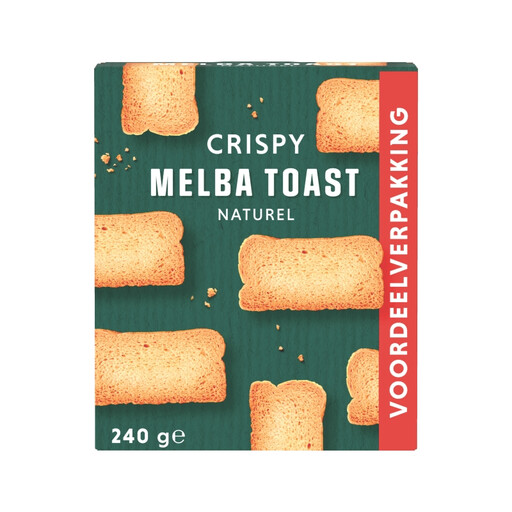 Image unavailable
A melba toast variety to consider if you’re looking for a 240 g pack.
The ingredients list wheat, barley and soya, and may include sesame. As this conflicts with the allergen information elsewhere in the product details, check the label on the pack before giving this toast to your child.
Stay close to young children while they’re eating, as recommended by the Netherlands Nutrition Centre.
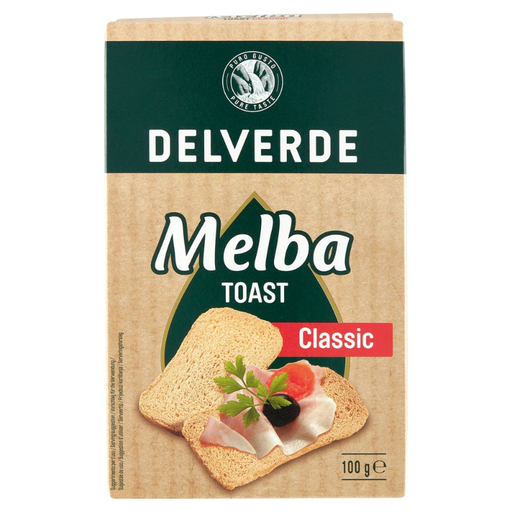 Image unavailable
A 100 g pack of melba toast to consider if you’re looking for a smaller amount.
The product information describes the toast as hard and crisp. Wheat and barley are listed, along with possible traces of sesame, soya and mustard. Check the current allergen information and stay with a young child while they’re eating.
Don’t assume they’re equivalent. The Netherlands Nutrition Centre recommends wholemeal and brown bread for children aged 1 to 3. For melba toast, compare the fibre, salt and ingredients of each variety before deciding how often to serve it.
Read the current ingredients and allergen information on the pack. The AH Melba Toast Plain reviewed lists cereals containing gluten and soya, among other ingredients; the wholemeal and spelt variety reviewed also lists sesame. Separately, ask about the school or childcare setting’s policies for food brought in from home.
Don’t assume so just because it’s called toast. If iodine information matters to your product choice, check the details for the specific product or ask the manufacturer which ingredients have been used.
Follow the storage instructions on the pack. For AH Melba Toast Plain, Albert Heijn says to keep the product in a sealed container once opened.
Toast doesn’t have to be the only option. The Netherlands Nutrition Centre suggests alternatives such as porridge, yoghurt with muesli and a wholemeal pancake, and recommends not offering too much at once.