
Vandaag of morgen in huis

Kwaliteit gegarandeerd

Welkomstaanbiedingen ontgrendelen: GRATIS bezorging | Tot 80% korting | Gratis 30 dagen JoyPlus-proefperiode
Download de app
Toddlers move around a lot in their sleep. When your child moves from a cot to a toddler bed, a toddler bed guard can help partially cover the open side of the bed. The right choice depends on more than just price or colour. Size, fixing method and compatibility with the bed are just as important.
Look out for these three common pitfalls:
A bed rail is not a substitute for supervision or a safe sleep environment. Check regularly that the fixings are secure and that no unwanted gaps have formed between the rail, mattress and bed.
A 150 cm bed guard may be suitable for a longer toddler bed or for children who move around a lot. A 90 cm rail is more compact and can be useful if you only want to cover part of the side of the bed.
The stated height of a rail isn’t the same as its effective height above the mattress. A thick mattress will cover some of the rail’s height. So, measure:
An adjustable bed guard gives you more flexibility to set the height, but always check exactly what the manufacturer means by ‘adjustable’.
Many models combine a metal frame with polyester or another fabric cover. Polyester is practical if the product information says the cover is washable. A fabric rail may also feel less hard than a solid bed side.
Check the full product specifications: ‘fabric’ on its own tells you little about the strength of the frame or fixings. Also check whether the cover can be removed and how it can be cleaned. Don’t use any parts that are damaged, torn or bent.
Some products are designed for a specific age group. For example, a bed guard for children aged 18 months and over may be suitable up to around 5 years. This doesn’t automatically mean every child in that age range needs the same bed guard. Their development, movements during sleep and type of bed all play a part.
Before buying, check:
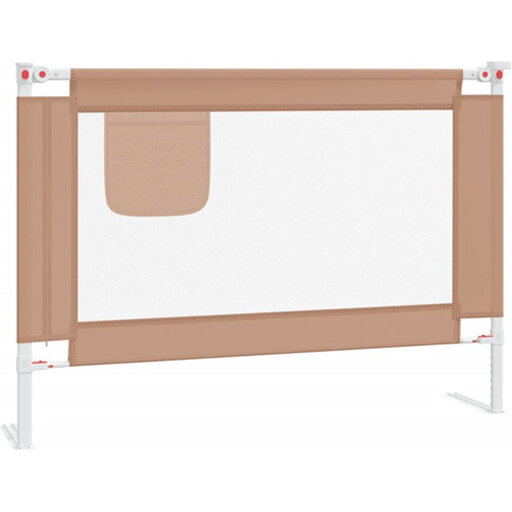
Why it suits this profile: Its compact size is ideal for parents who want to cover part of the bed side and are looking for a simple toddler bed rail to start with.
The product information states that the height is adjustable. This lets you set the rail to suit the mattress, as long as the bed is compatible and you follow the fitting instructions.
Measures 90 x 25 cm, with a polyester cover and lightweight metal tubes. According to the product information, it’s suitable for children aged 18 months to 5 years.
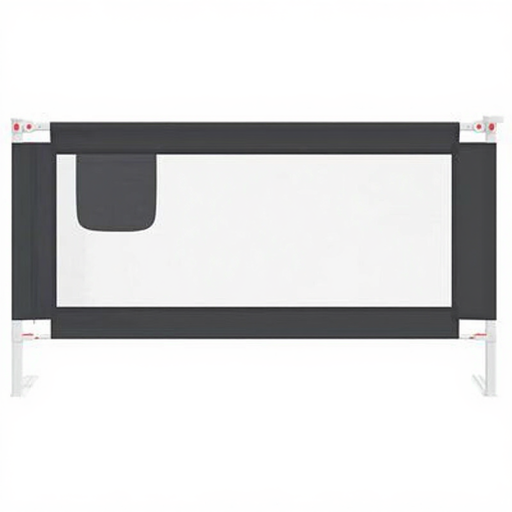
Why it suits this profile: This long model is a good fit for parents who want to cover more of a toddler bed and prefer a neutral dark grey finish.
At 150 cm long, it reduces the chance of being left with a large uncovered section because the rail is too short. Measure the bed first and check how the rail is fitted.
Measures 150 x 25 cm, with a fabric finish in dark grey. The packaging states a weight of 2.42 kg and includes instructions in Dutch.

Why it suits this profile: The combination of a 150 cm length and 42 cm height is a good choice when you want to cover more of the bed side and have extra height for coverage.
Its larger dimensions help avoid choosing a rail that’s too short or too low for the bed. Check in advance that 42 cm above the mattress is suitable.
Measures 150 x 42 cm, made from polyester, with a folding design for storage. The product information describes it as grey.
We’ve put together a complete, up-to-date list of products that meet these strict selection criteria and the applicable European safety requirements.
It depends on the product. Some models recommend use from 18 months to 5 years. Always check the product information, fitting instructions and compatibility with the specific bed. After fitting, check that your child can’t get trapped between any parts, the rail and the mattress.
There’s no one height that suits every bed. The height you need depends on the thickness of the mattress and how actively your child moves in their sleep. Measure the distance from the top of the mattress to the top edge of the rail. Follow the manufacturer’s instructions and check the structure regularly.
Its lifespan depends on how it’s fitted, how often it’s used and what it’s made from. Before each use, check the fixings, seams, metal tubes and any locking mechanisms. Replace the bed guard if any parts come loose, become bent or get damaged. A folding bed guard is handy for storage, but it still needs to be checked before use.
