
Vandaag of morgen in huis

Kwaliteit gegarandeerd

Welkomstaanbiedingen ontgrendelen: GRATIS bezorging | Tot 80% korting | Gratis 30 dagen JoyPlus-proefperiode
Download de app
A toddler balance bike may look simple: two wheels, a saddle and handlebars. But models can vary considerably in fit, weight, tyres and adjustability. Choose the wrong one and your child may struggle to handle the bike or quickly outgrow it.
Watch out for these three common pitfalls:
So, the best balance bike for children isn’t necessarily the model with the most features. Start by looking at its dimensions and construction, and how your child will use it.
With a first bike without pedals, your child should be able to touch the ground with their feet while sitting comfortably. So, measure their inside leg and compare it with the minimum saddle height. An adjustable saddle is useful if your child is growing quickly.
Also check the distance between the saddle and handlebars. Your child should be able to sit upright and comfortably without reaching too far forwards. On some models, both the saddle and handlebars can be adjusted. This makes an adjustable balance bike more versatile, but always check the exact adjustment ranges in the product details.
A lighter bike is easier for young children to control. Look at the overall weight, not just the frame material. A metal frame can be sturdy, but relatively heavy. A wooden model may have a low centre of gravity, while a magnesium alloy can help keep the frame light.
A lightweight model is also easier for parents to take to the park, nursery or in the car. Be sure to check the maximum weight capacity, and only use the bike for its intended purpose.
A balance bike with puncture-proof tyres doesn’t need a pump or inner tube. EVA or other puncture-resistant tyres are practical for short rides on flat paths and reduce the risk of a puncture. Pneumatic tyres can provide more cushioning, but you’ll need to check the tyre pressure.
No type of tyre makes a balance bike suitable for every surface. Avoid traffic, steps, steep slopes, wet surfaces and loose stones. For everyday use in a flat residential area or on a smooth park path, low-maintenance tyres are often sufficient.
A toddler balance bike is designed to help children practise pushing off, steering and balancing. That doesn’t mean your child should ride without supervision. Always keep an eye on them and choose a flat area away from cars.
Before each use, check:
A children’s bike helmet can provide extra protection. Choose a helmet that fits well and adjust the chin strap according to the instructions. Check the age limit for the specific model. For example, the OutdoorMaster helmets below have a recommended age of 5 and over, so they won’t necessarily be suitable for a toddler aged 2 or 3.
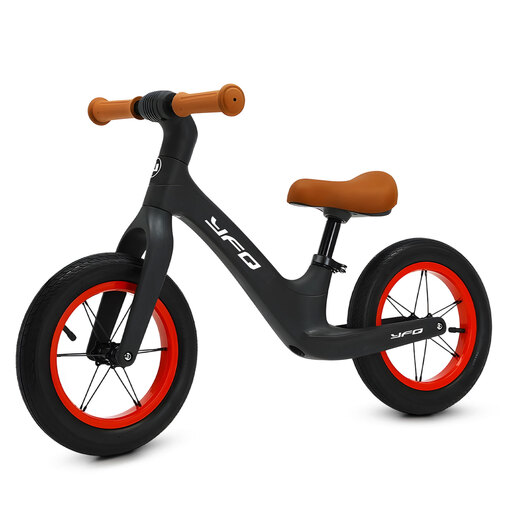
Why it suits this profile: This model is aimed at children aged 3 to 6 and has an adjustable saddle. The puncture-proof tyres mean less maintenance for families who mainly go on short rides.
The adjustable saddle helps you avoid buying a model your child will quickly outgrow. Check the exact minimum height before buying.
Puncture-proof tyres, an adjustable saddle and a kickstand, according to the product listing.
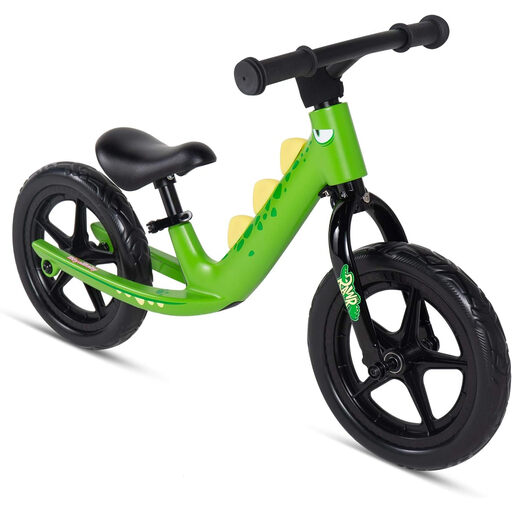
Why it suits this profile: For families looking for adjustability and control, this model has an adjustable saddle, footrests and a steering limiter, according to the product details.
The steering limiter is designed to prevent the handlebars from turning too far. Also, always check that the saddle height is right for your child.
Magnesium alloy, EVA tyres and a stated maximum weight capacity of 22,7 kg.
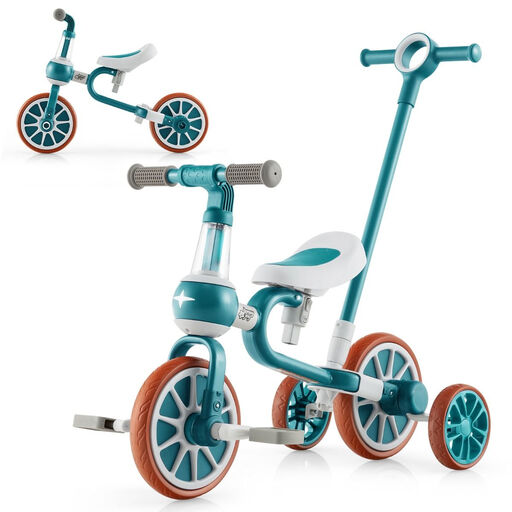
Why it suits this profile: According to the product details, this toddler tricycle can be used as a push bike, balance bike and pedal bike. It’s a good fit for families looking for one product to cover several stages.
The different configurations mean you don’t have to buy just one type of bike. After each conversion, check that all the parts are correctly secured.
Adjustable push handle, removable pedals and a stated weight capacity of 30 kg.
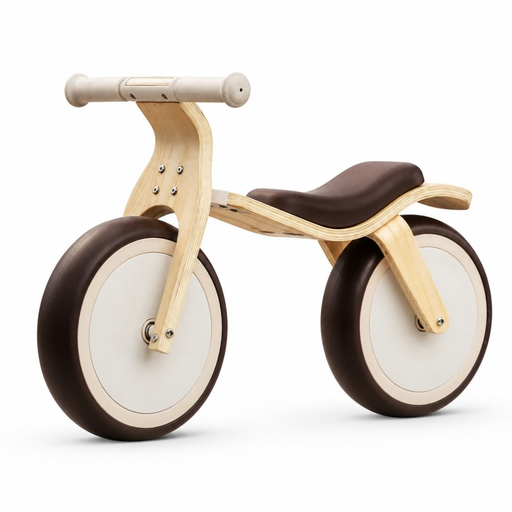
Why it suits this profile: The product details state a saddle height of 28 cm and a recommended age of 24 to 48 months. This may suit younger children who need to sit low.
The fixed, low saddle height makes it easier to judge the fit. Do check your child’s inside leg measurement, though, as this model isn’t described as having extensive adjustment options.
Wooden frame, EVA foam tyres, weight of 2 kg and a stated weight capacity of 25 kg.
We’ve put together a complete, up-to-date list of products that meet these strict selection criteria and the applicable European safety regulations.
It depends on the model and the child. Some models are intended for children from around 24 months, while others are designed for ages 3 and over. Check the minimum saddle height, your child’s inside leg measurement and the recommended age. Age is only a guide; build and motor skills matter too.
How long it can be used depends on its adjustability, your child’s weight and the surface they ride on. A balance bike for ages 2 to 6 may last longer if the saddle and handlebars offer a good range of adjustment. Check the connections, tyres and frame regularly. Stop using the bike if you find cracks, deformation or loose parts.
It depends on what you’re looking for. A balance bike helps children practise balancing on two wheels. A toddler tricycle is generally more stable and may suit a child who still has limited control. A 3-in-1 or 4-in-1 model offers a middle ground, but has more parts and configurations that need to be assembled correctly.
