
Late-night snackers who love flavour
Want a small snack that needs very little extra topping. Flavoured toast, for example with truffle or rosemary, lets the toast itself take centre stage.


Choose flavoured toast if you want the toast itself to bring flavour to your late-night snack, and plain melba toast if you want the topping to take centre stage. Toast cups are handy for loose or soft fillings that don’t sit as well on a flat piece of toast. If fibre is a priority, compare the nutritional information and check the ingredients and allergens for each variety.
Want a small snack that needs very little extra topping. Flavoured toast, for example with truffle or rosemary, lets the toast itself take centre stage.
Want to choose their own toppings and need a neutral base. For a loose or soft filling, a toast cup with raised sides can be more practical than a flat piece of toast.
Want to take fibre content into account when choosing. Compare the fibre per 100 g or per serving, and check the ingredients and allergens for your chosen variety.
First decide whether you want the toast itself to add flavour or simply provide a base for the topping. Then consider the shape and, if nutritional information matters to your choice, check the label of the specific variety.
| What to consider | What to check before buying | Who it matters to |
|---|---|---|
| Flavour with minimal toppings | Choose a flavour, such as truffle or rosemary, that goes with the topping you plan to use. | If I want a small bite late at night without preparing elaborate toppings, the toast itself can provide the flavour. Around 45% of consumers put flavour first when making this choice. |
| Shape for your topping | Consider whether a flat piece of toast will do, or whether a cup shape with raised sides would suit the filling better. | For a loose or soft topping, I want a shape that makes filling easier. For around 33% of consumers, how well the toast works with toppings is their main concern. |
| Fibre and ingredients | Compare fibre per 100 g or per serving, and read the ingredients and allergen information on the packaging. | When fibre or specific ingredients influence my choice, I want to be able to check the label for the exact variety. This is a priority for around 22% of consumers. |
Flavoured toast can have a strong influence on the taste of your topping. A flat piece of toast can also be less practical when you need a loose filling to stay in place.
Choose plain melba toast if the topping is the star, flavoured toast if you want to add very little, or a toast cup for a filling that needs raised sides.
Fibre content doesn’t tell you whether a type of toast is suitable if you have an allergy or intolerance. Ingredients and allergens vary between varieties.
If you have an allergy or intolerance, check the current ingredients and allergen information on the packaging you buy.
A product may appear on a category page without being available to buy at that moment; Jumbo, for example, notes this for Fornaccini varieties.
Check the availability of the specific variety before ordering or visiting the shop.
A brand to consider if you’re looking for melba toast as a base for toppings.
Worth considering if you’re looking for a toast cup with raised sides for toppings.
A supermarket own-brand range where you can compare plain and flavoured toast.
A supermarket own-brand range offering toast in different shapes and flavours.
A brand to explore if you’re looking for plain toast cups or plain melba toast.
This melba toast is a good fit for a late-night snack where you choose the toppings yourself. If you want toast with a more pronounced flavour of its own, or a cup shape to hold a filling, you’ll need to look for different features.
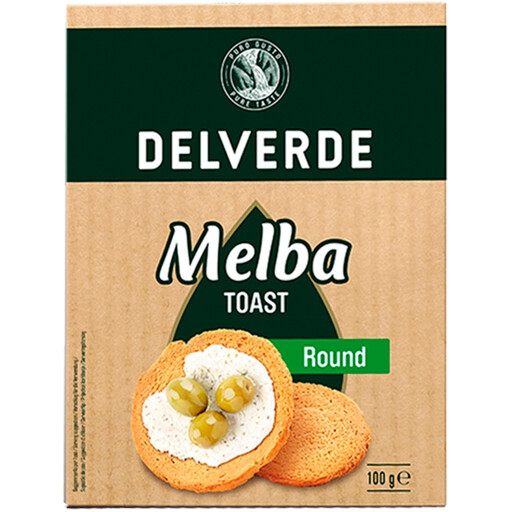 Image unavailable
Round melba toast for anyone who wants to choose their own toppings. If you have an allergy or intolerance, check the ingredients and allergen information on the packaging.
A toast cup with raised sides can make filling easier. Jumbo describes Haust Snack Cups Naturel as suitable for this; if you have an allergy, also check the information for your chosen variety.
No. A fibre claim tells you nothing about whether the toast contains gluten. Check the ingredients and allergen information for the specific product before choosing it.
Follow the storage instructions on the packaging and seal it securely after opening. This helps you store the variety as directed.
Check the ingredients list on the specific pack for mentions of iodised salt or baker’s salt. Don’t rely on the product name or type of toast alone.