
Workshop leader with several participants
You want to work out in advance how much bread you’ll need and how many complete sandwiches will fit in each batch, so your schedule matches the appliance’s capacity.


Choose a closed toastie maker if you’re using bread slices that fit and want to keep the filling inside the sandwich. A contact grill gives you more freedom over the shape and thickness of the bread, but doesn’t seal the edges. Then compare how many complete sandwiches fit in each batch and how you’ll clean the plates between workshop sessions. Product specifications from brands including Tefal, Princess and DOMO can help you weigh up these options.
You want to work out in advance how much bread you’ll need and how many complete sandwiches will fit in each batch, so your schedule matches the appliance’s capacity.
You’ll want to consider the size of the bread, the shape of the plates and how much filling they can accommodate. The Netherlands Nutrition Centre recommends draining washed spinach before using it in a toastie.
You want a cleaning routine that works between consecutive cooking sessions, and are comparing removable plates with fixed ones.
Start by checking how many complete sandwiches you can make per batch and the size of the bread. Then consider whether the plate shape, filling and cleaning method are right for your workshop.
| What to consider | What to look for when buying | Who is this most relevant to? |
|---|---|---|
| Capacity per batch | Count how many slices of bread you need for one sandwich. DOMO states that the DO9064C takes four slices per batch; the Princess 112415 has room for two toasties or three paninis. | When there are several participants, I want to know how many complete sandwiches I can make per batch; around 36% of consumers prioritise this capacity. |
| Bread and filling | Compare the size of the bread with the plate dimensions, and consider whether you need sealed edges. Tefal lists plate dimensions of 26,8 × 13,7 cm for the SW7011; the Netherlands Nutrition Centre recommends draining washed spinach. | When I make generously filled spinach sandwiches, I want the bread and filling to fit the plates; around 29% of consumers give this the highest priority. |
| Cleaning between batches | Check whether the plates are removable and dishwasher-safe for each model. Tefal lists dishwasher-safe plates for the SW7011; DOMO states that the DO9064C has fixed, non-dishwasher-safe plates. | Between consecutive sessions, I want a cleaning method that’s practical; around 21% of consumers prioritise easy cleaning over extra features and capacity. |
| Worktop space and simplicity | Measure your worktop and compare it with the dimensions of the appliance and plates. Inventum lists a cooking surface of 22,4 × 13 cm for the SG750B, as well as vertical storage. | For a small workshop, I want an appliance that fits the available space, without features I won’t use; around 14% of consumers prioritise simplicity and compactness. |
DOMO describes the DO9064C as having capacity for four slices at a time. The number of complete sandwiches you can make depends on how many slices each sandwich needs.
Count the slices needed for one sandwich, then plan the number of batches accordingly.
Models differ in whether their plates are removable and dishwasher-safe. A non-stick coating alone doesn’t tell you how the plates can be cleaned.
Check both features for the exact model and follow the manufacturer’s cleaning instructions.
Plate sizes and shapes vary between models. As a result, a small plate may not suit the slices or the amount of filling you want to use.
Measure the slices you’ll be using and compare them with the stated plate dimensions before choosing an appliance.
The Snack XL SW7011 is designed for anyone looking for deeper plates and interchangeable plates for toasties and waffles.
The 112415 is a contact grill for anyone who wants to use different bread shapes and values a floating lid.
The DO9064C is worth considering if fitting several standard slices of bread in each batch matters more than having removable plates.
The SA-3050 is a compact sandwich maker with fixed grill plates.
The SG750B is a compact toastie maker with grill plates that can be stored vertically.
This selection includes both closed sandwich makers and contact grills. Focus on the shape of bread you want to use, how many sandwiches you need to make per batch and how the appliance is cleaned.
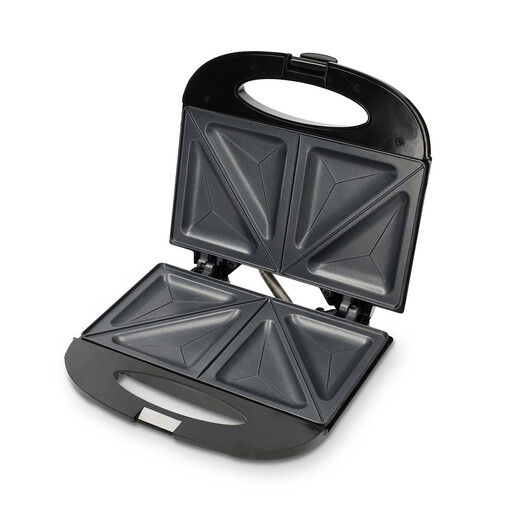 No image available
A closed sandwich maker for anyone who wants to keep the filling inside the sandwich.
The product name lists sandwich plates, automatic temperature control and a non-stick coating.
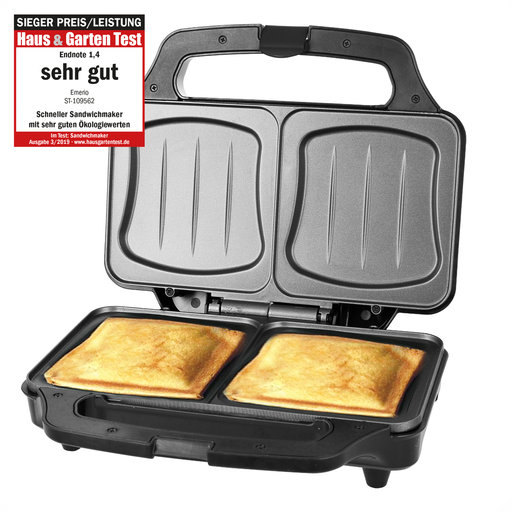 No image available
An option for anyone who wants to make thicker sandwiches and values being able to prepare two sandwiches per batch.
The product name lists XXL plates, capacity for two sandwiches and 900 W. The product description limits use to indoors and domestic settings; check this if your workshop is commercial.
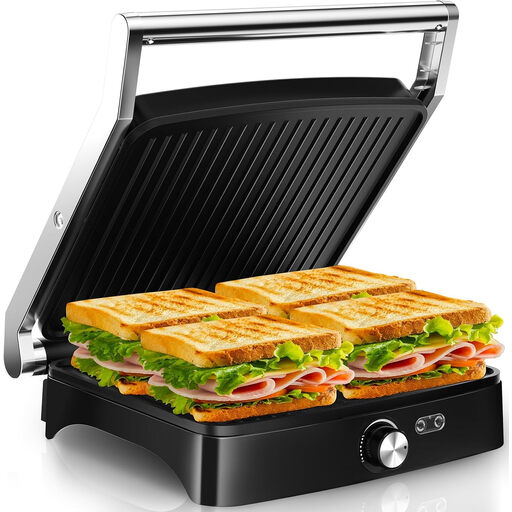 No image available
A contact grill for anyone who wants to make sandwiches and paninis without being limited to a fixed sandwich shape.
The product name lists non-stick plates; the product description says it opens to 180°.
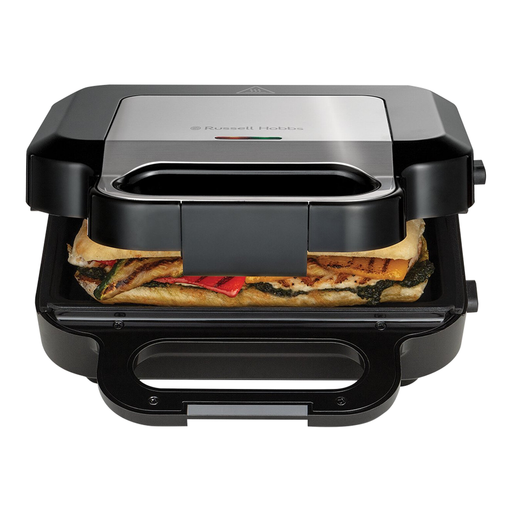 No image available
A good fit for anyone who wants to use the other functions of a 3-in-1 appliance as well as making sandwiches.
The product name lists waffle and grill functions, removable dishwasher-safe plates, a non-stick coating and extra-deep plates.
 No image available
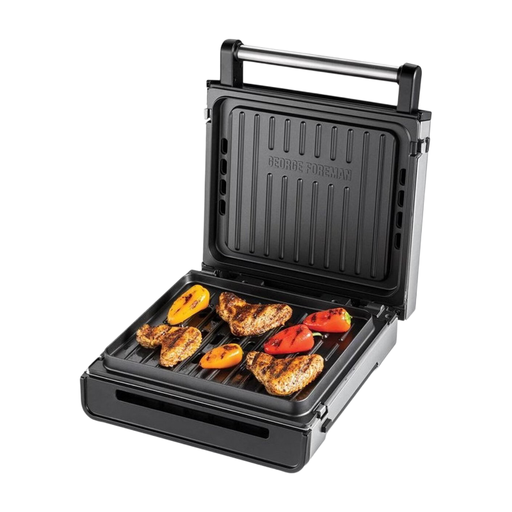
A contact grill for anyone who wants to use a grill surface for sandwiches and other dishes.
The product name lists removable plates. The product description states that the plates are dishwasher-safe and mentions a floating hinge for food up to 2,5 cm thick.
Yes. The Netherlands Nutrition Centre uses fresh spinach in a toastie recipe. You can wash and drain the spinach, then cook the toastie until lightly golden in a grill or frying pan; the recipe doesn’t compare electric models.
Not necessarily. DOMO lists capacity for four slices per batch for the DO9064C; count how many slices your workshop recipe uses for each complete sandwich to work out how many batches you’ll need.
No. Tefal lists dishwasher-safe plates for the SW7011, while DOMO states that the DO9064C has fixed, non-dishwasher-safe plates. Check the instructions for the exact model.
The Netherlands Food and Consumer Product Safety Authority states that CE marking is mandatory for electrical products. The marking is the manufacturer’s declaration that the product meets the applicable EU requirements; check the information for the specific product you’re considering.
This depends on how the workshop is organised and how the food is offered. The Netherlands Food and Consumer Product Safety Authority describes HACCP-based food safety practices for businesses that prepare, handle or sell food, as well as requirements for allergen information on unpackaged food offered for sale. A cookery workshop doesn’t automatically fall under all business requirements just because it’s called a workshop.