
Family who eat breakfast together
Wants to toast several suitably sized slices in one batch, so compares capacity with the space available on the worktop.


Choose based on the dimensions of your rye bread and how many slices you want to toast at once. Models specified as having two long slots can hold up to four suitably sized slices; a 2-slice model takes up less space, but you’ll need extra batches to toast four slices. Tests don’t confirm how your particular rye bread will toast, so slot size and capacity don’t guarantee even browning.
Wants to toast several suitably sized slices in one batch, so compares capacity with the space available on the worktop.
Uses slices of varying shapes or thicknesses, so checks the slot dimensions and whether the bread can be inserted without getting stuck. Rye bread also varies from recipe to recipe.
Is happy to toast in extra batches in return for a 2-slice model, and considers how easy it is to operate and remove small pieces.
Start with the size of your usual slices and how many you want to toast per batch. Features alone won’t tell you how rye bread will turn out in your toaster.
| What to consider | What to look for | Who should pay particular attention? |
|---|---|---|
| Capacity at breakfast time | Compare the number of suitably sized slices per batch with the appliance’s external dimensions. | If I want to have breakfast with my family at the same time, I want to know how many of our slices will fit in one batch. Around 36% of consumers say capacity is their top buying priority. |
| Rye bread that fits | Measure the length, width and thickness of a typical slice and compare them with the stated slot dimensions. | I want to be able to insert my own rye bread without it getting stuck, even when the slices vary in shape or thickness. Around 29% of consumers prioritise making sure their bread fits. |
| Browning and defrosting | Check which browning settings the model offers and whether it has a defrost function if you need one. | If I want to adjust the browning for different types of rye bread, I look at the controls and settings. Around 21% of consumers make this their top priority. |
| Removing toast and cleaning | Check whether the appliance has a high-lift function and a removable crumb tray. | When using it regularly, I want to be able to remove small slices easily and clear away crumbs without hassle. Around 14% of consumers prioritise ease of use and maintenance. |
Severin specifies that the AT 2509 and AT 2590 have two long slots that can hold up to four slices at once. That doesn’t mean they’ll fit rye bread of every shape or thickness.
Compare the slot layout with the length and thickness of the slices you use at home.
If your slices don’t fit the available slots properly, you may need to toast them in extra batches.
In a test of 13 2-slice toasters, the Consumentenbond found that price and speed weren’t good predictors of toasting results. The test doesn’t provide any conclusions about results with rye bread specifically.
Use capacity and features to help you choose; don’t treat them as proof that your rye bread will toast evenly.
According to ACM ConsuWijzer, the retailer remains responsible if a product breaks sooner than you could reasonably expect under normal use.
Keep your proof of purchase and contact the retailer if the product may have developed a fault too soon.
Contacting the retailer first can help you avoid paying for a repair or replacement yourself unnecessarily.
The AT 2509 and AT 2590 are worth considering if you want to toast several suitably sized slices at once.
The TT7208 and TT5338 offer different features for browning, operation and removing toast.
The TAT2M123 is a 2-slice option if you want to remove small pieces more easily.
According to Philips, the HD2636/20 has wide, self-centring slots and functions for reheating and defrosting.
These models cover the choice between a long slot, capacity for several slices, and features for browning and cleaning. According to the Dutch Government, electrical appliances sold in the EU must carry a CE marking. The marking alone doesn’t prove that an individual appliance meets all safety requirements.
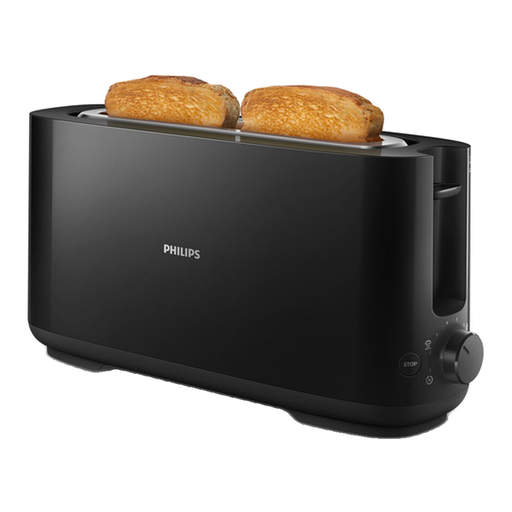 No image available
A long slot may suit longer slices. Measure your bread and check the slot dimensions before choosing.
The product name specifies a long slot and a black finish.
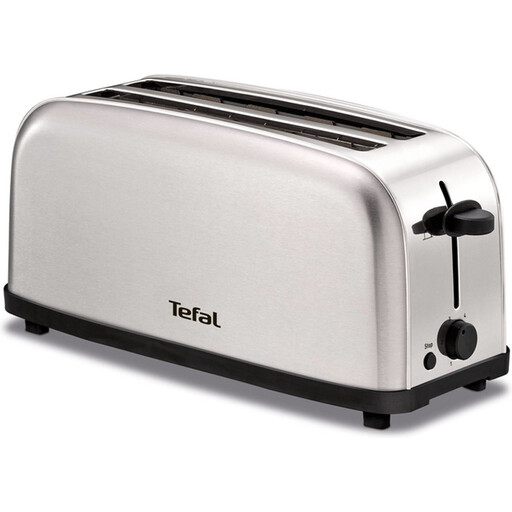 No image available
The product name specifies four slices; compare the slots with the types of rye bread you use.
The product name specifies six browning settings and a removable crumb tray.
Also listed: stainless steel.
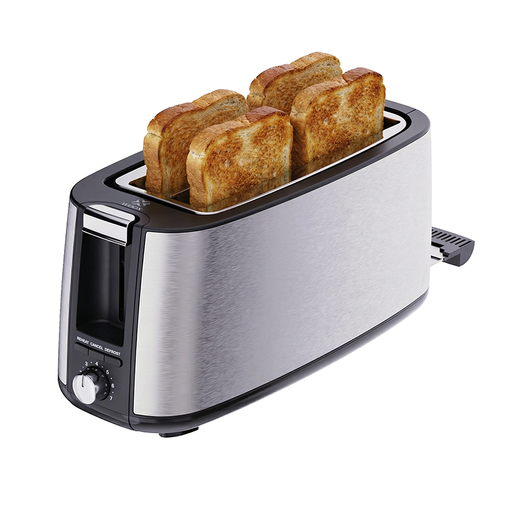 No image available
The product name specifies space for four slices; check that the slot layout and dimensions suit your bread.
The product name specifies a removable crumb tray and non-slip feet.
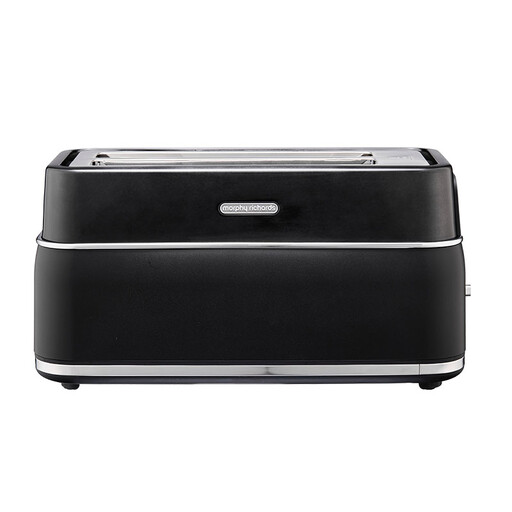 No image available
The product name specifies four slices and a two-slot design; check which slices will fit in the slots.
The product name lists a power rating of 1800 W and a black finish.
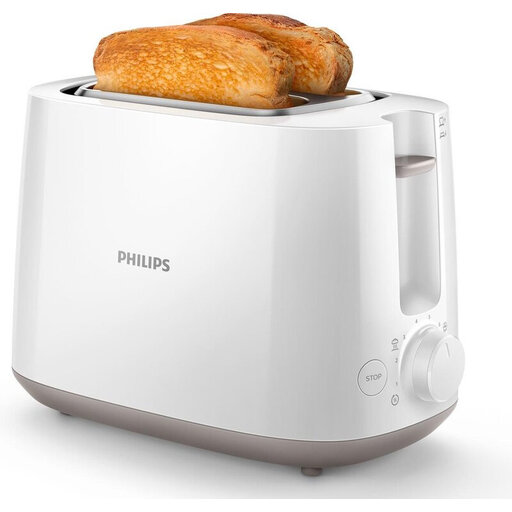 No image available
The product name specifies two slots; this capacity may mean extra batches if you’re toasting more slices for the family.
Also listed: eight browning settings, four functions, a warming rack and a defrost function.
No. Severin specifies that the AT 2509 and AT 2590 have two long slots that can toast up to four suitably sized slices at once. Check whether your rye bread will fit in the slots.
No. The specifications describe the slots, not a test with your bread. One producer describes its Frisian rye bread as moist and high in water content. So check the dimensions and the model instructions, and don’t expect the same results as with ordinary sliced bread.
A removable crumb tray can make cleaning easier; Tefal lists one for the TT7208. Follow the cleaning and safety instructions for the appliance you choose.
Not automatically. According to ACM ConsuWijzer, a product should last for as long as you could reasonably expect under normal use. If it breaks sooner, the retailer is responsible for providing an appropriate solution; the manufacturer’s warranty doesn’t replace this statutory right.
According to the Dutch Government, electrical appliances sold in the EU must carry a CE marking. The marking alone isn’t an independent performance test and doesn’t prove that an individual appliance meets all safety requirements.