
Vandaag of morgen in huis

Kwaliteit gegarandeerd

Welkomstaanbiedingen ontgrendelen: GRATIS bezorging | Tot 80% korting | Gratis 30 dagen JoyPlus-proefperiode
Download de app
A toaster may seem like a simple kitchen appliance, but the differences between models become more noticeable after a few months of use. Slots that are too narrow, crumbs that are hard to remove or unclear browning settings can make your daily breakfast unnecessarily frustrating.
So don’t focus only on a black casing, the wattage or a low price. Check that the toaster suits the bread you eat, the space available on your worktop and the features you’ll actually use.
A toaster with wide slots is useful for thick slices, bagels and rolls. However, “suitable for different types of bread” doesn’t automatically mean that every thick slice will fit. Check whether the manufacturer specifies variable slot width, extra-deep slots or a particular slot size.
A standard 2-slot toaster is often enough for sliced bread. If you regularly eat sourdough, thick slices or bakery rolls, look for a model with wide or extra-long slots.
A toaster with adjustable browning settings gives you more choice between lightly and deeply toasted bread. However, the number of settings is only one part of the picture. Good controls include a clear dial or easy-to-identify buttons for cancel, defrost and reheat.
Also watch out for conflicting product information. For some models, the product title, images and specifications may give different slot counts. Always check the full product page before ordering.
Crumbs collect beneath the heating elements. Without a removable crumb tray, you have to turn the toaster upside down, which is awkward and less tidy. A toaster with a crumb tray is easier to maintain, but only if you empty the tray regularly.
Don’t use a knife, fork or other metal object to dislodge stuck bread. Unplug the toaster first and let it cool down completely.
A 2-slot model is suitable for one or two people and usually takes up little space. For a household where several people have breakfast at the same time, a 4-slot toaster may be more practical. Check whether each slot can be operated separately and how much space the appliance takes up.
A long-slot model can be an alternative to two short slots. For example, the Philips Daily Collection HD2590/90 is described as a model with a long slot, eight browning settings, defrost and reheat functions, and an integrated warming rack. The product information gives different descriptions of the number of slots, so check the current product page carefully before buying.
A toaster with a defrost function is useful if you use bread straight from the freezer. The function extends the cycle so the bread can defrost before toasting. A toaster with a reheat function warms already-toasted bread, usually without running a full additional browning cycle.
A cancel button is useful when you want the toast to pop up sooner. A high-lift function helps you remove small slices without reaching too close to the hot slots. A warming rack is suitable for warming rolls or croissants; don’t put raw, wet or packaged food on it.
Check that the toaster is suitable for the type of bread you usually buy. Self-centring slots can help position a slice more evenly between the heating elements, but they don’t guarantee identical results with every type of bread.
Other useful features include non-slip feet, automatic shut-off and protection against jammed bread. Place the appliance on a flat, heat-resistant surface, away from curtains and kitchen cupboards. Never leave a toaster unattended while it’s in use.
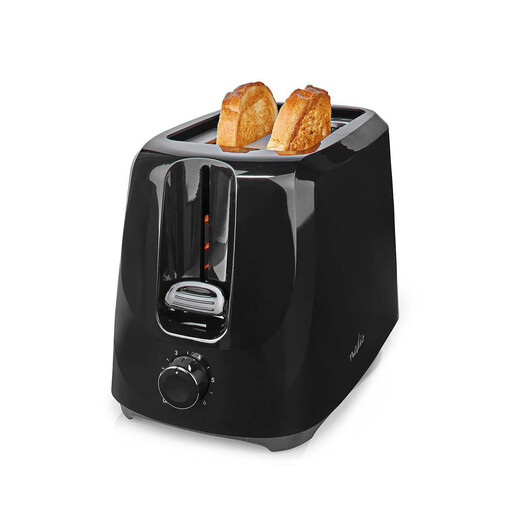
Why it suits this profile: This compact model is designed for everyday use, with two slots, six browning settings and a relatively low stated power rating of 700 W.
The product information lists a removable crumb tray, cord storage and non-slip feet, making cleaning and storage easier to manage.
Two slots, six browning settings, removable crumb tray and cord storage.
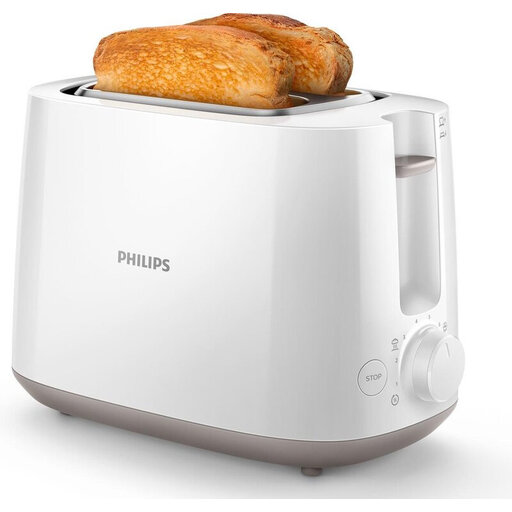
Why it suits this profile: A good choice for households that switch between different types of bread and value clear, straightforward functions and a warming rack.
The specifications list eight adjustable browning settings, defrost and reheat functions, and a removable crumb tray.
Eight settings, two variable-width slots, automatic shut-off and an integrated warming rack.
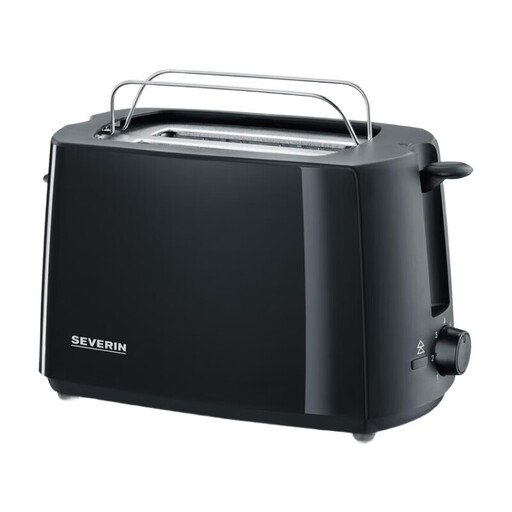
Why it suits this profile: A practical choice if you want to warm small snacks, mini pizzas or rolls as well as toast, using the included baking accessory.
The functions are clearly specified: seven browning settings, defrost and reheat functions, high lift and a removable crumb tray.
Baking tray with lid, seven settings, high lift, defrost function and crumb tray.
Empty the crumb tray regularly and clean the outside with a slightly damp cloth. Never immerse the toaster, plug or cable in water. Leave enough space above a warming rack, and don’t use the appliance under a cupboard if heat could build up there.
How long a toaster lasts depends on how it’s used and maintained, as well as the quality of its components. A model with lots of features isn’t automatically more durable. Look for clear specifications, a suitable warranty, and an available manual and manufacturer information.
We’ve put together a complete, up-to-date list of products that meet these strict selection criteria and the current European safety requirements.
Two slots are usually enough for one or two people. A 4-slot model is more convenient when several people eat at the same time, but it takes up more space and may use more electricity per use.
Yes, if you often freeze bread. The function is designed to defrost and toast frozen bread in a single cycle. Check the instructions, and bear in mind the type and thickness of the bread.
Unplug it, let it cool down completely, then remove the crumb tray. Don’t use water inside the casing, and never put metal objects into the slots. Keep the outside dry and check the cable regularly for damage.
