
Vandaag of morgen in huis

Kwaliteit gegarandeerd

Welkomstaanbiedingen ontgrendelen: GRATIS bezorging | Tot 80% korting | Gratis 30 dagen JoyPlus-proefperiode
Download de app
A toaster may seem like a simple kitchen appliance, but differences in slot width, controls and features can make a big difference to how convenient it is to use every day. A model designed for standard sliced bread may struggle with sourdough, bagels or thick slices.
So don’t focus only on colour, wattage or brand. Think about how the appliance will suit the bread you eat, the space in your kitchen and your cleaning routine. Below, you’ll find the key things to consider, along with some popular options based on verifiable product specifications.
The term toaster with wide slots sounds appealing, but the exact dimensions matter more. A 3.8 cm slot, as found on some KitchenAid models, gives you more room for thick slices, bagels and English muffins. Thick slices may still get stuck in a standard two-slot toaster.
Check that the slots are long enough, too. A long-slot model can toast two large slices side by side, while a compact model is mainly designed for regular slices.
A toaster with adjustable browning settings gives you more control, but the difference between settings can vary from one appliance to another. Eight settings may allow for fine adjustments in theory, but it’s still wise to start with a low or medium setting when using a new model.
Look for a clear dial or easy-to-read controls. A touchscreen may look modern, but physical buttons can sometimes be quicker to use when you’re in a hurry.
A toaster with a defrost function is handy for bread straight from the freezer. A toaster with a reheat function can warm up toast without putting it through a full toasting cycle again. These features are useful when they can be operated independently.
A bun rack is designed for warming croissants and rolls on top of the appliance. It’s no substitute for an oven: don’t leave baked goods unattended, and only use the rack as instructed in the manual.
Choose a two-slot toaster if you usually make one or two slices at a time. If several people in your household eat breakfast at once, a long-slot model or one with a four-slice function could save time. Don’t just check how many slices it can toast; also consider:
A compact toaster is practical in a small kitchen, but may be less suitable for large slices or several users.
A toaster with adjustable browning settings lets you choose between lightly toasted bread and darker toast. The number of settings available ranges from around five to eight. The wattage of the models mentioned is roughly 720 to 1,400 watts.
Higher wattage doesn’t automatically mean more evenly toasted bread. Automatic centring, the shape of the heating elements and the control system are just as relevant. So look at how the features work together rather than focusing on a single figure.
A toaster with a crumb tray is easier to keep clean. Empty the tray regularly, as accumulated crumbs can get hot. Always unplug the appliance before cleaning it or trying to remove stuck bread.
Also check whether the model has:
Your statutory consumer rights in the EU still apply. The exact manufacturer’s warranty may vary by product and seller, so check the details on the product page.
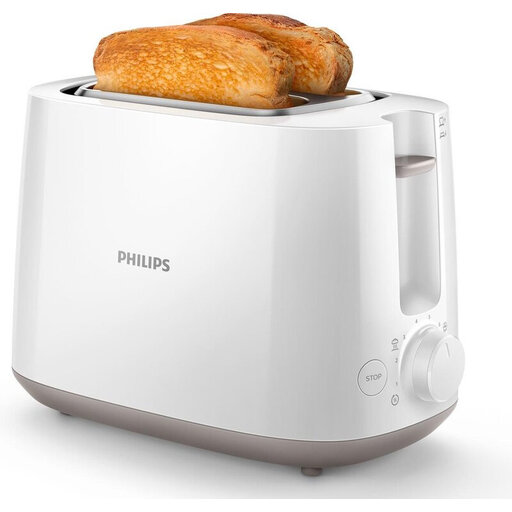
Why it suits this profile: The controls are straightforward, and you get two slots, eight browning settings, defrost and reheat functions.
The product information lists a crumb tray, automatic centring and a lift function. That means you don’t have to rely on looks or marketing claims alone.
830 W, eight settings, defrost function, reheat function and an integrated bun rack.
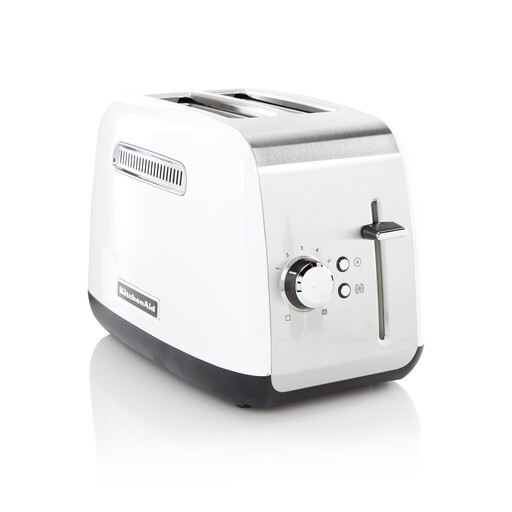
Why it suits this profile: This KitchenAid toaster is a good fit for kitchens where design, a metal finish and room for thicker bread all matter.
The specifications list 3.8 cm slots, automatic centring and a high-lift function. This makes it easier to assess whether it’s right for fans of thick slices.
Two extra-wide slots, five browning settings, bagel function, reheat function and a metal housing.
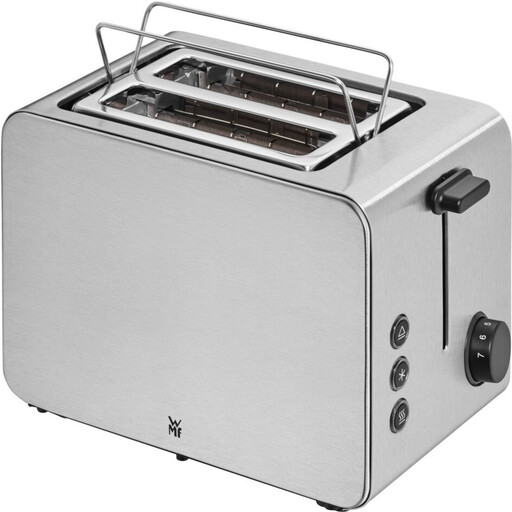
Why it suits this profile: This model is designed for households that want to warm bagels, rolls and croissants as well as make toast.
As well as offering a range of uses, the product information lists a crumb tray, automatic centring and cord storage.
Seven settings, defrost, reheat and bagel functions, a bun rack and a 1-metre cord.
We’ve put together a full, up-to-date list of products that meet these strict selection criteria and the applicable European safety requirements.
Its lifespan depends on how often you use it, how well you maintain it and its build quality. Empty the crumb tray regularly, avoid letting bread get stuck and don’t put metal objects in the slots. Check the warranty terms when you buy and keep your receipt.
A toaster usually runs for just a few minutes at a time. Its power rating, measured in watts, indicates how much energy it uses at most while running. In practice, a 900-watt model that runs for a short time may use less energy than a more powerful model that runs for longer. The exact cost depends on your energy tariff and how often you use it.
It can be, but check whether the appliance has a dedicated bagel function. A bagel toaster often heats one side more intensely while still warming the other side. According to the product information, some KitchenAid and WMF models have this feature. Always follow the manufacturer’s instructions and don’t put oversized items in the slots.
