
Vandaag of morgen in huis

Kwaliteit gegarandeerd

Welkomstaanbiedingen ontgrendelen: GRATIS bezorging | Tot 80% korting | Gratis 30 dagen JoyPlus-proefperiode
Download de app
A toaster may seem like a simple kitchen appliance, but small differences determine how convenient it is to use every day. A slot that is too narrow can trap thick slices of bread, limited browning controls may not always deliver consistent results, and a missing crumb tray makes cleaning unnecessarily difficult.
When buying a toaster, don’t just focus on colour, wattage or a low price. Pay particular attention to the dimensions, features, safety and how you plan to use the appliance.
Higher power does not automatically mean that bread will be toasted more evenly. Wattage mainly indicates the appliance’s electricity consumption and the amount of energy it can use. Slot length, bread centring and heat control also play a part.
For everyday use, models of around 700 to 1,000 watts are often sufficient for two slices. A 4-slot model generally needs more power because it heats several slices at once.
The description toaster with wide slots sounds practical, but check whether the slots are suitable for your bread. Think about thick farmhouse slices, bagels, brioche or a slice of sourdough. Variable slot width can help position thin and thick slices more effectively.
Also consider the difference between two short slots and one long slot. A long-slot toaster may be suitable for longer slices, while a compact model with two short slots takes up less space.
A toaster with a defrost function is useful if you use bread straight from the freezer. With a reheat function, you can warm up cooled toast without starting a full toasting cycle. If you rarely encounter these situations, a simpler model may be sufficient.
A bun and croissant warming rack is practical, but always check that the product is designed for this purpose. Do not place food that is too large for the slots inside the toaster, and never use metal objects to remove stuck bread.
A toaster with adjustable browning control gives you more control over lightly toasted or darker bread. In practice, six to eight settings offer plenty of choice. The ideal setting may vary depending on the type of bread, so a dial or digital setting is more useful than a fixed time period.
A stop or cancel button is important if you want to remove the bread before the cycle ends. A high-lift function makes smaller slices easier to remove without bringing your fingers close to hot components.
A toaster with a crumb tray is easier to keep clean. Unplug the appliance, allow it to cool completely and empty the tray regularly. Otherwise, crumbs can build up inside the appliance.
Do not use water inside the toaster, and do not immerse the cord, plug or casing. A smooth casing, removable crumb tray and cord storage help keep your worktop tidy.
Check whether the product information mentions automatic shut-off, anti-jam or anti-blocking protection and a stable base. These features reduce risks if a cycle is interrupted or bread becomes stuck, but never leave a toaster unattended while it is operating.
Place the appliance on a flat, heat-resistant surface, away from curtains, wall shelves and other flammable materials. Only use a toaster with the correct voltage and follow the manufacturer’s instructions.
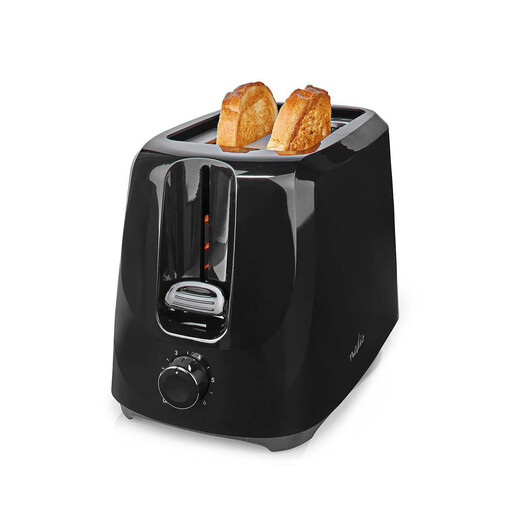
Why it suits this profile: This compact 2-slot model has six browning settings and a power rating of 700 watts. It is suitable for everyday use without taking up much space on the worktop.
The specifications mention not only the design, but also the six settings, a removable crumb tray and cord storage.
Compact size, six browning levels, non-slip feet and a 1.2-metre cord.
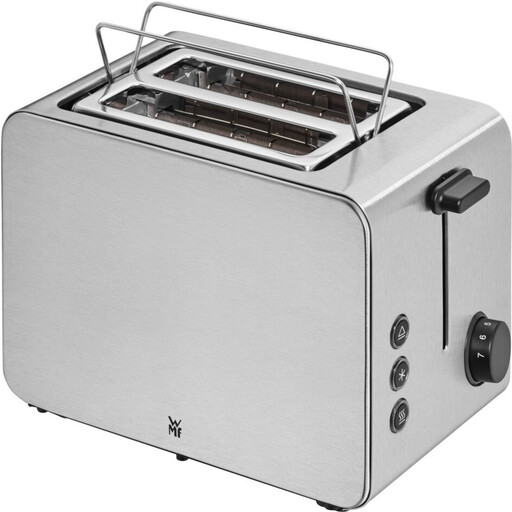
Why it suits this profile: The stainless-steel casing, seven settings and integrated bun rack are ideal for households that use several types of bread.
The product information lists specific features: automatic centring, seven settings, defrosting, reheating and a removable crumb tray.
Stainless-steel design, bun rack, seven settings and cord storage.
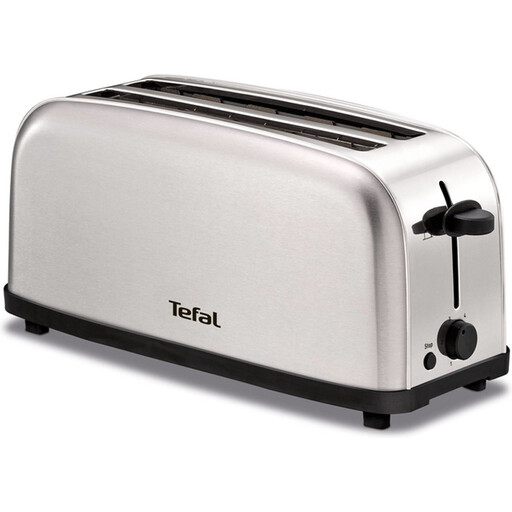
Why it suits this profile: According to the product information, the two long slots can toast four slices at once. This suits larger households that still want a compact design.
The long slots offer more flexibility than two short slots, while the six browning settings make fixed, limited controls less of an issue.
Four slices at once, two long slots, six settings, crumb tray and warming rack.
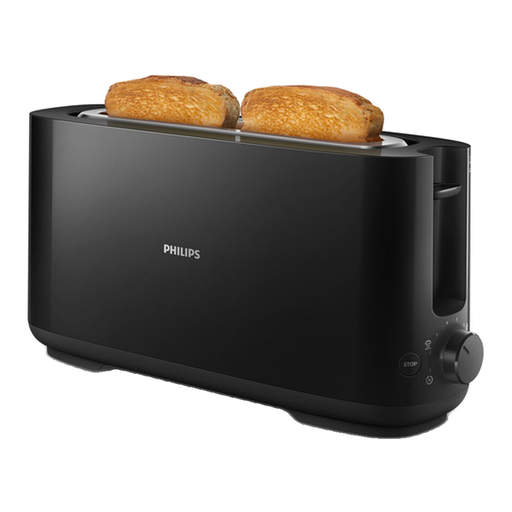
Why it suits this profile: The long slot, eight browning settings, defrost function and warming rack combine several uses in a relatively narrow design.
The product specifications make it clear that this is one long slot. Check whether you would prefer to toast two separate slices side by side.
Long slot, eight settings, high-lift function, automatic shut-off and crumb tray.
We have put together a complete, up-to-date list of products that fully meet these strict selection criteria and the applicable European safety regulations.
Its lifespan depends on how it is used, maintained and built. Empty the crumb tray regularly, do not use metal objects and allow the appliance to cool down whenever instructed in the manual. A fault, damaged cord or mechanism that keeps jamming are all reasons to stop using the appliance.
Consumption depends on the wattage and the length of the toasting cycle. A 700-watt model uses less electricity per minute than a 1,400-watt model, but the actual cost depends on how long and how often you use the appliance. Higher wattage can be useful when the toaster has several slots or is used for larger quantities of bread.
A compact two-slot toaster is usually sufficient for one or two people. As well as checking the external dimensions, consider the cord length, the space available above the appliance and how the crumb tray slides out. For long or extra-thick slices, a long or wide slot may be more important than choosing the smallest possible size.
