
Vandaag of morgen in huis

Kwaliteit gegarandeerd

Welkomstaanbiedingen ontgrendelen: GRATIS bezorging | Tot 80% korting | Gratis 30 dagen JoyPlus-proefperiode
Download de app
A toaster may seem like a simple purchase, but differences in slot size, capacity and controls can make a big difference to how convenient it is to use every day. A compact model may be handy in student accommodation, while a household with several toast-lovers may be better off with a 4-slice toaster.
When comparing models, don’t just look at the number of features. Some may sound appealing but prove less useful in practice if the slots are too narrow, there’s no crumb tray or the appliance is too large for your worktop. Below, we cover the key things to consider, along with some suitable options for different needs.
A higher wattage doesn’t automatically mean your bread will toast more evenly or quickly. The result also depends on the slot length, the heating elements and how the bread is centred. An 800 to 900 W toaster may be perfectly adequate for everyday use, while models for four slices often need more power.
A toaster with wide slots is suitable for thicker slices, bagels or artisan bread, but check whether the manufacturer gives a measurement. Some models are simply described as “extra wide”, with no exact dimensions. Two standard slots are usually enough for a sliced sandwich loaf; wide or long slots are more practical for sourdough, rolls or thick slices.
A toaster with defrost and reheat functions can be handy, but the basics still matter: clear browning controls, an easy-to-reach stop button and simple cleaning. A toaster with a crumb tray saves time when it comes to maintenance. A warming rack is useful if you regularly want to warm croissants, soft rolls or pastries, but it’s no substitute for an oven.
A 2-slot toaster is usually a good fit for one or two people. A model with long slots can toast two large slices at once. Some compact appliances have two long slots that, according to the product information, can hold up to four standard slices.
A 4-slice toaster is especially practical for families or households where several people have breakfast at the same time. Check whether the slots can be operated independently. Two separate controls let you choose different browning settings.
A toaster with adjustable browning settings gives you more control than one with a fixed timing cycle. Seven or eight settings will usually offer enough choice for different types of bread, although results can vary from slice to slice. Start with a low setting when trying a new type of bread.
Useful features include:
Measure your worktop before buying a toaster. A long model may be narrow, but it will take up more depth. A compact toaster is handy in a small kitchen, as long as the slots suit the bread you usually eat.
A stainless steel toaster is easy to wipe clean and has a neutral look. Stainless steel doesn’t mean the appliance is completely maintenance-free. Empty the crumb tray regularly, let the appliance cool down and never put water inside the housing. A non-slip base helps keep the appliance steady during use.
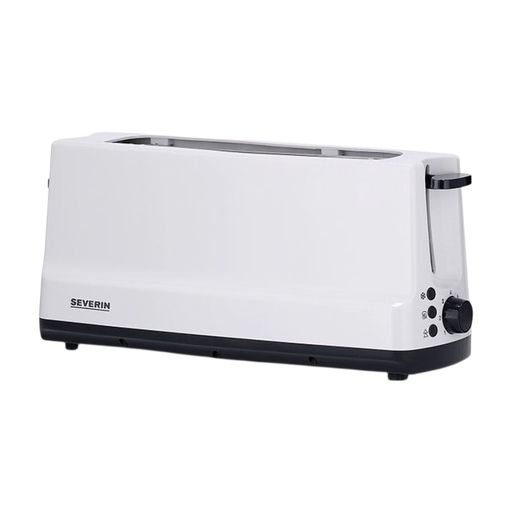
Why it suits this profile: This model is suitable for everyday use by one or two people. The long slot has room for two slices, and the controls are straightforward.
The product information lists electronic browning control, bread-centering, a crumb tray and a lift function. So you don’t have to judge it on wattage alone.
800 W, defrost and reheat functions, warming rack, cool-touch exterior and a 0.85-metre cord.
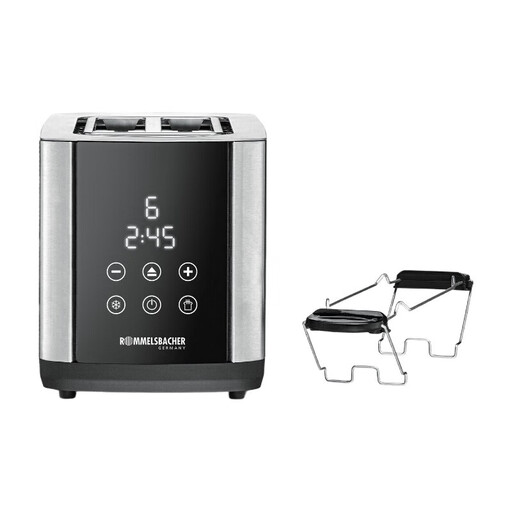
Why it suits this profile: This model is designed for people who value wide slots, plenty of settings and straightforward controls.
The stated slot dimensions of up to 12 × 12 cm make it clearer that this model can handle XL toast than a vague description such as “wide”.
850 W, 9 browning levels, touch controls, countdown timer, automatic centring, warming rack and crumb tray.
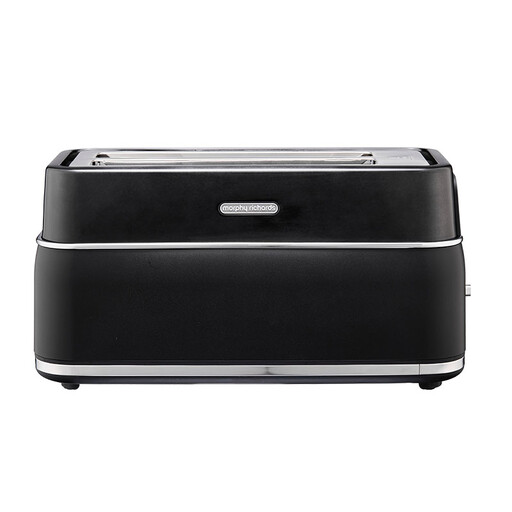
Why it suits this profile: The extra-long slots and 1800 W power rating make this a good fit for households where several slices are toasted one after another.
The product description lists seven browning settings, variable slot width and a removable crumb tray. This gives you a clearer picture of its capacity and maintenance needs.
Extra-long slots, capacity for up to four slices according to the product description, defrost, reheat and cancel functions, plus anti-jam protection.
We’ve put together a complete, up-to-date list of products that meet these strict selection criteria and comply with the applicable European safety regulations.
Use your toaster on a flat, stable surface, away from curtains and other flammable materials. Don’t leave it switched on unattended. Never put a knife, fork or other metal object into the slots. If bread gets stuck, unplug the appliance and let it cool down first.
Empty the crumb tray regularly, and never immerse the toaster, plug or cable in water. Also check that warranty and manufacturer information is available. According to the product information, various models mentioned come with a statutory guarantee of at least two years within the EU.
A standard 2-slot toaster is often rated at around 700 to 1,000 watts. A higher wattage can be useful for a toaster with several slots, but on its own it doesn’t tell you enough about how evenly it toasts.
Wide slots offer more room for thick slices, bagels and some rolls. Be sure to check the stated slot dimensions. A long slot is particularly handy for large or elongated slices, but it doesn’t automatically mean you can toast four separate slices at once.
A toaster’s lifespan depends on how it’s used and cleaned, as well as how it’s made. Regularly removing crumbs, avoiding tightly wrapping the cord and letting the appliance cool down between periods of intensive use can help prevent unnecessary wear. Stop using it if you notice smoke, damage or unusual operation.
