
Vandaag of morgen in huis

Kwaliteit gegarandeerd

Welkomstaanbiedingen ontgrendelen: GRATIS bezorging | Tot 80% korting | Gratis 30 dagen JoyPlus-proefperiode
Download de app
A toaster may seem like a simple appliance, but the differences between models can make a real difference in everyday use. A slot that’s too narrow can trap thick farmhouse bread or a bagel. A model with few settings may not toast consistently. And a crumb tray that’s difficult to reach can make cleaning more fiddly than it needs to be.
So when buying a toaster, look beyond its colour and wattage. Pay particular attention to the slot size, capacity, functions, ease of cleaning and the space available on your worktop.
A 2-slice toaster is suitable for one or two people and generally takes up less space. For a household with several toast-lovers, a 4-slice toaster or a model with two long slots may be more convenient.
Check exactly how the capacity is described. According to the product description, two long slots may hold up to four slices, but this depends on the length and thickness of the bread. So check the slot dimensions rather than relying on the product title alone.
A toaster with wide slots is useful for thick-cut bread, sourdough, bagels and English muffins. However, dimensions vary between models. For example, the KitchenAid Classic 5KMT2115EWH specifies slots that are 3.8 cm wide. Other models may simply be described as ‘extra wide’, without giving an exact measurement.
If you often toast artisan bread, check:
A toaster with a defrost function, reheat function and bun warmer sounds versatile. But these functions are only useful if the controls are clear and crumbs are easy to remove.
A toaster with a crumb tray is preferable to one you have to turn upside down to clean. Also look for a non-slip base, automatic shut-off and cord storage. They may not be glamorous features, but they make everyday use easier to manage.
For a small household, a compact toaster with two slots is often enough. Measure the space available beforehand, including room around the appliance. A long model can toast four slices at once, but takes up more depth or width.
A four-slice model is especially practical when several people have breakfast at the same time. Bear in mind that using all the slots at once means higher power consumption per use.
A toaster with adjustable browning settings gives you more control than a model with just one fixed setting. Seven settings are common, but having more settings doesn’t automatically guarantee an even result. The type, moisture content and thickness of the bread also make a difference.
Power is measured in watts. A model rated at 700 to 850 watts may be suitable for everyday use in a small household. Models rated at around 1,200 to 1,800 watts are worth considering if you want to toast several slices at once. However, wattage mainly indicates electrical power; it doesn’t directly tell you how evenly the toaster browns or how long it will last.
A black toaster can fit easily into a modern kitchen and may show less colour contrast when small marks appear. An stainless steel toaster often has a metal body and a different look. In either case, check that the material around the slots is heat-resistant and that the appliance stands firmly.
Useful practical features include:
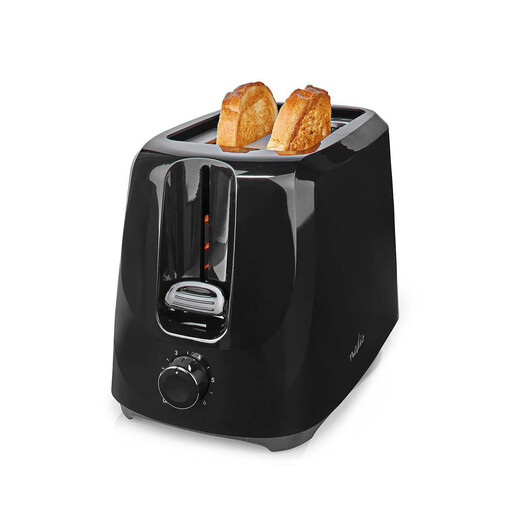
Why it suits this profile: This model is designed for everyday basics, with two slots, six browning settings and a compact size of 25 × 14,7 × 16,5 cm.
The removable crumb tray and cord storage help keep daily cleaning to a minimum and your worktop tidy.
700 W, six browning settings, non-slip feet and a compact black design.
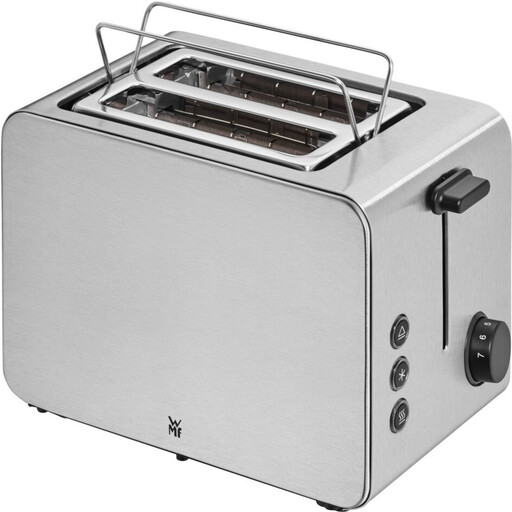
Why it suits this profile: The Cromargan metal body, seven settings and functions for bread, bagels and rolls will appeal if you value quality materials and straightforward controls.
The product description lists specific features rather than relying on style claims alone: automatic centring, a crumb tray and an integrated bun warmer.
1.000 W, seven settings, reheat and defrost functions, a bun warmer and cord storage.
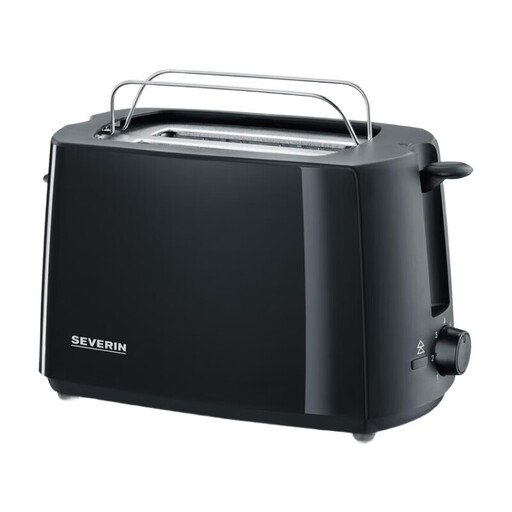
Why it suits this profile: As well as making toast, this 2-slot model comes with a baking accessory for small snacks, mini pizzas and pastries, according to the product description.
The extra function comes with a baking tray and lid. Use the accessory only as directed in the manual.
Seven browning settings, high-lift function, reheat and defrost functions, black housing and removable crumb tray.
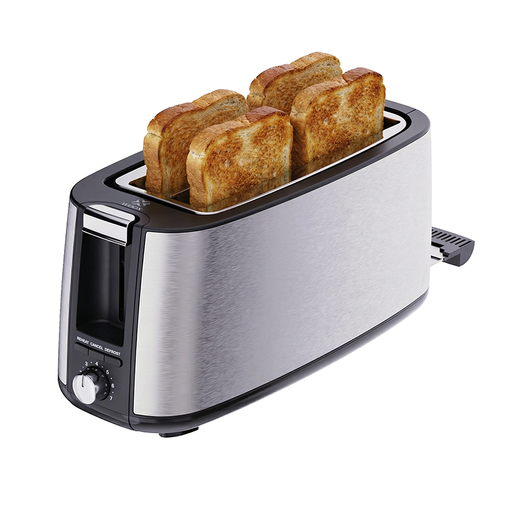
Why it suits this profile: Four slots are handy when several people want toast at the same time. The stainless steel finish suits a busy, modern kitchen.
The product description lists automatic centring, anti-jam protection and a removable crumb tray, so extra capacity doesn’t come at the expense of ease of use.
Four slots, 1.200–1.400 W, seven browning settings, reheat and defrost functions.
We’ve put together a complete, up-to-date list of products that meet these strict selection criteria and the applicable European safety requirements.
Place the appliance on a flat, heat-resistant surface, with enough clear space around it. Don’t use the toaster beneath kitchen cupboards if the manual advises against it. Empty the crumb tray regularly, and always unplug the appliance before cleaning.
If bread gets stuck, don’t use a knife, fork or any other metal object to remove it. Unplug the toaster, let it cool completely and follow the manufacturer’s instructions. The statutory guarantee in the EU is generally at least two years; any additional manufacturer’s warranty varies by product.
Yes, especially if you often use bread straight from the freezer. According to the product description, the function extends the heating cycle to defrost and toast frozen bread. The result will still depend on the type and thickness of the bread.
Around 700 to 900 watts is often enough for a compact 2-slot model. Four-slot models and those with long slots generally have a higher power rating. Don’t just look at the wattage; consider capacity, slot size and functions too.
Lifespan depends on how often it’s used, how well it’s maintained and the quality of the product. A removable crumb tray, automatic shut-off and sturdy base make it easier to use and care for. Also check the warranty terms and keep your proof of purchase.
